
Introduction
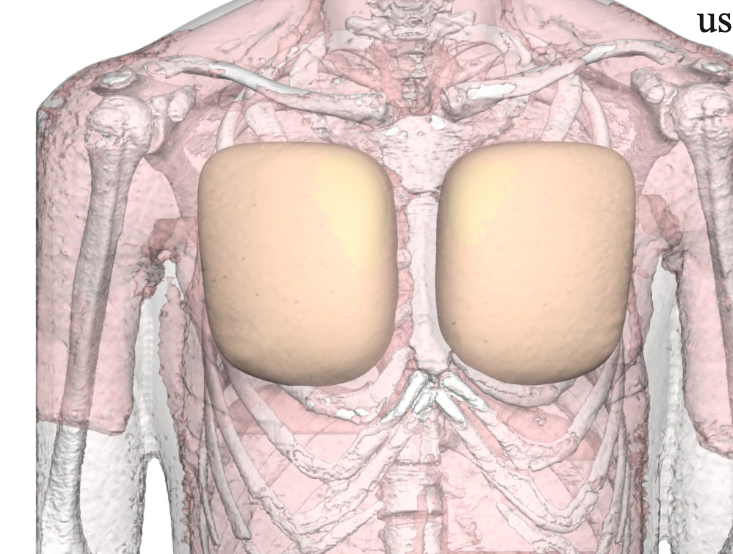
Custom pectoral implants are patient-specific chest implants designed to enhance or restore the size, shape, and symmetry of the pectoral region. They are most commonly used in men seeking a more defined, athletic chest or correction of congenital or acquired asymmetry.
Benefits of Custom Implant Design for Pectoral Augmentation
CT-based design and preoperative control
Three-dimensional CT scans of the chest allow for digital implant design with precise control over implant dimensions. This enables the surgeon—and, when appropriate, the patient—to plan the desired augmentation outcome before surgery.
Advantages in revision cases
In patients with existing pectoral implants, the implants and their pocket position can be clearly visualized on CT imaging. This significantly improves the ability to design replacement implants that correct limitations of the original design.
Key design benefits
-
Preoperative implant control: Thickness, width, and edge transitions can be tailored to create natural slopes and defined medial cleavage.
-
Improved symmetry: Especially valuable in cases of unilateral muscle or rib cage underdevelopment or after prior chest surgery.
Who Benefits Most from Custom Pectoral Implants?
-
Men with congenital chest asymmetry (e.g., Poland syndrome)
-
Patients unable to achieve desired chest size despite training
-
Individuals with contour deficits following weight loss or injury
-
Revision patients after standard implants or fat grafting
Implant Material and Placement
Material
-
Solid medical-grade silicone: durable, stable, and sculptable
Placement
-
Typically submuscular (beneath the pectoralis major)
-
Inserted through discreet high axillary (armpit) incisions
Fixation considerations
-
A custom fit reduces the risk of implant migration
-
Precise pocket creation remains critical to long-term stability
Surgery and Recovery
-
Surgical time: Approximately 1.0–1.5 hours
-
Setting: Outpatient procedure
-
Downtime:
-
Light activity: ~1–2 weeks
-
Gym activity: ~4–6 weeks
-
Chest training: ~8 weeks
-
-
Results:
-
Immediate improvement in contour
-
Initial fullness due to swelling, with refinement over several months
-
Risks and Considerations
-
Infection, hematoma, or seroma
-
Implant shift (lower risk with custom designs)
-
Temporary tightness or numbness
-
Scar quality (axillary incisions are well hidden but may widen)
Custom vs. Standard Pectoral Implants
| Feature | Custom | Standard |
|---|---|---|
| Fit | Exact anatomical match | Limited size options |
| Symmetry correction | Excellent | Moderate |
| Natural contour | Superior | Good |
| Cost & lead time | Higher / longer | Lower / shorter |
Case Study
This male patient previously underwent placement of standard pectoral implants with an objectively excellent result. Chest shape was improved, and symmetry was outstanding. Despite this, the patient desired a greater result—specifically increased overall size and more fullness in the upper chest.
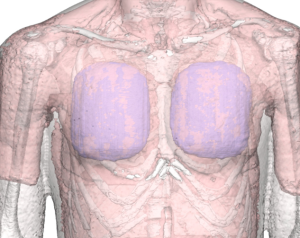
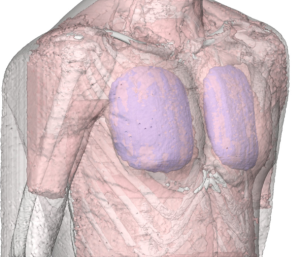 A 3D CT scan demonstrated excellent implant positioning and a rectangular implant shape. The existing implants had a total volume of 270 cc, with greater thickness inferiorly and a superior taper.
Custom Redesign
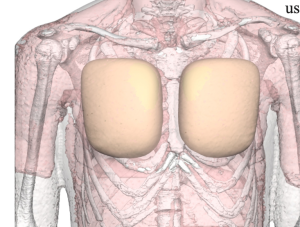
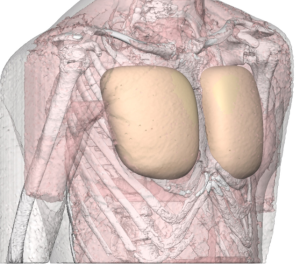 New custom implants were designed using the identical footprint of the original implants but with the following modifications:
-
Total volume increased to 540 cc
-
Greater superior thickness (33 mm) compared to inferior thickness (22 mm)
-
Increased superomedial fullness (33 mm) versus inferolateral thickness (21 mm)
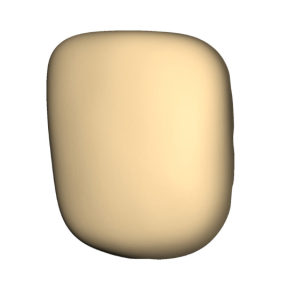
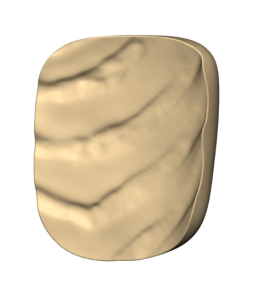 The implants featured a smooth outer surface and an inner surface contoured with rib impressions to enhance stability.
Surgical Exchange
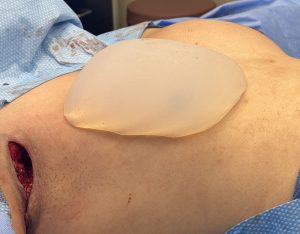 Through the patient’s existing axillary incisions, the original implants were removed and replaced with the new custom implants. Despite their size, insertion was possible through the small axillary access using a funnel insertion device. This allowed passage through the axillary “bottleneck” of the implant pocket.
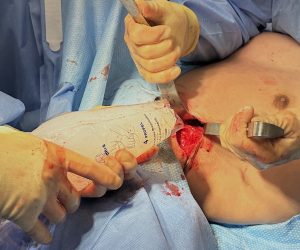
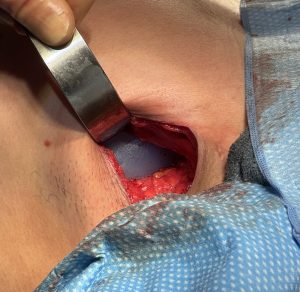 The increased volume near the axillary tail of the implant was temporarily visible immediately postoperatively.
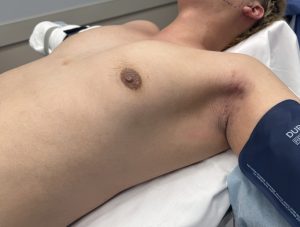
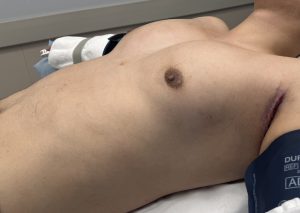 The immediate intraoperative result demonstrated markedly increased projection and upper chest fullness.

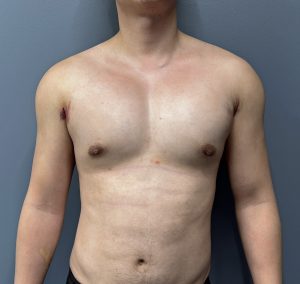
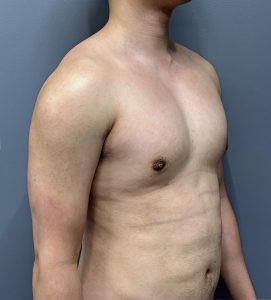

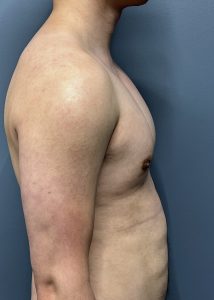
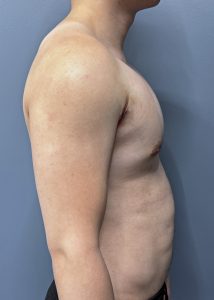 But the accurate assessment of the changes is best seen in the standing position tje day after the surgery.
Discussion: Revision Scenarios in Pectoral Implant Surgery
Standard pectoral implants meet the needs of most male chest augmentation patients. However, as with all standard implant systems, a subset of patients require revision. These cases benefit greatly from CT-based planning and custom implant design.
1. Implant Malposition
Causes
-
Inadequate pocket control
-
Excessive muscle release
-
Poor implant–chest wall match
Revision strategy
-
Pocket reconstruction (capsulorrhaphy or capsulotomy)
-
Internal suturing to re-establish borders
-
Custom implant design with shape constraints to prevent migration
2. Asymmetry (Size, Shape, or Position)
Causes
-
Pre-existing chest wall or muscle asymmetry
-
Unequal pocket dissection
-
Muscle animation differences
Revision strategy
-
Differential pocket adjustment
-
Asymmetric custom implants (varying width, thickness, or medial fullness)
-
Supplemental fat grafting for fine contour refinement
3. Inadequate Chest Augmentation Effect
Causes
-
Implant size too small
-
Change in patient aesthetic goals
Revision strategy
-
Exchange to a larger standard implant
-
Conversion to custom implant design using CT visualization
-
Adjunctive fat grafting for edge blending or surface volume
4. Round or “Mound-like” Appearance
Causes
-
Non-rectangular implant shape
-
Insufficient upper pole projection
-
Implant folding or malposition
Revision strategy
-
Replace with a custom rectangular implant
-
Increase upper pole fullness while reducing inferior bulk
-
Emphasize inferior taper rather than central projection
5. Revision After Fat Grafting
Causes
-
Irregular fat survival
-
Nodules or fat migration
-
Inconsistent volume leading to a breast-like contour
Revision strategy
-
Implant placement
-
Liposuction of central mound deformity
-
Custom implant design accounting for existing soft tissue
6. Poland Syndrome and Complex Congenital Cases
Challenges
-
Rib, muscle, and chest wall deficiencies
-
Growth-related changes
-
Prior reconstructive attempts
Revision strategy
-
Fully custom chest implant systems (pectoral ± parasternal ± rib components)
-
Staged revisions as anatomy evolves
-
Long-term planning is essential
Conclusion
CT-based planning is fundamental to successful pectoral implant revision surgery. It allows precise evaluation of implant position, size, and volume distribution, enabling targeted improvements. In most revision cases, custom implant design provides the greatest level of control and predictability.
Key Points
-
Inadequate pectoral implant results are more often related to implant shape than volume alone.
-
Many male patients desire upper and medial fullness to achieve a more rectangular chest contour.
-
Custom implant replacement must carefully consider existing implant placement, shape, and volume distribution.
Barry Eppley, MD, DMD
World-Renowned Plastic Surgeon