
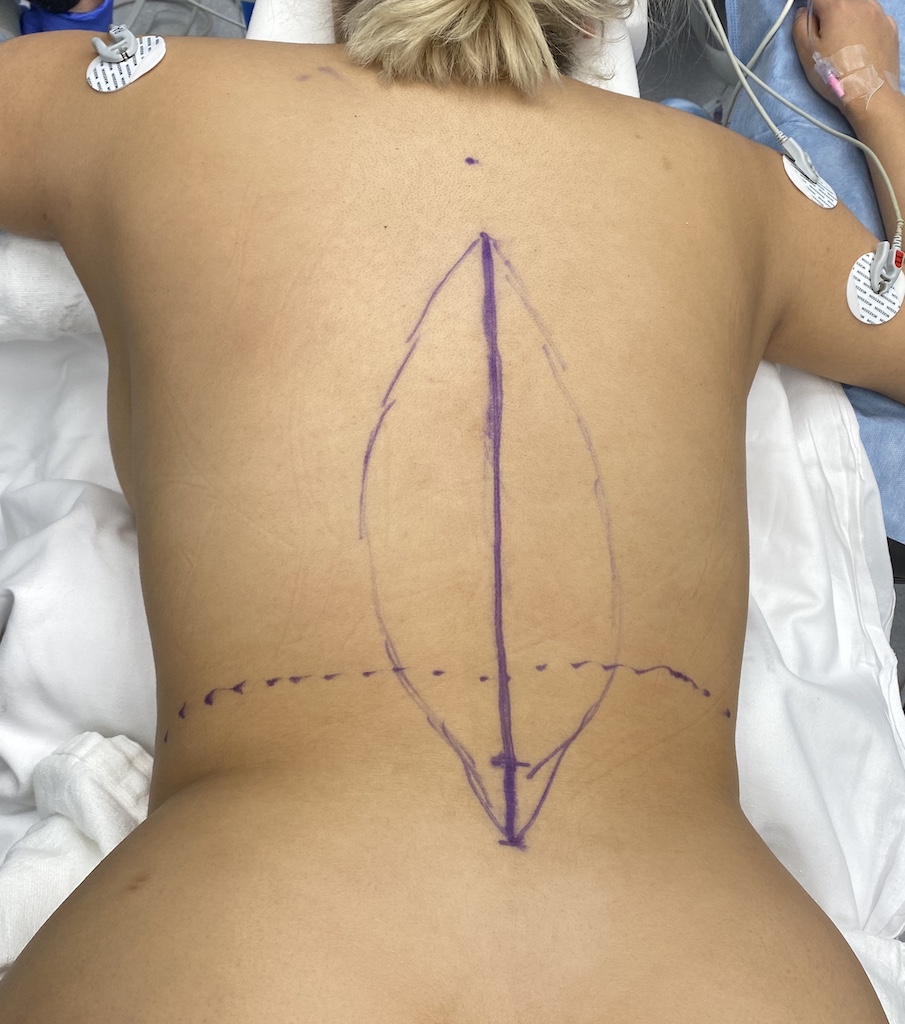
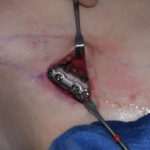
When rib removal (most commonly the 11th and 12th floating ribs) is combined with a back lift, the orientation of the excision—horizontal versus vertical—is the dominant factor determining the quality of waist narrowing, scar placement, and overall contour change.
1. Horizontal Back Lift With Rib Removal
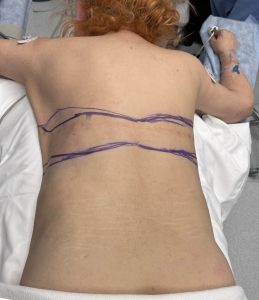 Incision
Transverse excision across the mid- to upper back, typically in the bra-line region.
Primary Effect
- Improves upper back rolls and skin laxity
- Produces vertical (up–down) tightening rather than circumferential narrowing
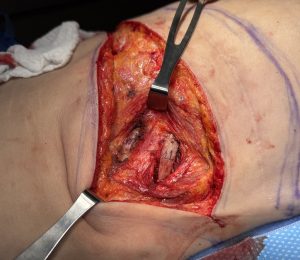 Interaction With Rib Removal
- Rib removal reduces skeletal width
- However, soft-tissue tightening does not effectively translate this reduction into visible waist cinching
Advantages
 Scar often concealed by bras or swimwear
- Familiar posterior body-lift mechanics
- Effective for redundant upper-back skin
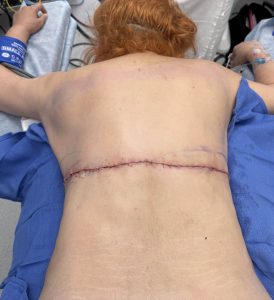 Scar often concealed by bras or swimwear
Limitations
- Minimal waist narrowing
- Limited synergy with rib removal
- Little lateral pull at the flanks
Best Suited For
- Patients whose primary concern is upper-back skin excess
- Cases where rib removal is intended for subtle contour refinement rather than dramatic waist reduction
2. Vertical Back Lift With Rib Removal
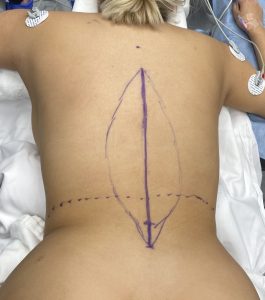 Incision
Longitudinal excision, centered or paramedian along the posterior trunk.
Primary Effect
- Horizontal (side-to-side) tightening
- Direct narrowing of the waist and flanks
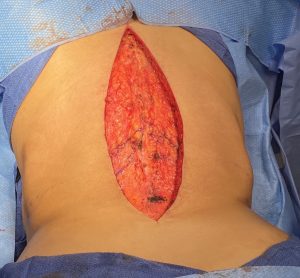 Interaction With Rib Removal
- Strong synergy between skeletal narrowing and circumferential soft-tissue tightening
- Produces the most significant posterior waist reduction
Advantages
- Powerful waist-cinching effect
- Superior contour transition from ribs to flanks and hips
- Mechanically aligned with the aesthetic goals of rib removal
Limitations
- Vertical scar is more visible and harder to conceal
- Less effective for correcting upper-back rolls
- Technically more demanding
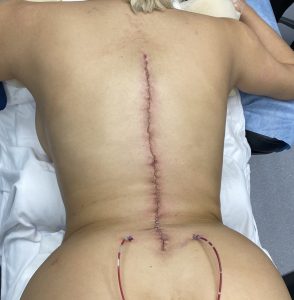 Vertical scar is more visible and harder to conceal
Best Suited For
- Patients prioritizing maximum waist narrowing
- Lean patients who understand and accept scar trade-offs
- Cases in which rib removal is a central aesthetic driver
Head-to-Head Comparison
|
Feature |
Horizontal Back Lift |
Vertical Back Lift |
|
Skin tightening vector |
Vertical |
Horizontal |
|
Waist narrowing |
Limited |
Strong |
|
Synergy with rib removal |
Low–Moderate |
High |
|
Scar concealment |
Better |
Worse |
|
Upper-back roll correction |
Better |
Limited |
|
Overall contour change |
Moderate |
Significant |
Practical Surgical Insight
- Rib removal + vertical back lift produces true skeletal and soft-tissue waist reduction.
- Rib removal + horizontal back lift narrows the rib cage but fails to fully translate this change into visible contour improvement.
Operative Planning Pearls
1. Choose Excision Orientation Based on Force Vector
This is the single most important decision.
- Vertical back lift
- Horizontal pull
- Direct waist narrowing
- Best synergy with rib removal
- Horizontal back lift
- Vertical pull
- Improves rolls, not waist diameter
- Dilutes the visual benefit of rib removal
Pearl:
When rib removal is performed, default to a vertical or oblique excision unless scar acceptance is absolutely prohibitive.
2. Perform Preoperative Marking With the Patient Standing
- Identify the true anatomic waist—not where clothing sits
- Mark:
- Inferior rib cage margin
- Iliac crest
- Posterior midline and paraspinal gutters
Pearl:
Mark the zone of maximum horizontal pinch—this determines excision width more accurately than skin redundancy alone.
3. Rib Selection and Resection Technique
- Remove ribs 11 and 12 routinely
- Rib 10 removal further enhances waist reduction
- Perform partial posterolateral resection rather than complete rib excision
- Latissimus dorsi muscle resection enhances rib removal results
Pearl: Preserve:
- Costovertebral articulation
- Intercostal neurovascular bundle
- Paraspinal muscle integrity
4. Protect the Intercostal Neurovascular Bundle
- Use subperiosteal dissection only
- Visualize rib cutter placement—never cut blindly
Pearl:
Chronic postoperative pain almost always results from intercostal nerve traction or cautery injury, not the rib removal itself.
5. Control Posterior Scar Behavior
Vertical back lift scars are prone to:
- Widening
- Hypertrophy
- Visibility with motion
Pearls:
- Use progressive tension sutures
- Anchor deeply to paraspinal fascia
- Avoid excessive skin tension
6. Avoid Over-Resection of Skin
Rib removal already reduces trunk circumference.
Over-tightening can cause:
- Dog-ears at upper or lower poles
- Widened scars
- Unnatural posterior contour
Pearl:
Aim for skeletal narrowing combined with moderate skin tightening—not aggressive excision.
7. Drain Strategy Is Non-Negotiable
- Use a minimum of two subcutaneous drains
- Expect prolonged drainage due to dead space and motion
Pearl:
Early drain removal is a common cause of seromas and contour distortion.
8. Patient Counseling Pearl
Be explicit with patients:
- Both vertical and horizontal back lift scars commonly widen
- Secondary scar revision is likely
- Final contour evolution requires 3–4 months
Pearl:
Regardless of orientation, the back lift provides the exposure and access that enable effective rib removal.
Bottom-Line Strategy
- Vertical back lift + rib removal
? Maximal waist narrowing with controlled risk - Horizontal back lift + rib removal
? Limited synergy; reserve for roll-dominant deformities
Barry Eppley, MD, DMD
World-Renowned Plastic Surgeon