
Like all custom facial implants there are some learned guidelines that help guide CAD design for both males and females. These rules apply regardless of the material used.
MALE Custom Midface Implant Design Rules
1. Lateral projection > anterior projection
- Drive augmentation outward along the zygomatic arch
- Keep anterior cheek relatively flat
- Think horizontal vector, not cheek “apple”
Rule:
If the implant is obvious on a ¾ view, it’s usually too anterior.
2. Straight planes, not convex curves
- Male cheeks should read as planar
- Avoid rounded transitions between implant and native bone
- Sharper transitions are acceptable (and often desirable)
Design cue:
- Flatten the anterior face of the implant
- Limit curvature radius
3. Minimal submalar volume
- Submalar fullness feminizes the face
- Use only when there is true skeletal deficiency or wasting
Rule:
Submalar thickness in men should be supportive, not volumetric
4. Lower implant height
- Keep the superior border lower to avoid a high cheek apex
- Prevents “model cheekbone” look
Ideal male apex
- At or slightly below the lateral canthus
5. Width is acceptable—roundness is not
- Mild increase in bizygomatic width is fine
- Rounded medial fullness is not
Design check
- Assess frontal silhouette: width should read as bone, not softness
6. Blends with jaw/chin
- Male midface implants should be designed in context
- Often paired with:
- Jawline implants
- Chin widening or lengthening
Rule:
The midface should never be the strongest structure on a male face.
FEMALE Custom Midface Implant Design Rules
1. Anterior projection > lateral width
- Emphasize forward cheek apex
- Avoid excessive lateral widening
Rule:
If width increases more than projection, redesign.
2. High, soft cheek apex
- Apex should be higher and more medial
- Creates youthful, lifted appearance
Ideal female apex
- Slightly above the lateral canthus
- Forward-facing highlight on frontal view
3. Curved, continuous contours
- Smooth transitions are critical
- No abrupt edges or planes
Design cue
- Increase curvature radius
- Feather implant margins more aggressively
4. Submalar blending is often essential
- Women tolerate (and benefit from) submalar support
- Especially for:
- Aging faces
- Lid–cheek junction
- Nasolabial softening
Rule:
Submalar volume should support, not descend.
5. Vertical lift illusion
- Implant shape should create an upward visual vector
- Avoid inferior bulk
Design check
- No fullness below the oral commissure plane
6. Harmony with soft-tissue procedures
- Female custom implants often assume:
- Lower blepharoplasty
- Fat grafting
- Facelift or midface lift
Rule:
Female implant design is rarely standalone.
Shared Rules (Both Sexes)
- Bone-hugging design reduces visibility and migration
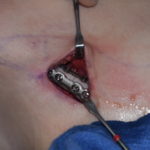
- Screw fixation improves precision and symmetry
- Millimeter-level changes matter—custom is unforgiving
- Overcorrection is harder to fix than undercorrection
Quick Design Summary
|
Feature |
Male |
Female |
|
Primary vector |
Lateral |
Anterior |
|
Shape |
Flat / angular |
Rounded / curved |
|
Submalar volume |
Minimal |
Moderate |
|
Cheek apex |
Lower |
Higher |
|
Width tolerance |
Higher |
Lower |
|
Risk of error |
Feminization |
Heaviness |
Bottom line
Custom implants amplify design intent.
If the sex-specific rules aren’t respected, custom implants make mistakes more permanent, not less.
Dr. Barry Eppley
World-Renowned Plastic Surgeon