

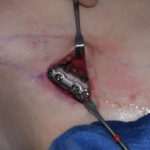
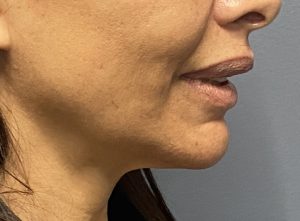
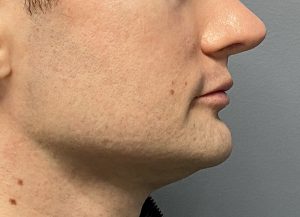
 The labiomental fold (the horizontal crease between the lower lip and the chin) is a critical anatomic and aesthetic consideration in chin augmentation, whether with implants, osteotomy, or fillers.
Below is a structured, surgical-focused explanation.
1. Why the labiomental fold matters
The depth and shape of the labiomental fold strongly influence:
- Lower facial balance
- Perceived chin projection
- Lip competence and lower lip posture
- Overall harmony between the lip–chin–jawline unit
An improperly managed labiomental fold can make a chin augmentation look artificial, aged, or dysfunctional, even if projection is technically adequate.
2. Ideal labiomental fold aesthetics
- Depth:
- Men: slightly deeper is acceptable
- Women: softer, more obtuse fold preferred
- Angle (labiomental angle):
- Typically ~110–130°
- Continuity: Smooth transition from lower lip to chin, not a sharp step-off
- Symmetry: Especially important in frontal view
3. Effect of chin augmentation on the labiomental fold
A. Chin implants
- Increase fold depth if:
- Implant is too large vertically
- Implant sits too high
- Soft tissue envelope is tight
- Improve fold if:
- Horizontal projection is increased without excessive vertical height
- Implant is placed low and centered on the inferior mandibular border
? Common pitfall: Over-projecting the chin without addressing soft tissue ? exaggerated “witch’s chin” or “button chin” effect.
B. Sliding genioplasty (osseous genioplasty)
- Most controllable method for fold management
- Can:
- Advance chin without deepening the fold
- Reduce fold depth by controlled vertical lengthening
- Correct mentalis strain
Vertical lengthening often softens a deep labiomental fold, while pure advancement may deepen it unless planned carefully.
C. Fillers / fat grafting
- Useful for:
- Mild chin deficiency
- Isolated deep labiomental crease
- Technique matters:
- Overfilling the fold directly can look unnatural
- Better approach: structural chin support first, then subtle fold blending
4. Role of the mentalis muscle
The mentalis muscle is a major determinant of fold depth.
- Hyperactive or high mentalis insertion ? deep crease
- In chin surgery:
- Improper mentalis resuspension can worsen the fold
- Meticulous reattachment is essential
- Adjuncts:
- Botulinum toxin can temporarily soften a deep fold
- Useful diagnostically before surgery
5. Common problems & how to avoid them
|
Problem |
Cause |
Prevention |
|
Over-deepened fold |
Excess vertical implant height |
Choose low-profile or custom implant |
|
“Button chin” |
High implant placement |
Place implant on inferior border |
|
Lower lip incompetence |
Excessive advancement |
Balance projection with soft tissue |
|
Step-off deformity |
Poor soft tissue redraping |
Careful mentalis handling |
6. Key surgical principles
- Chin projection alone is not enough—fold behavior must be predicted
- Evaluate the fold at rest and animation
- Vertical and horizontal changes affect the fold differently
- Sliding genioplasty offers the greatest control
- Mentalis management is as important as bone or implant choice
Dr. Barry Eppley
World-Renowned Plastic Surgeon