
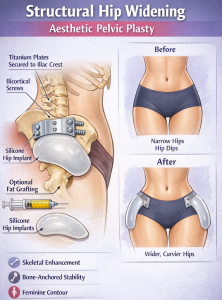
 Aesthetic pelvic framework contouring is achieved through subperiosteal augmentation of the lateral iliac crest using titanium implants, with optional adjunctive soft-tissue hip augmentation (autologous fat grafting or silicone implants). This combined approach enhances lateral hip width while smoothing contour transitions.
Components
1. Iliac Crest Augmentation (Primary Procedure)
- Subperiosteal placement of titanium bone-widening implants
- Augmentation of the lateral bony pelvic rim
- Increased upper-hip width and definition
- Creation of a true skeletal change to the waist–hip silhouette
2. Soft-Tissue Hip Augmentation (Optional)
- Autologous fat grafting and/or silicone hip implants
- Adds volume and rounding over the lateral hip and into the subiliac hollow
Used to:
- Extend the hip-widening effect inferiorly
- Correct hip dips
With vs. Without Soft-Tissue Augmentation
- With soft-tissue augmentation: Fuller, rounder hip contour
- Without soft-tissue augmentation: Sharper, more skeletal definition
Indications
- Desire for structural hip widening
- Congenitally narrow pelvis or prominent hip dips
- Body feminization
- Pelvic asymmetry
- Patients in whom fat grafting alone is insufficient
This procedure reshapes the pelvic framework itself rather than relying solely on soft-tissue augmentation. While fat grafting or hip implants may be added to enhance smoothness and volume, the primary aesthetic change derives from iliac crest widening.
Case Study
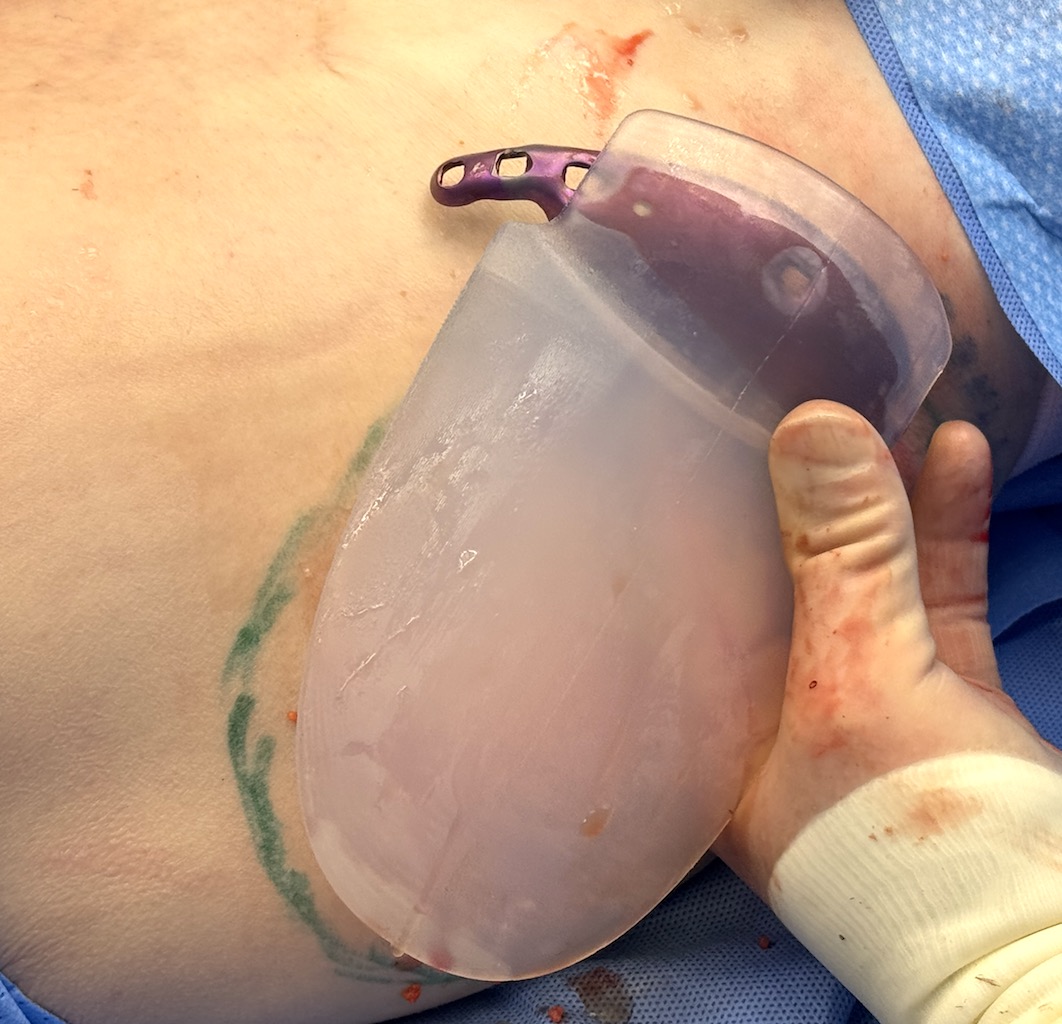
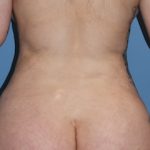
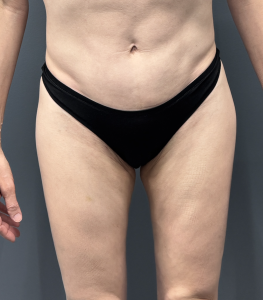 This lean female patient with narrow hips desired structural hip widening. Due to the absence of adequate donor fat, silicone hip implants were selected to achieve a more complete augmentation.
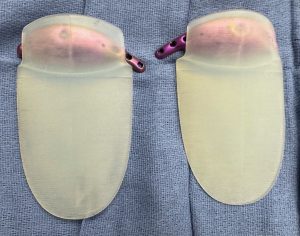
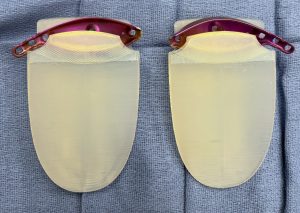
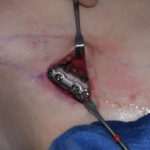
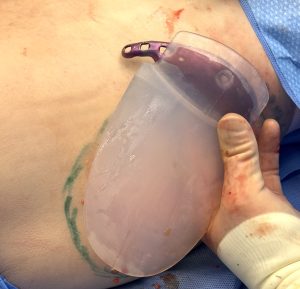 Bilateral 35-mm titanium plates were secured to the lateral iliac crests using bicortical screws. Silicone hip implants were then inserted and mechanically connected to the posterior aspect of the iliac crest plates via a hooked design. During closure, the superior flange of each hip implant was positioned over the crest plate.
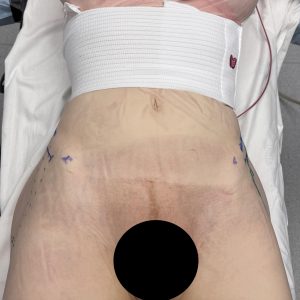
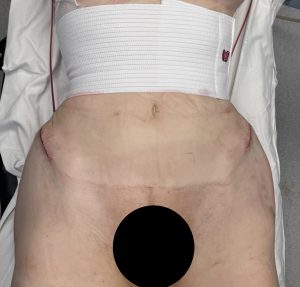 The immediate intraoperative hip-widening effect was clearly evident.
Discussion
The concept of skeletal hip widening using titanium iliac crest implants is straightforward and effective, with secure anchorage provided by bicortical screw fixation. However, widening the iliac crest can create or accentuate a subiliac hollow (hip dips), depending on the patient’s anatomy. Consequently, adjunctive soft-tissue hip augmentation is frequently required.
Although injectable fat grafting is typically the first-line method for complementing iliac crest widening, adequate donor sites may not always be available. In such cases, silicone hip implants become a valuable adjunct.
The current silicone hip implant design incorporates a hook that interfaces directly with the titanium iliac crest plate. This bone-anchored configuration mitigates many common complications associated with soft-tissue hip implants, including:
- Inferior implant bending
- Edge visibility
- Implant migration
- Asymmetry
Despite improved stabilization, achieving a seamless contour transition between the bony and soft-tissue implant components remains a technical challenge. One design solution, as demonstrated in this case, involves extending a superior flange from the hip implant onto the titanium crest plate. With fascial closure, this flange compresses around the implant interface, creating a smoother external contour between the two implant surfaces.
Dr. Barry Eppley
Plastic Surgeon