
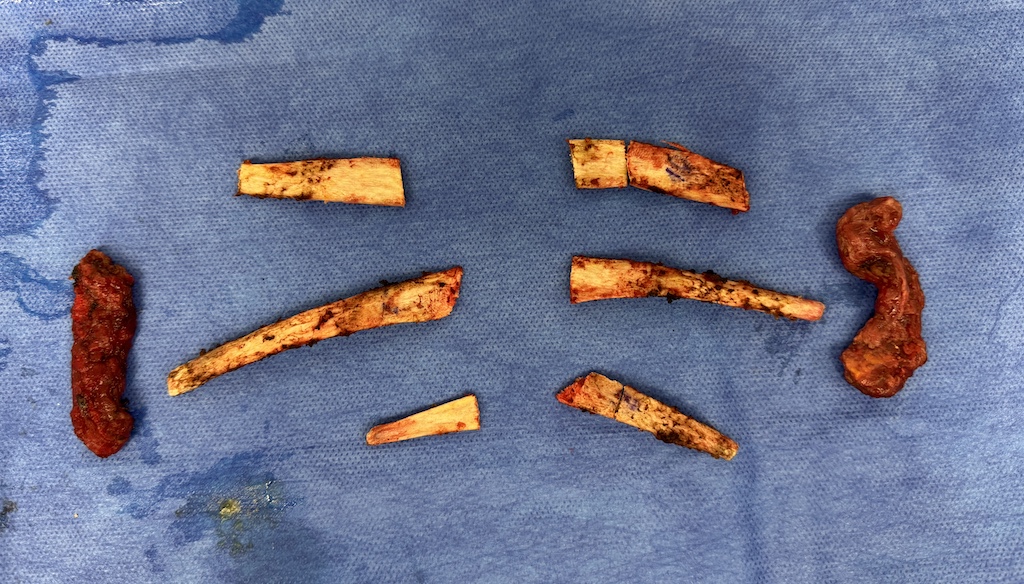

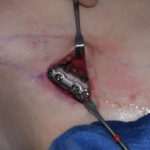
There are several structurally or skeletally based aesthetic body contouring procedures that can be performed from the clavicles down to the lower extremities. Excluding lower extremity lengthening or shortening, the three primary procedures are shoulder narrowing, rib removal or modification, and hip widening or augmentation (pelvic plasty).
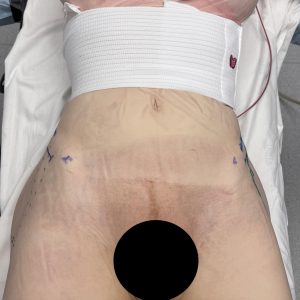
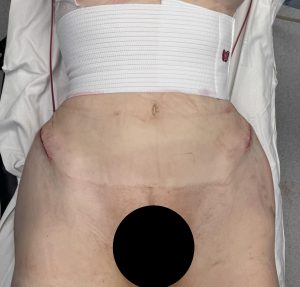 Many patients desire more than one of these structural body contouring procedures. Because each has distinct recovery considerations, an important question is whether they can be combined. Any two of these procedures may be performed together, but all three should not be combined in a single operative setting. One possible combination is rib removal and pelvic plasty.
Combining Rib Removal and Pelvic Plasty

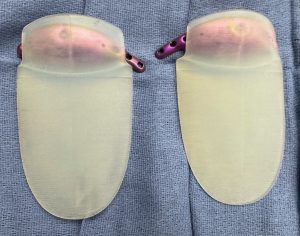 Rib removal and pelvic plasty can be performed together, but only in very select patients and with careful surgical planning. This is not a routine or automatic combination, and several important surgical realities must be understood.
When Combining Them May Be Appropriate
These procedures may be safely combined when:
- The patient is healthy, low risk, and medically optimized
- The aesthetic goal is waist–hip contouring (e.g., maximizing an hourglass shape within the patient’s anatomic limitations)
- Operative time can be maintained within a safe range
- The surgeon has extensive experience with both procedures
- Postoperative positioning and recovery requirements do not conflict
From an anatomical standpoint, the rib cage and pelvis are separate operative fields, so the combination is technically challenging from an intraoperative perspective.
Why This Combination Requires Caution
1. Recovery conflicts
- Rib removal requires torso protection and limits twisting
- Pelvic surgery affects walking, sitting, and hip motion
When performed together, basic mobility and daily activities can be significantly more difficult in the early postoperative period than with either procedure alone.
2. Operative time and physiologic stress
- Rib removal involves deep rib cage surgery
- Pelvic plasty (iliac crest contouring) involves bone work
Combining these procedures increases physiologic stress and may raise the risk of:
- Increased blood loss
- DVT or pulmonary embolism
- Pulmonary stress
- Greater postoperative pain burden
The exact degree of increased risk is not fully known.
3. Complication management
If a complication arises, diagnosis and management may be more complex:
- Is the pain respiratory or pelvic in origin?
- Is the swelling truncal or hip-related?
Staging procedures simplifies postoperative monitoring and intervention.
Benefits of Staging
When staged, one reasonable approach is:
- Stage 1: Rib removal, allowing healing and stabilization of the waist
- Stage 2: Pelvic plasty performed 3–6+ months later to address hip width or flare
For patients traveling alone, coming from long distances (including overseas), or those with any medical concerns, staging often provides a significantly easier recovery—even if the overall treatment timeline is longer.
Barry Eppley, MD
Plastic Surgeon