
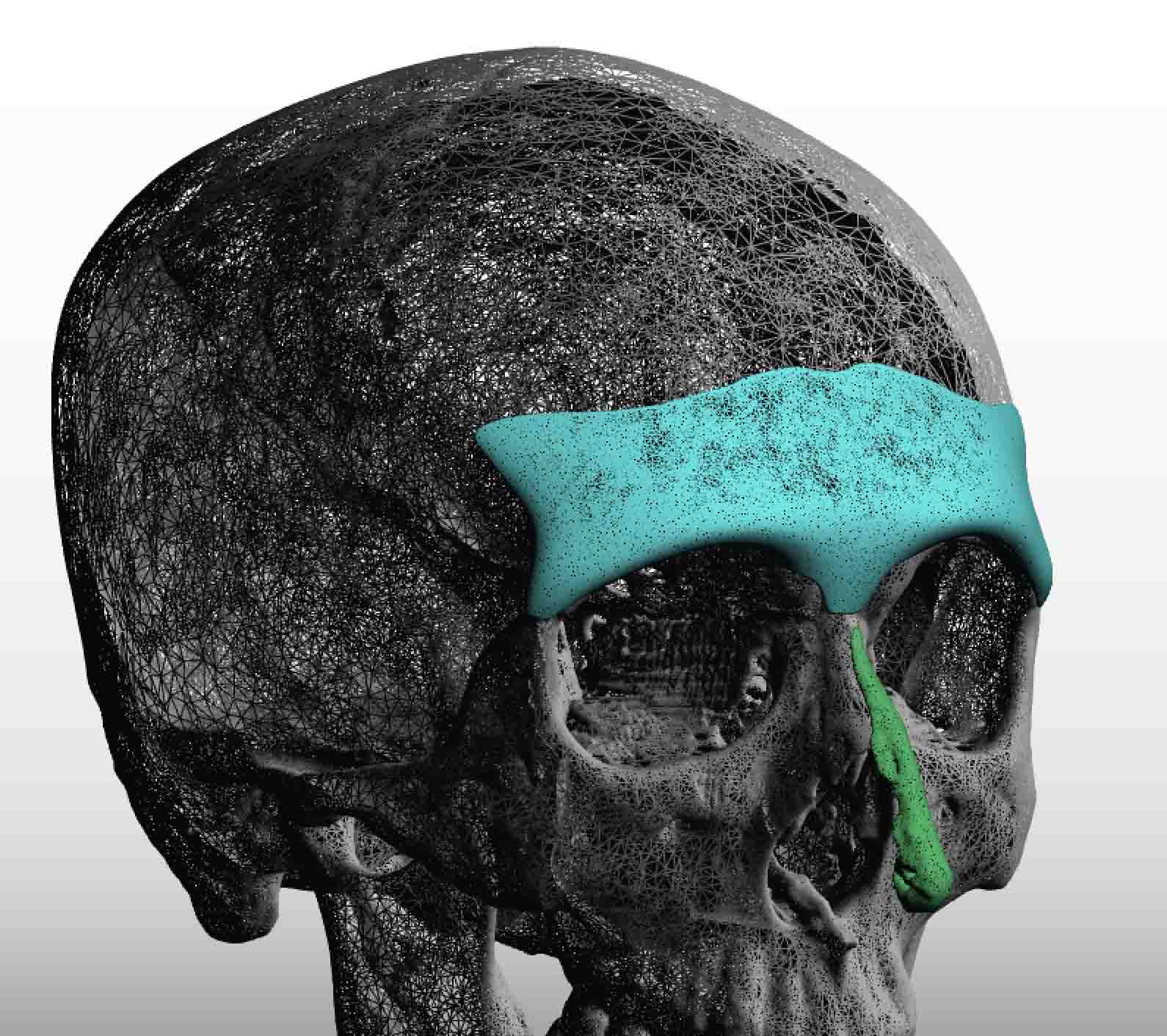
Brow bone implants (also called supraorbital ridge implants) are solid facial implants used to increase projection and definition of the brow ridge. They are most commonly performed for:
- Facial masculinization
- Enhancing a flat or recessed brow
- Balancing forehead–nose proportions
- Reconstructive contour correction
What They Do
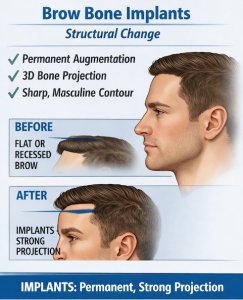 Brow bone implants increase:
- Forward projection of the supraorbital rim
- Lateral brow fullness (outer third of the brow)
- Overall upper facial strength and definition
They do not raise the eyebrows (that’s a brow lift) and they do not change forehead height. They MAY lower the eyebrows based on the implant design.
Implant Materials
Most commonly:
- Solid silicone (custom-carved or preformed)
- PEEK (custom 3D-designed)
Custom 3D-designed implants (from CT scan data) provide the most precise contour and symmetry.
Surgical Approach
Typically performed through:
- A limited scalp incision behind the frontal hairline
- Occasionally through an existing forehead incision
The implant is placed directly over the brow bone and secured. Surgery is usually outpatient.
Recovery
- Swelling and bruising: 2–3 weeks
- Sutures: dissolvable
- Return to work: 10–14 days (depending on swelling tolerance)
- Final definition: 6–12 weeks
Temporary forehead/scalp numbness is common and gradually improves.
Risks
- Infection
- Implant shifting (rare when properly secured)
- Asymmetry
- Prolonged numbness
- Visibility/palpability if overly large
When custom-designed and properly placed, complication rates are very low.
Good Candidates
- Men seeking stronger upper facial structure
- Patients undergoing facial masculinization
- Individuals with flat or underdeveloped brow ridges
- Those wanting permanent structural augmentation
Case Example
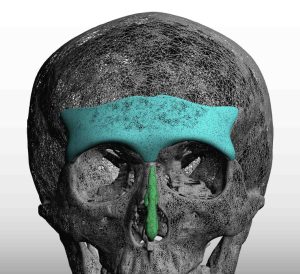
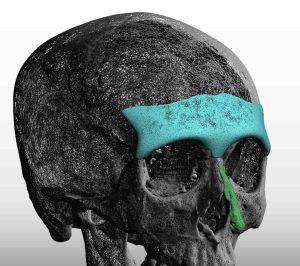 This male desired a strong brow bone augmentation. He had a prior nasal implant augmentation. A custom brow bone implant was designed to add projection to the supraorbital ridge from one fronto-zygomatic suture line to the other.
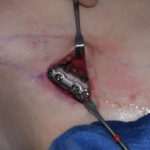
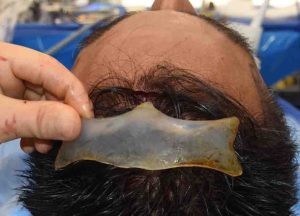 The custom brow implant was placed through a small incision behind the frontal hairline aided by endoscopic visualization.
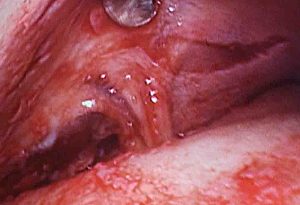
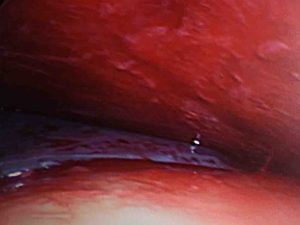 The whole purpose of endoscopic visualization is two fold: isolate and protect the supraorbital nerve and ensure that the tail of the implant successfully passes down along the lateral orbital rim to the suture line.
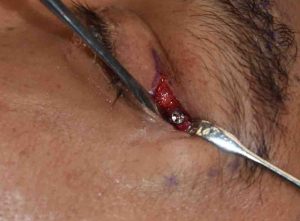 One important step to ensure the tail of the implant is properly positioned is with small upper eyelid incisions. This also allows for the placement of small screw fixation.
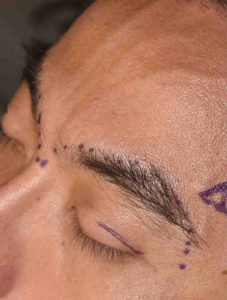
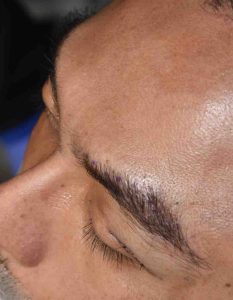
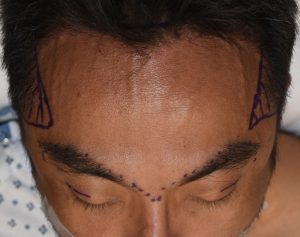
 The immediate effects of the implant showed increased
horizontal projection of the brow bones and a slightly lower eyebrow position.
Discussion
Because the brow bone area is not big, unlike the jawline for
example, injectable filler and fat techniques are another common
augmentation method.
Here’s a clear, side-by-side comparison of brow bone implants vs. brow bone fillers:
1. Structural Power
Brow Bone Implants
- Create true skeletal projection
- Can significantly increase forward brow prominence
- Best for patients with a flat or recessed supraorbital ridge
- Permanent structural change
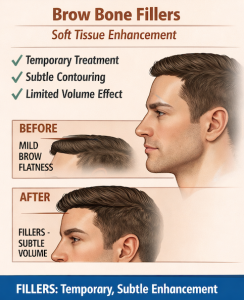 Brow Bone Fillers
- Provide soft tissue camouflage only
- Limited ability to create strong projection
- Better for minor contour refinement
- Cannot truly build a masculine brow ridge if meaningful projection is desired, implants are far more effective.
2. Longevity
Implants
- Permanent (unless removed)
- No maintenance required
Fillers
- Temporary (typically 9–18 months depending on product)
- Requires repeat treatments
- Cost accumulates over time
3. Degree of Change Possible
Implants
- Can increase projection 3–8+ mm
- Can widen the brow laterally
- Custom shaping possible with 3D CT design
- More precise symmetry control
Fillers
- Usually limited to subtle 1–3 mm contouring
- Large volumes increase risk
- Hard to control exact bony definition
4. Risk Profile
Implants
- Surgical procedure
- Swelling 2–3 weeks
- Small risk of infection or implant malposition
- Temporary scalp numbness common
Fillers
- Office procedure
- Minimal downtime
- Higher vascular risk in this region (supraorbital/supratrochlear arteries)
- Risk of vascular occlusion and vision complications (rare but serious)
?? The brow/forehead region is considered a higher-risk filler area due to vascular anatomy.
5. Aesthetic Outcome
Implants
- Sharper, stronger, more angular contour
- Better for facial masculinization
- Creates a true shadowing effect over the eyes
Fillers
- Softer look
- Can smooth mild irregularities
- Often insufficient for strong masculine definition
6. Cost Consideration (Long-Term)
- Implants = higher upfront cost, one-time procedure
- Fillers = lower per session cost, but cumulative expense over years
Over 5–7 years, fillers often exceed the cost of surgery.
? When Each Makes Sense
Fillers may be appropriate if:
- You want to “test drive” projection
- You need minor contour refinement
- You prefer non-surgical treatment
- You want temporary change
Implants are better if:
- You want significant brow projection
- You want permanent change
- You are pursuing facial masculinization
- Your brow ridge is structurally flat
? The Key Takeaway
Fillers can enhance soft tissue.
Implants change the underlying bone framework.
They are not equivalent treatments — they serve different types of brow bone augmentation needs.
Dr. Barry Eppley
Plastic Surgeon