
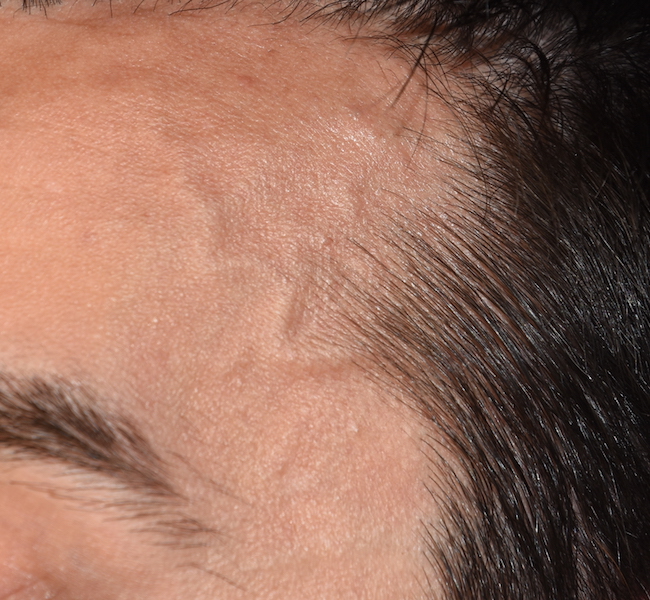
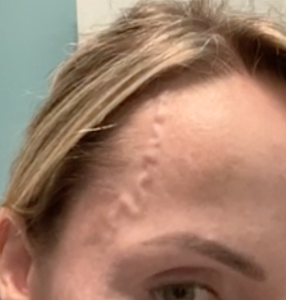
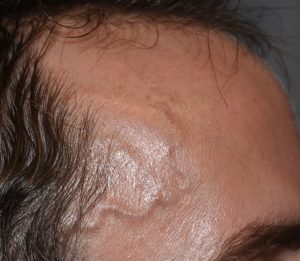
 The superficial temporal artery (STA) is characteristically serpiginous (tortuous or wavy) for several functional and anatomical reasons related to the mobility of the scalp and temporalis region. The tortuosity is not random—it provides mechanical and physiological advantages.
1. Accommodation for Skin and Scalp Movement
The STA runs within the loose connective tissue layer of the scalp, which is highly mobile over the skull. A straight artery would be more prone to stretching or tearing during:
- Jaw movement
- Facial expression
- Scalp movement
- Head rotation
The serpentine course acts like a reserve length, allowing the artery to straighten slightly when tension is applied without compromising blood flow.
2. Protection Against Compression
 Because the STA lies superficially over the temporalis fascia, it is exposed to:
- External pressure
- Muscle movement
- Changes in scalp tension
A tortuous path allows the vessel to absorb mechanical forces and reduce the risk of luminal collapse or kinking.
3. Growth Adaptation
During development, the scalp expands significantly relative to the skull, especially in childhood. Arteries supplying expanding soft tissues often become tortuous as length increases relative to fixed bony distances.
4. Hemodynamic Stability
 Tortuosity can also help dampen pulsatile flow and pressure, protecting distal capillary beds in the scalp.
5. Similar Pattern in Other Mobile Regions
You see this same principle in other arteries supplying mobile tissues:
- Facial artery – highly tortuous for facial expression
- Splenic artery – tortuous due to organ mobility
- Uterine artery – tortuous for uterine expansion
Clinical Relevance
The serpiginous course is important for:
- STA biopsy (giant cell arteritis)
- Temporal region filler or facelift procedures
- Cosmetic temporal artery ligations
The tortuosity makes the vessel easier to palpate and identify, but also explains why it can shift position slightly under the skin.
In short:
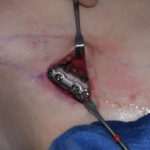
The superficial temporal artery is serpiginous primarily to provide slack for scalp mobility and protect the vesel from stretch or compression. This slack of the artery is a useful feature in cosmetic superficial temporal artery ligations because of the importance of extraction of the artery out of the incision prior to ligations.
Dr. Barry Eppley
Plastic Surgeon