
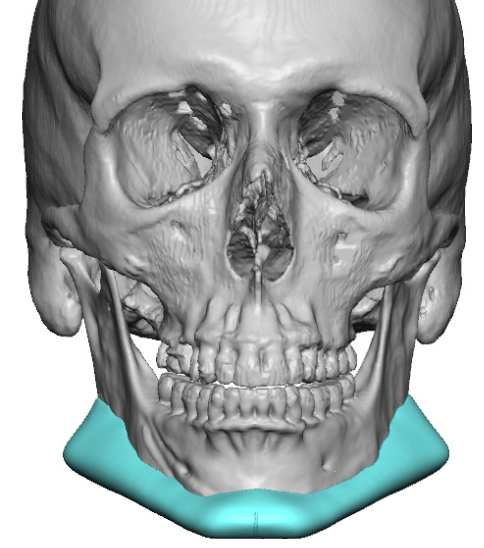
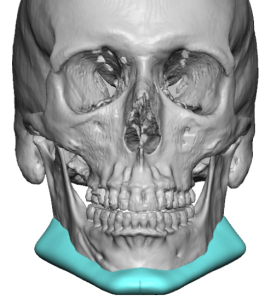
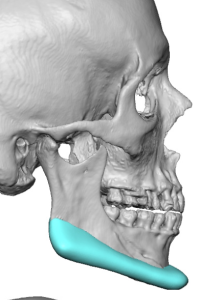
 Custom jawline implants are used in aesthetic facial surgery when the goal is to reshape the entire mandibular contour in ways that stock implants cannot reliably achieve. The main indication is when the surgeon wants precise 3-D control of jawline width, projection, asymmetry correction, and contour continuity.
In mu extensive experience I can identify nine (9) common aesthetic indications for their use.
1. Global Weak Jawline
Primary indication
Patients with:
- narrow mandibular width
- weak chin projection
- poorly defined or high jaw angles
Clinical signs:
- jawline fades into neck
- angle poorly defined in oblique view
- lower face appears narrow relative to cheekbones
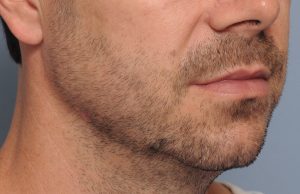
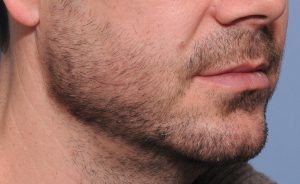 Goal:
Goal:
- increase posterior width
- sharpen mandibular angle
- increase chin projection/length
- create a continuous inferior border
Custom implants work well here because they allow a wraparound augmentation from angle –body – chin. In essence taking a small jaw and making it bigger and more defined overall.
2. Masculinization of the Lower Face
Common indication in aesthetic male facial surgery.
Desired features:
- wider gonial angle
- straighter mandibular border
- stronger posterior frame
- more square chin
- a more angular lower jaw shape
Typical augmentations:
- angle width increase
- inferior angle drop]
- body straightening
- square chin shape
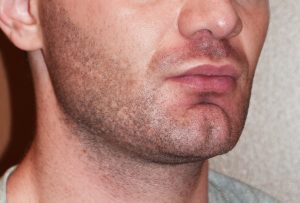
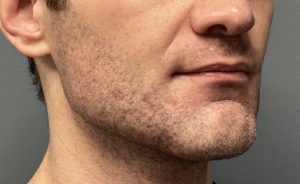 Custom implants provide controlled angular shapes at the corners (chin and jaw angles) for those males seeking a strong jaw augmenation effect.
3. Jawline Asymmetry
Many patients have mandibular asymmetry due to:
- developmental asymmetry
- prior jaw osteotomies
- previous V line jaw reduction
Manifestations:
- jaw angle shapes differences
- jawline tilt/occlusal cant
- uneven inferior border
- one side of chin long/shorter than the other
Typical augmentation effects::
- different jaw angle width and heights between the two sides
- differential inferior border leveling
- asymmetric body contour correction
- Midline of chin re-established with correction of inferior border tilt
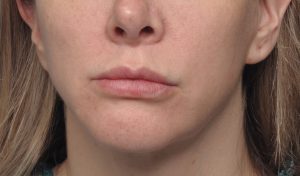
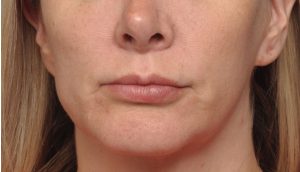 Stock implants cannot come close to accurately making these corrections
4. Revision of Prior Jaw Implants
Patients with unsatisfactory results from standard chin and jaw angle implants.
Common issues:
- chin and jaw angle implant placement asymmetries
- Inadequate/excessive implant projections
- discontinuous unconnected jawline appearance
Custom implants are used to:
- redesign the entire jawline contour
- correct asymmetry
- smooth and connected augmentation effects
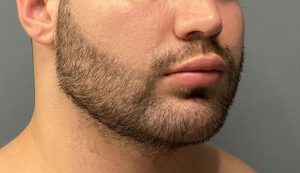
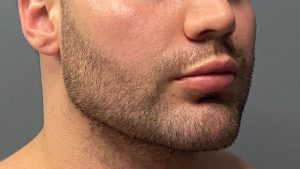 A custom jawline implant takes what the standard implants achived and takes the result to an even better aesthetic level.
5. Aging Jawline Rejuvenation
With aging the mandible can appear:
- disappearing jawline
- unsupported soft tissue sagging
- Minimal visible separation between face and the neck
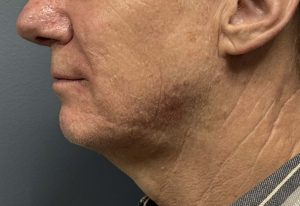
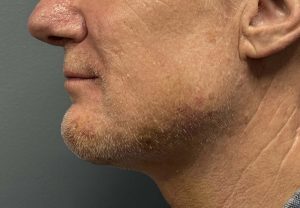 Custom implants can rejuvenate the lower face by:
- Creating a more defined face/neck separation by a more visible inferior mandibular border
- Improved cervicomental angle
- lengthening of the jawline
- Differing degrees of a necklift effect
In some patients the implant may obviate the need for a lower face/necklift. In others it will delay the need for one and/or reduce the magnitude of the necklift needed later.
6. V Line Reversal
Some V line jaw reduction patients will experience regret and desire a subtotal or complete reversal. band
Common issues:
- jaw now too small compared to the upper face
- complete loss of jaw angles
- chin too narrow
- appearance of soft tissue redundancies, jowling and neck sagging
Custom implants are used to:
- restore the lost jawline contours
- correct asymmetry
- re-establish soft tissue support
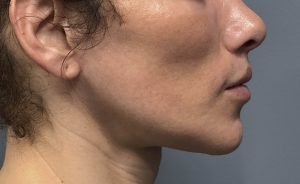
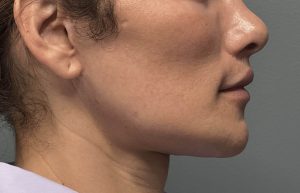 Only an implant can create inferior border augmentation
7. Jaw Augmentation after Double Jaw Surgery
While double jaw surgery has many benefits it is not a 3D jaw augmentation procedure. Some patients seek to optimize their jaw shape secondarily.
Common issues:
- inadequate jaw angle width/asymmetry
- inferior border irregularities
- residuak chin projection/shaope defieiency
- lack of adequate vertical jaw length
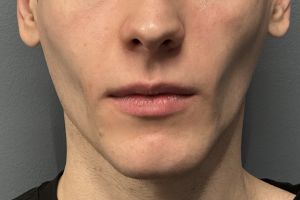
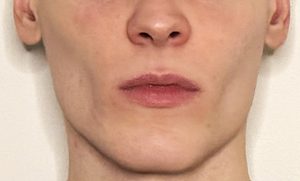 Custom implants are used to:
- restore/augment jaw contours
- correct asymmetries
- masculinize the jawline
8. Steep Mandibular Plane Angle
The paiient with a short but long chin and high jaw angles needs an L shaped derotation for theier jaw augmentation needs.
Goals include:
- increased chin projection with vertical chin shortening
- vertical jaw angle lengthening with widening
- derotation of the entire jawline
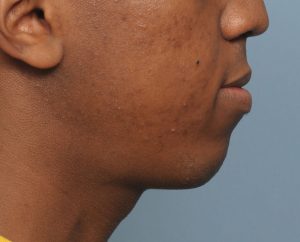
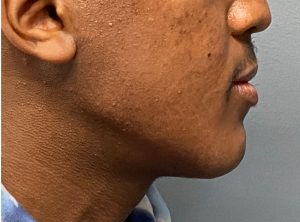 A custom jawline implant can either provide the complete derotation of the entire jawline or, if significant vertical chjn shortening is needed with the chin advancemcent, it can be combined with a bony genioplasty.
9. Vertically Short Face
When the lower third of the face is disproportionately small this indicates a vertically short chin/jawline. While in some cases a vertically lengthening genioipalsty may suffice when the entire jawline needs lemgthened only a custom implant can reliably do so.
Goals include:
- vertical lengthening of the lower third of the face
- longer chin
- lower jawline
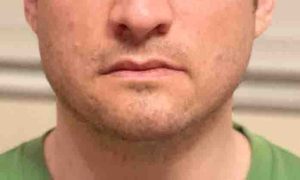
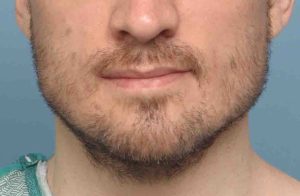 Lengthening of the jawline behind the chin can only be done by implant expansion .
When custom implants are usually preferred over stock implants
Custom implants are typically chosen when:
• augmentation involves multiple mandibular regions
• asymmetry correction is required
• surgeon wants precise 3-D contour control
• implant must extend from angle to chin
Stock implants are usually adequate only for limited augmentation (e.g., isolated chin or angle).
Contraindications / Poor Candidates
Situations where custom jaw implants may not be ideal:
- severe malocclusion requiring orthognathic surgery
- very thick soft tissues limiting visible change
- active infection or poor oral health
- unrealistic aesthetic expectations
Summary
Most common aesthetic indications
- Weak or narrow jawline
- Male facial masculinization
- Mandibular asymmetry
- Revision of prior implants
- Aging jawline rejuvenation
- V Line reversal
- Jaw Augnentation after Double Jaw Surgery
- Steep Mandibular Plane Angle
The major advantage of custom implants is the ability to create a single continuous mandibular contour tailored to the individual patient.
Dr. Barry Eppley
Plastic Surgeon