
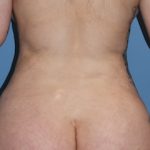
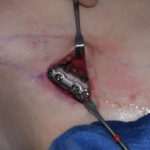

The Eppley-style jaw augmentation algorithm is more granular than typical cosmetic algorithms because it evaluates the mandible as three independent aesthetic units:
- Chin (central projection)
- Mandibular body (jawline length/straightness)
- Jaw angle (width and posterior definition)
Treatment is then selected depending on which unit is deficient and whether the deficiency is projection, width, or length.
Step 1 — Global Facial Diagnosis
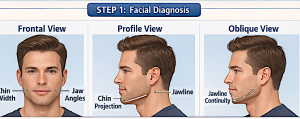 Evaluate the lower face in three views:
Frontal view
- Chin width
- Jaw angle width
- Facial symmetry
- Gonial flare
Profile view
- Chin projection
- Mandibular plane definition
- Cervicomental angle
Oblique view (most important for aesthetics)
- Jawline continuity
- Angle definition
- Posterior jaw width
Step 2 — Identify the Primary Skeletal Deficiency
Assess the lower face by anatomic and aesthetic units for skeletal deficiencies.
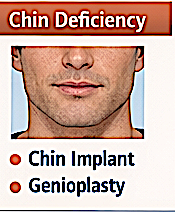 A. Isolated Chin Deficiency
Signs
- Poor pogonion projection
- Normal jaw angles
- Weak profile
Treatment
|
Severity |
Treatment |
|
Mild |
Chin filler |
|
Moderate |
Chin implant |
|
Severe |
Sliding genioplasty |
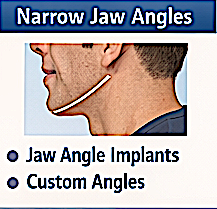 B. Narrow Jaw Angles
Signs
- Narrow lower face
- Lack of mandibular width
- Poor posterior definition
Treatment
|
Severity |
Treatment |
|
Mild |
Filler |
|
Moderate |
Jaw angle implants |
|
Severe |
Custom angle implants |
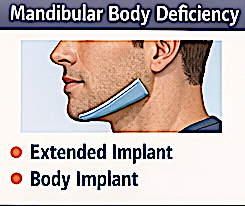 C. Mandibular Body Deficiency
Signs
- Jawline curves inward
- Weak lateral contour
- Lack of straight jawline
Treatment
|
Treatment |
|
Extended chin implant |
|
Custom mandibular body implant |
|
Jawline filler |
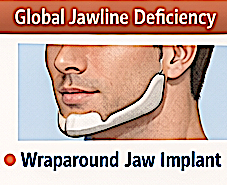 D. Global Jawline Deficiency
Signs
- Weak chin
- Narrow angles
- Poor mandibular body contour
Treatment
|
Best treatment |
|
Custom wraparound jawline implant |
This implant augments:
- chin
- mandibular body
- angles
Step 3 — Determine Dimension of Augmentation
Mandibular augmentation occurs in three planes.
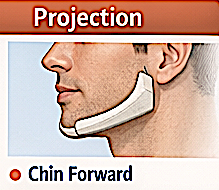 1. Projection (Anterior)
Corrects:
- retruded chin
- weak profile
Procedure
- Chin implant
- Genioplasty
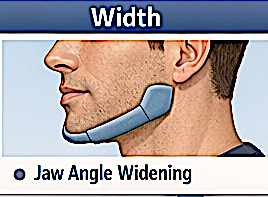 2. Width (Lateral)
Corrects:
- narrow lower face
- lack of masculinity
Procedure
- Jaw angle implants
- Custom implants
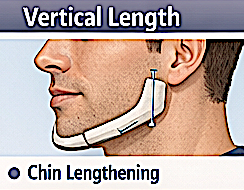 3. Vertical Length
Corrects:
- short lower third
- obtuse mandibular angle
Procedure
- Vertical lengthening genioplasty
- Custom jawline mplant
Step 4 — Determine Implant Strategy
Option 1: Standard implants
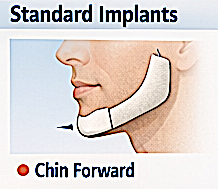 Used when deficiency is isolated.
Examples
- Chin implant
- Jaw angle implants
Option 2: Extended implants
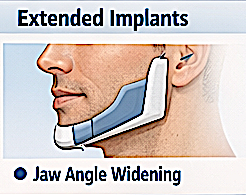 Used when deficiency involves two mandibular zones.
Example
- Extended anatomical chin implant
Option 3: Custom wraparound implant
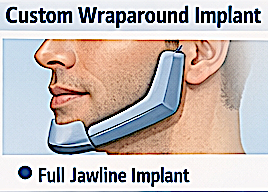 Used when three zones are deficient.
Benefits
- Smooth jawline continuity
- Corrects asymmetry
- Ideal for male jawline enhancement
Step 5 — Check for Soft Tissue Issues
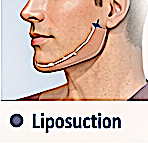
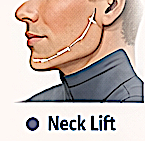 If present, combine with:
- Submental liposuction
- Submentoplasty
- Neck lift
- Buccal fat removal
- Facelift
Because skeletal augmentation alone may not optimally sharpen the jawline.
Key Concept in Eppley Jaw Design
Jawline aesthetics depend on continuity.
The goal is not just projection or width but a continuous mandibular line from chin to body to angle.
Most aesthetic failures happen when:
- chin is augmented but jaw angles are not
- chin and jaw angles are augmented independently leavng gaps between them
Interesting trend in modern facial aesthetics
The most requested procedure in male facial augmentation surgery is now:
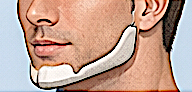 Custom wrap around jawline implants
because it produces the “model jawline” seen in actors and influencers. It is the most powerful changer of the young to middle-aged male face.
Dr. Barry Eppley
Plastic Surgeon