

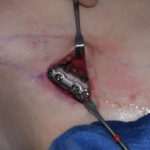
Temporalis muscle reduction surgery (sometimes called temporal muscle reduction or temporalis reduction) is a procedure used to reduce fullness at the sides of the head/temple area, usually for cosmetic facial narrowing or contouring.
How effective is it?
In properly selected patients, it can be quite effective for:
- Narrowing the convex side of head shape
- Reducing temporal bulging during clenching
- Creating a slimmer head shape
- Improving symmetry if one temporalis muscle is enlarged
- Reducing/curing temporal-based migraine headaches
The effectiveness depends heavily on:
- Why the temporal area looks wide
- Enlarged/thick muscle ? surgery can work well
- Bone prominence ? muscle reduction alone may not help much
- A CT scan can differentiate muscle vs bone and is often done in the evaluation process
- How much reduction is performed
-
- Conservative reduction gives subtle improvement
- Aggressive reduction increases contour change but also risks
- Patient anatomy
-
- Thin’/slim patients often show less visible change as their muscles are often thinner
- Thick/larger patient often show more significant changes due to thicker muscle
Typical outcomes
In my extensive experience with the surgery:
- Visible narrowing after the major swelling resolves which appears at 10 to 14 days after surgery
- Final results take a good 3 – 4 months
- Permanent reduction for the posterior temporal muscle as it can’t regrow once it is removed
- A transposed anterior temporal muscle theoretically could be re-enlarged but that has never been yet seen
Risks and downsides
Potential complications include:
- Undercorrection
- Irregular contouring
- Hollowing or over-resection
- Asymmetry
- Temporary chewing discomfort
Non-surgical alternatives
- Botox to the temporalis muscle
- Temporary but reversible
- Good diagnostic trial before surgery
- Often effective for mild/moderate hypertrophy
Botox is commonly used first to see whether any amount of muscle volume reduction is seen aesthetically favorable before committing to permanent surgery.
Overall
- Effective for true temporalis hypertrophy: yes, often significantly
- Best candidates: younger patients with muscle enlargement and good skin quality
- Main concern: avoiding temporal hollowing and unnatural contours
Case Example
This young male desired a reduction on the width of his head which he felt ewas largely due too the muscle. The greatest width or convexity was in the area above his ears. It did reduce in width by wide mouth opening.
Under anesthesia the posterior temporal muscle was removed through postauriculae incisions.
When evaluated three months after the surgery the reduction in his head width could be fully appreciated.
Dr. Barry Eppley
Plastic Surgeon