
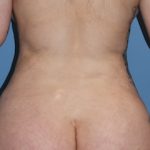
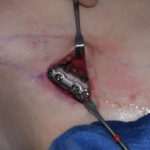
Evaluation of lower third of the face deficiencies and the appropriate treatment for them can be assessed both from an anatomic unit and dimensional standpoint. The evaluation process begins at the chin and works its way back to the jaw angles.
Step 1 — Evaluate Chin Projection
Assess the pogonion position relative to ideal profile lines (e.g., facial convexity or aesthetic profile line).
Findings
Isolated chin deficiency
 weak chin projection
- normal mandibular width
- normal jawline contour
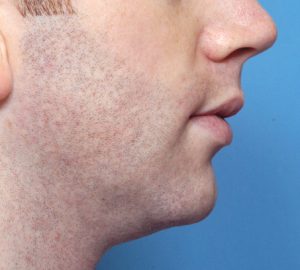 weak chin projection
Recommended procedure:
Chin implant
Purpose
• 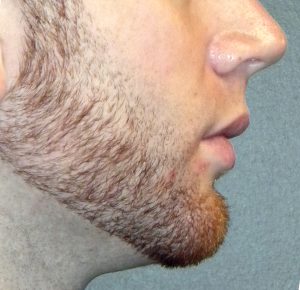 improve profile
• increase projection
• improve chin–neck angle
Step 2 — Evaluate Gonial Angle Width
Assess bigonial width vs bizygomatic width.
Findings
Posterior mandibular deficiency
- narrow gonial angles
- weak posterior jawline
- normal chin projection
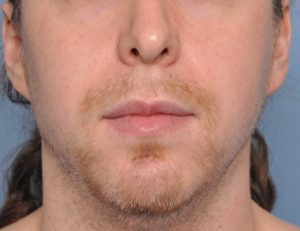 narrow gonial angles
Recommended procedure:
Mandibular angle implants
Purpose
• 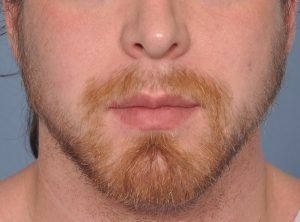 widen posterior jaw
• strengthen masculine frame
Step 3 — Evaluate Mandibular Body Contour
Look for inferior border irregularity or weakness.
Signs include:
- concave mandibular body
- soft jawline definition
- weak transition from angle to chin
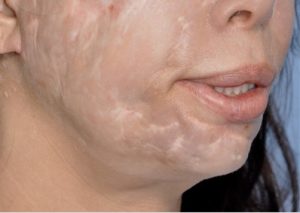 concave mandibular body
Findings
Body deficiency with chin weakness
Recommended procedure:
Extended chin implant
Purpose
• 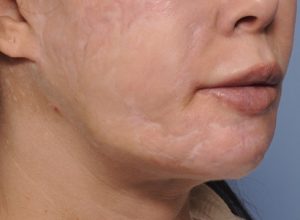 augment chin projection
• extend along mandibular body
• improve jawline continuity
Step 4 — Evaluate Jawline Continuity
Assess the entire mandibular contour from angle to chin.
Common issues:
- weak angle
- weak mandibular body
- prejowl depression
- asymmetry
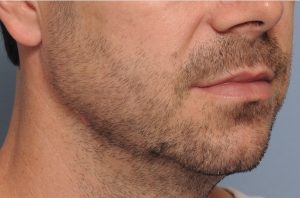 weak angle
Findings
Multi-zone deficiency
Recommended procedure:
Full wraparound custom jaw implant
Purpose
• 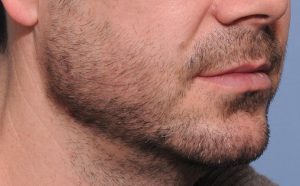 augment angle width
• straighten mandibular body
• fill prejowl depression
• integrate chin contour
Key Clinical Indicators
|
Finding |
Best Procedure |
|
Chin retrusion only |
Chin implant |
|
Narrow gonial angles |
Angle implants |
|
Chin + body weakness |
Extended chin implant |
|
Weak angle + body + prejowl |
Custom wraparound implant |
|
Jaw asymmetry |
Custom implant |
Additional Factors Influencing Choice
Facial proportions
Relationship of:
- bizygomatic width
- bigonial width
- chin projection
Soft tissue thickness
Thicker tissues may require larger skeletal augmentation.
Asymmetry
Significant asymmetry always favors custom implants.
Patient aesthetic goals
- masculinization
- feminization
- contour sharpening
- rejuvenation
Practical Surgical Insight
Most surgeons escalate treatment complexity in this ascending order:
Chin implant
Angle implants
Extended chin implant
Custom wraparound jaw implant
Custom implants are typically chosen when multiple mandibular zones require augmentation simultaneously.
This lower facial augmentation algorithm is largely obvious and very straightforward. However if your surgeon does not/has not ever performed jaw angle implants then they will never come up with treatment recommendations that go beyond that of chin augmentation.
Dr. Barry Eppley
Plastic Surgeon