Top Articles

Blog

Shaving of Ribcage Protrusions – Concept and Case Example

What Does Rib Shaving Mean? Shaving of ribcage protrusions is a surgical contouring procedure in which a prominent portion of a rib or ribs is reduced through excision of its outer convexity through bone or cartilage removal rather than removing the entire rib segment. Typically this is done for protrusions of the costal or cartilage-comprised Read More…

Aesthetic Hip Augmentation – Surgical Placement of Hip Implants

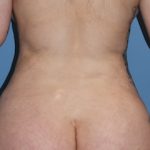
The surgical placement of aesthetic hip implants is dictated by the soft tissue anatomy between the iliac crest and the greater trochanter of the femur. While it would be ideal to place the implant in a subfascial or submuscular plane over the lateral pelvis where the implant is protected and edges would have no risk Read More…

Aesthetic Hip Implants – Design Considerations

For custom aesthetic hip implants, the dimensions are driven more by the patient’s pelvic width, soft-tissue thickness, and desired silhouette than by a standard size. Typical design ranges I have used are:   Parameter Typical Range Vertical length 14–22 cm Maximum width 10–14 cm Maximum projection 1.5 – 4.0 cm Edge thickness Feathered to near Read More…

Aesthetic Hip Augmentation – Basic Implant Concepts

Aesthetic hip implants are usually custom solid silicone designs because there are no widely available true “standard” hip implants, and the hip has a complex, curved, vertically oriented contour. Key Hip Implant Augmentation Design Concepts Intended to fill  the hip dip zone between the iliac crest and the greater trochanter of the femur. Avoid going Read More…

Design vs Placement Impact on Custom Facial Implaht Outcomes

Which is more important in custom facial implant outcomes..design vs surgical placement? For custom facial implants, if I had to rank them, I would say: 1. Design (slightly more important) 2. Surgical placement (very close second) The reason is that a perfectly placed implant cannot create an outcome that wasn’t built into the design. Placement Read More…

Essentials in Custom Forehead Implant Designs

The key elements in a custom forehead implant design can be divided into aesthetic goals, anatomical constraints, and implant engineering considerations. 1. Forehead Shape Goals   The first step is defining exactly what forehead change is desired: Horizontal augmentation: Increasing overall forehead projection. Vertical augmentation: Increasing forehead height. Central prominence: Creating more fullness in the Read More…

The Role of The Zygomatic Arch in Custom Jawline Implant Designs

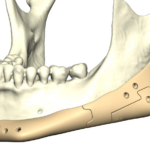
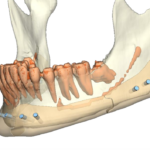
In custom jawline implant design, the zygomatic arch is not part of the implant itself, but it is a very important anatomic landmark and aesthetic reference point that influences the design. Several ways it comes into play: 1. Defines the Upper Limit of Jawline Width When creating a mandibular angle or wraparound jaw implant, one Read More…

Advancements in Vermilion-Based Lip Reshaping

Recent advancements in lip enhancement surgery include: Hyaluronic acid fillers with refined injection techniques: More emphasis on lip shape, support, and proportion rather than simply adding volume. Lip lift procedures: Particularly subnasal (“bullhorn”) lip lifts that shorten the distance between the nose and upper lip, increasing upper tooth show and lip definition. Micro-fat grafting to Read More…

Female Large Two Stage Skull Augmentation Concept

A large two-stage skull augmentation is used when the desired increase in skull size or contour exceeds what the scalp can safely accommodate in a single operation. The goal is to create enough scalp tissue first, then place a much larger custom implant in a second surgery. Stage 1: Scalp Expansion A scalp tissue expander Read More…

Skull Shape Guidelines for Aesthetic Augmentation Implant Designs

For overall cranial augmentation performed purely for aesthetic enhancement, there is surprisingly little scientific literature defining an “ideal” skull shape compared to the extensive literature on facial aesthetics. Most implant design is therefore based on artistic contouring principles combined with anthropometric measurements rather than any single formula such as the Golden Ratio. What Makes a Read More…

Top Articles