Top Articles

Blog

Custom Jawline Implants and the Mini Neck Lift Effect in Younger Patients

Jawline implants can create a “mini-neck-lift effect” in younger patients because the improvement comes from skeletal support and soft-tissue redraping, not from removing skin or tightening muscles. Younger necks still have elastic skin and relatively tight platysma, so when the underlying framework changes, the tissues can reposition themselves. Here are the main mechanisms. 1. Upward Read More…

Why Jawline Implants Affect the Neck More Than Chin Implants

Custom jawline implantw have a more profiound effect on the neck than chin implants for multiple reasons including: 1. Mandibular perimeter expansion A custom jawline implant enlarges the jaw in three regions: Chin (anterior) Mandibular body (side of the jaw) Jaw angles (posterior) This increases the total perimeter of the mandible. Result The soft tissue Read More…

Custom Jawline Implants and Their Effects On The Neck

A custom jawline implant can have a noticeable effect on a sagging neck, but the effect depends heavily on the cause of the neck laxity (skin, fat, muscle, or skeletal support). Here’s how it works anatomically and aesthetically. 1. Structural effect: expanding the jawline Custom jawline implants augment the inferior border of the mandible (chin Read More…

Custom Occipital-Parietal Temporal Skull Implant Overlay Case Example

A custom skull implant overlay (sometimes called a “topper implant” or stacked skull implant) is a secondary implant designed to sit on top of an existing skull implant to increase projection or refine contour without replacing the original implant.  Concept The original implant acts as the base implant that establishes the footprint on the skull. A secondary overlay implant is designed to fit precisely over that base implant within the Read More…

Love Band Surgery (Aeygo-Sal Surgery) – Tunnel Graft Technique

Love band surgery (also called Aegyo-sal surgery) is a cosmetic procedure that creates or enhances the small puffy roll just under the lower eyelashes. This feature makes the eyes What the “love band” is It’s the natural fullness directly under the lower eyelid, right beneath the lash line. It’s common in children and young people Read More…

Design Patterns in Vertical L:engthening Custom infraorbital-Malar Implants

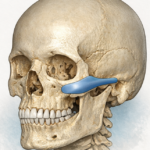
In custom infraorbital–malar (IOM) implant design, vertical infraorbital rim lengthening can be conceptualized in three different design patterns based on how aggressively the orbital–malar relationship is altered. These patterns are useful during planning because they correspond to different anatomical problems and aesthetic goals. 1. Subtle Vertical Rim Lengthening (Contour enhancement pattern) Concept A small inferior Read More…

The Role of Vertical Lengthening in Custom Infraorbital-Malar Implants

Vertical infraorbital rim lengthening is one of the most important—but often under-appreciated—design variables in custom infraorbital-malar (IOM) implants. Its value lies in correcting the three-dimensional skeletal deficiency of the upper midface, not just adding projection. Below is a structured explanation of why it matters biomechanically and aesthetically. 1. What “vertical infraorbital rim lengthening” actually means Read More…

Posterior Webbed Neck Correction Surgery Case Example

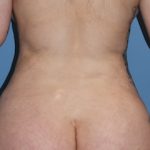
Posterior webbed neck correction is a posterior midline excisional technique used to improve the contour of a webbed neck. It is an indirect surgical approach that emphasizes scar concealment. Rather than directly excising or rearranging the lateral neck webs—which produces visible scars along the sides of the neck—the posterior approach moves the webs inward through Read More…

Tertiary Custom Skull Implant Overlay Case Example

Placing a custom skull implant overlay on top of an existing skull implant is possible — but it requires careful analysis and is not a routine situation. The approach depends heavily on what the first implant is, how it was placed, and why additional augmentation is needed. Here is a structured breakdown: 1. When Would Read More…

Quantitative Modeling of Midface Projection-to–Soft Tissue Response: Predicting Lid–Cheek and Midface Surface Change From Skeletal Augmentation

Skeletal augmentation of the infraorbital rim, anterior maxilla, and malar region produces a nonlinear, region-specific soft tissue response. For surgical planning—especially with custom infraorbital–maxillary or “midface mask” implants—quantitative modeling helps answer a practical question: How many millimeters of surface change (soft tissue forward movement) will occur for each millimeter of bony/implant projection? A workable, clinically Read More…

Top Articles