Top Articles

Design Patterns in Vertical L:engthening Custom infraorbital-Malar Implants

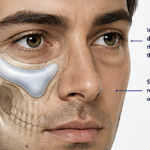
In custom infraorbital–malar (IOM) implant design, vertical infraorbital rim lengthening can be conceptualized in three different design patterns based on how aggressively the orbital–malar relationship is altered. These patterns are useful during planning because they correspond to different anatomical problems and aesthetic goals. 1. Subtle Vertical Rim Lengthening (Contour enhancement pattern) Concept A small inferior Read More…

The Role of Vertical Lengthening in Custom Infraorbital-Malar Implants

Vertical infraorbital rim lengthening is one of the most important—but often under-appreciated—design variables in custom infraorbital-malar (IOM) implants. Its value lies in correcting the three-dimensional skeletal deficiency of the upper midface, not just adding projection. Below is a structured explanation of why it matters biomechanically and aesthetically. 1. What “vertical infraorbital rim lengthening” actually means Read More…

Quantitative Modeling of Midface Projection-to–Soft Tissue Response: Predicting Lid–Cheek and Midface Surface Change From Skeletal Augmentation

Skeletal augmentation of the infraorbital rim, anterior maxilla, and malar region produces a nonlinear, region-specific soft tissue response. For surgical planning—especially with custom infraorbital–maxillary or “midface mask” implants—quantitative modeling helps answer a practical question: How many millimeters of surface change (soft tissue forward movement) will occur for each millimeter of bony/implant projection? A workable, clinically Read More…

Implant vs Bony Repositioning for Jaw Asymmetry – An Assessment Guide

Are implants or jaw surgery better for jaw asymmetry? This is the most important decision point in jaw asymmetry treatment. The choice between a custom wrap-around implant and orthognathic (double jaw) surgery depends entirely on what is actually asymmetric: Bone shape? Bone position? Bite? Entire jaw rotation? Or just contour deficiency? Below is a structured Read More…

Custom Wrap-Around Jawline Implant for Jaw Asymmetry Case Example

A custom wrap-around jawline implant is one of the most effective surgical options for correcting jaw asymmetry, particularly when the asymmetry involves: Uneven mandibular angles One side of the jaw that is flatter or smaller Chin deviation with posterior jaw deficiency Hemifacial skeletal underdevelopment Imbalance from prior surgery What “Wrap-Around” Means A wrap-around implant is Read More…

Female Custom Fronto-Temporal Head Widening Implants Case Example

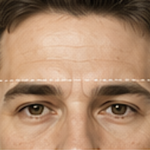
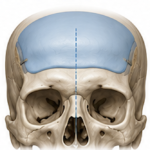
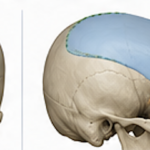
Custom Fronto-Temporal Implants are patient-specific cranial implants designed to widen the upper temporal region and the lateral forehead in one continuous contour. They address the transition zone between the forehead and the side of the head — an area that strongly influences facial width and upper facial balance. What Area They Augment Fronto-temporal implants cover: Read More…

Combined Infraorbital–Malar–Maxillary Reconstruction (The Custom “Midface Mask” Implant)

Combined infraorbital–malar–maxillary augmentation represents a comprehensive skeletal reconstruction of the central and lateral midface. Commonly referred to as a custom midface mask implant, this technique restores deficient projection across the infraorbital rim, anterior maxilla, paranasal region, and zygomatic body in a single, continuous construct. Unlike isolated infraorbital or malar implants, or even combined infraorbital-malar implant,  Read More…

Biomechanical Analysis of Midface Projection Correction – Implant-Based Augmentation vs. Orthognathic Advancement

Midface retrusion may be corrected through either skeletal augmentation (implant-based reconstruction) or skeletal repositioning (orthognathic advancement). Although both approaches can increase midfacial projection, they differ fundamentally in biomechanical mechanism, load transmission, soft tissue response, and occlusal impact. Analyzing the structural, functional, and biomechanical distinctions between these two strategies allows for good clinical decision making in Read More…

Top Articles