Top Articles

The Three Types of Infraorbital Rim Implants

The undereye area has become a focus of aesthetic attention for the management of tear troughs and hollows. Some of these occur as a result of aging and others have a more congenital origin which then becomes more apparent with aging. Treatment for aesthetic under eye issues is fundamentally about adding volume. Injectable fillers and Read More…

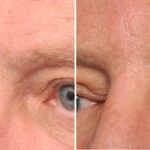
OR Snapshots – ePTFE Orbital Implants for Orbital Floor and Rim Augmentation

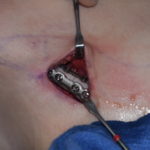
Surgery for vertical orbital dystopia always includes augmentation of the orbital floor. Most of the time the inferior orbital rim is lower as well and needs to be concurrently augmented. Various materials have been used for orbital implants from bone grafts to numerous synthetic implants. In the ‘aesthetic’ orbital dystopia patient (4mms or less of Read More…

ePTFE-Coated Silicone Nasal Implants for Augmentation Rhinoplasty

ePTFE (expanded polytetrafluoroethylene) offers a facial implant material that is very biocompatible and also induces some tissue adherence. Due to the microfibrillar nature of its surface, ePTFE has some surface porosity where fibroblasts can attach and induce collagen attachments. ePTFE, however, does not come in any solid preformed facial implants and they have to be Read More…

The Different Types of ePTFE Facial Implants

There have been a wide variety of materials used for facial implants over the past fifty years. But as today there are really only three basic biomaterials that have proven consistently effective and easily manufactured with a relatively low incidence of complications in human facial implantation use. These biomaterials are silicone, polyethylene (Medpor) and polytetrafluoroethylene. Read More…

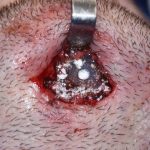
Pyriform Aperture Implant for Reduction of Excess Gingival Show

A gummy smile or excess gingival exposure is well known to be the result of vertical maxillary bony excess. Corrective methods include a maxillary impaction procedure or soft tissue lowering gummy smile procedures. Both approaches have their indications and are most commonly used in Caucasian patients. In the December 2016 issue of the Annals of Read More…

Facial Implants and Biofilms – Implications for Postoperative Infections

Synthetic implants are widely used and important for many types of facial augmentation. Without them many aesthetic facial procedures would not be possible or would be far more difficult to perform and have higher risks. The risk of infection with facial implants is acknowledged by surgeons and patients alike. Fortunately facial implant infections are very Read More…

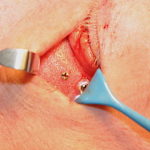
Facial Implant for Deep Pyriform Space Augmentation

The nasolabial fold is a well known facial area that deepens with age. This has resulted in it being a common target for a variety of treatments that include injectable synthetic fillers and fat as well as the placement of subcutaneous implants. Regardless of the treatment they all are directed towards pushing out the linear Read More…

Volume Comparison Between Nasal Implants vs Injectable Fillers

Augmentation of the nose is a frequent element in many rhinoplasty procedures. While the use of locally harvested cartilage grafts works in may cases, more significant augmentations of the dorsum require different volume addition techniques. The choices for major dorsal augmentation rhinoplasty for Asian and African-American patients, for examples, is either that of a nasal Read More…

The Composite Nasal Implant in Asian Rhinoplasty

In Asian rhinoplasty, one of the principle elements of its treatment is dorsal augmentation. This can be done using a silicone nasal implant or the autologous option can be done using a rib graft. Because of its ease of use and that it spares the patient a donor site, silicone nasal implants are widely used Read More…

Top Articles