
Top Articles

The Safety of Injectable Fat Grafting

Fat grafting and its liposuction harvest has become mainstream in 2015 for both aesthetic and reconstructive plastic surgery needs. While ongoing clinical studies and experience will continue to evaluate its effectiveness, there is no debating that its use has become adopted by most plastic surgeons. Several of the reasons for its popularity is that most Read More…

Technical Strategies – Fat Injections for Lower Eyelid Ectropion

  Lower eyelid retraction, known as ectropion, occurs for a variety of reasons. The most common reasons are after an elective aesthetic lower blepharoplasty and/or midface lift or after repair of an orbital floor or cheek bone fracture. The lower eyelid retracts downward due to loss of support in one or several of its layers Read More…

Dermal-Fat Grafts in Coccydynia

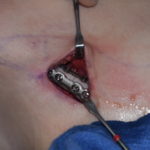
The tail bone is well known bony structure at the end of the spine. Known as the coccyx (Greek word for cuckoo), it gets its name due its beak-like appearance due to the bend in the fused vertebrae which make up its bony length. It usually is convex on the back side and concave on Read More…

Dermal-Fat Grafts For Buttock Augmentation

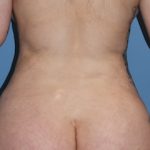
Buttock augmentation continues to grow in popularity, largely driven by the acronym BBL. The Brazilian Butt Lift is a moniker for the transfer of autologous fat into the buttocks though injection using the patient’s own fat harvested by liposuction. Besides being a natural procedure, the additional benefit of body contouring from the liposuction part of Read More…

Fat Injections in the Treatment Of Parry-Romberg Syndrome

Parry-Romberg syndrome, also known as progressive hemifacial atrophy is a very uncommon neurocutaneous disease. It is characterized by shrinkage of tissues (primarily fat although muscle bone and skin are affected as well) on one side of the face that usually follows the distribution of branches of the trigeminal nerve. It affects females more than males Read More…

Fat Injections For Scar Therapy

Fat injections, also known as autologous lipofilling, continues to expand in usage in plastic surgery. While initially perceived as just a soft tissue filler, it has become known for improving the quality of the tissues into which it is injected. The precise mechanisms as to why this happens is not known but observations and anectodal Read More…

Technical Strategies in Plastic Surgery – Fat Grafting in Migraine Surgery

Contemporary migraine surgery for the treatment of perpheral triggers involves decompression of the involved nerves. The most common involved nerves include the supraorbital, supratrochlear and the greater and lesser occipital nerves. (the zygomaticotemporal and auriculotemporal nerves are avulsed so they are excluded)  The success of nerve decompression depends on adequate release of the enveloping muscle Read More…

The Biology of Injectable Fat Grafting – How Does It Work?

Injectable autologous fat grafting has been around about as long as liposuction but has only achieved widespread clinical use and acceptance more recently. Few skeptics remain in plastic surgery as to its potential utility or in the techniques to do it. The only semi-controversy about fat grafting is in the breast because of its unknown Read More…

Top Articles