Top Articles

7 Forehead Shapes Seen on CT Scans That Guide Implant Design
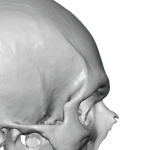
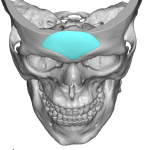
In designing custom forehead implants from CT scans  I notice that patients fall into a limited number of recurring skull shape patterns. These patterns determine implant thickness distribution, coverage, and edge design. Below are 7 common forehead bone shapes that often drive implant design. 1. Flat Forehead Description Minimal forward projection Straight or slightly sloping Read More…
The 5 Most Common Forehead Implant Requests

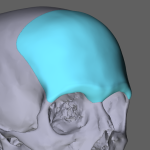
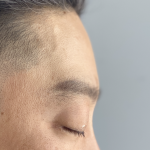
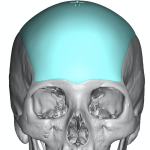
Despite the many potential custom forehead implant types that can be designed,patient requests for forehead implants tend to cluster into a few very consistent aesthetic patterns. Most patients fall into five common forehead reshaping goals. 1. Flat Forehead Correction Most common request overall in females Typical patient description “My forehead looks flat.” “My forehead profile Read More…

The Wide Diversity of Custom Forehead Implant Designs and Aesthetic Effects

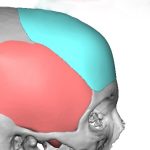
The forehead occupies one-third of the aesthetic facial units and, because of its broad featureless surface, seems like a very straightforward augmentation area. In reality, however, there are numerous shape changes that can be done for differing aesthetic effectsbased on desired changes to its height, width, projection and shape. Thus forehead augmentation is more complex Read More…

Forehead Augmentation: Comparative Analysis of Bone Cement and Custom Implant Techniques

Abstract Forehead augmentation is an established craniofacial aesthetic procedure used to alter contour, projection, and symmetry of the upper facial skeleton. Two primary structural methods are employed: intraoperatively sculpted bone cements and preoperatively designed custom implants. Although both techniques provide permanent augmentation, they differ significantly in fabrication method, precision of shape control, surgical requirements, and Read More…

Gender-Specific Design Principles in Custom Forehead Implant Augmentation

Abstract Forehead augmentation using custom-designed implants has become an increasingly refined procedure in craniofacial and aesthetic surgery. However, optimal outcomes depend on recognizing the fundamental anatomical and aesthetic differences between male and female foreheads. This article outlines the gender-specific skeletal characteristics, aesthetic objectives, and implant design principles that guide successful custom forehead augmentation. Female forehead Read More…

Female Forehead Implant Augmentation Concepts

Ideal Female Forehead Contour Side-profile: Smooth, slightly convex curvature Soft brow transition Balanced projection (no bulge) Aesthetic Concept: Curvature, softness, and continuity Augmentation Method Comparisons Fat Grafting Shallow soft-tissue fill Achieves surface refinement Bone Cement Rigid onlay over bone Achieves structural contour change Custom Implant Pre-shaped implant fixed to bone Offers precise shape creation Custom Read More…

Hydroxyapatite Forehead Augmentation Revision Case Study

Introduction Hydroxyapatite (HA) forehead augmentation is a skeletal contouring procedure that uses a bone-like material to increase projection, smooth surface irregularities, or reshape the forehead. It is most commonly performed for aesthetic contour enhancement, post-traumatic deformities, congenital asymmetries, and frontal sinus obliteration. What Is Hydroxyapatite? Hydroxyapatite is a calcium phosphate compound that closely mimics the Read More…

Male Custom Forehead Implant Case Study

Introduction Forehead implants are a surgical option to permanently reshape or augment the forehead, typically used to improve projection for flat or recessed foreheads. The concept of forehead implants may be partial or complete based on whether a brow bone augmentation effect is desired or not (forehead vs forehead-brow bone implant ) For purposes of Read More…

Combining Forehead Augmentation and Frontal Hairline Advancement: A Case Study

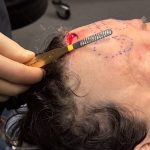
Combining Forehead Augmentation and Frontal Hairline Advancement: A Case Study The forehead is one of the most prominent thirds of the face, and its size and shape significantly influence facial aesthetics. Forehead reshaping generally involves either reduction or augmentation, which can address both the soft tissue and bony components. A common soft tissue reduction is Read More…

Top Articles