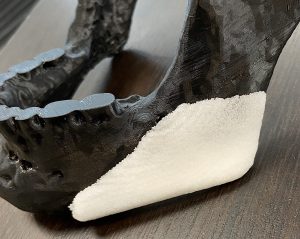
 Medpor (porous polyethylene) facial implants are designed to integrate with surrounding tissue, which is great for stability—but that same feature makes removal significantly more difficult than with smooth implants (like silicone). Here are the main challenges surgeons face:
1. Tissue Ingrowth (Primary Issue)
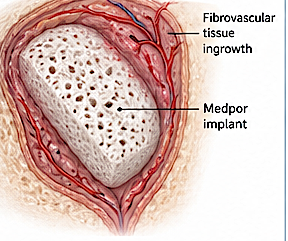
- Medpor is porous, allowing fibrovascular tissue to grow into it.
- Over time, the implant becomes firmly adherent to surrounding structures.
- Removal often requires sharp dissection, not simple extraction.
- This increases:
- Operative time
- Bleeding
- Risk of collateral damage
2. Difficulty Identifying Tissue Planes/Adherence To Surroundign Soft Tissues
- Normal anatomical planes are often obliterated or distorted.
- The implant may be bonded directly to from:
- Muscle
- Periosteum
- Soft tissue envelope
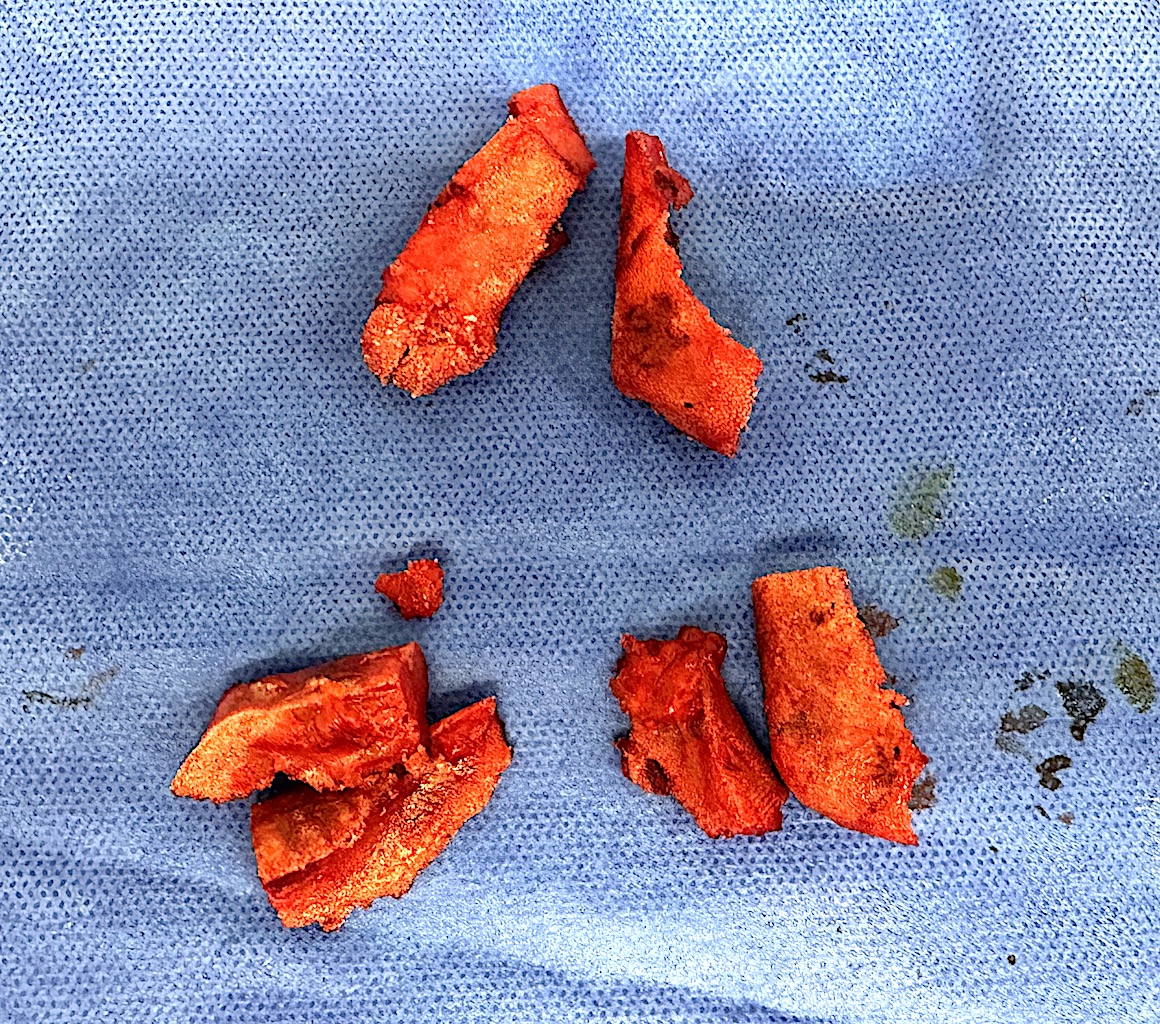
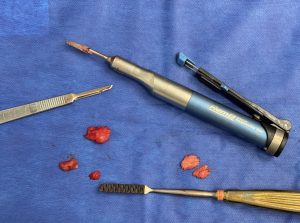
- Surgeons will often need to remove the implant in pieces with various types of instrumentation
3. Risk to Adjacent Structures
Depends on implant location:
- Infraorbital rim/cheek implants
- Risk to infraorbital nerve – numbness or dysesthesia
- Chin (mentoplasty) implants
- Mental nerve injury
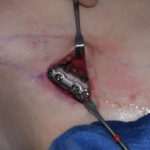
- Jaw angle implants
- Marginal mandibular nerve risk
- Orbital implants
- Extraocular muscles, globe, vision risk
4. Bone Changes
- Long-term implants can cause:
- Pressure resorption of bone
- Irregular bony surfaces
- This can make:
- Implant removal harder
- Secondary reconstruction more complex
5. Fragmentation of the Implant
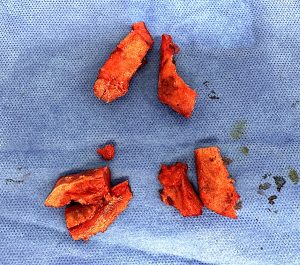
Due to the adherence of the Medpor to all surrounding tissues:
-
- Breakage of the implant during removal
- May be necessary to reove in sections
- Retained fragments if not meticulous
6. Soft Tissue Deficiency After Removal
- Once removed, you may see:
- Volume loss
- Contour deformities
- Thinning of overlying tissues
- Patients often require:
- Fat grafting
- New implant (often silicone)
- Flap or graft reconstruction in severe cases
7. Infection or Inflammation
- If removal is due to infection:
- Tissue is often scarred, inflamed, and friable
- Dissection becomes even more difficult
- Chronic low-grade inflammation can also obscure planes.
8. Scarring and Skin Changes
- Overlying soft tissue may be:
- Contracted
- Adherent
- Increases risk of:
- Skin irregularities
- Poor aesthetic outcome post-removal
9. Longer Recovery and Higher Morbidity
Compared to silicone implant removal:
- More swelling
- More bruising
- Higher risk of sensory changes
- Longer healing time
10. Unpredictable Aesthetic Outcome
- Because Medpor integrates, removal can leave:
- Asymmetry
- Surface irregularities
- Secondary procedures are common.
Bottom Line
Medpor removal is not a simple reversal procedure—it is closer to a reconstructive surgery than a straightforward implant removal due to its biologic integration.
Dr. Barry Eppley
Plastic Surgeon