
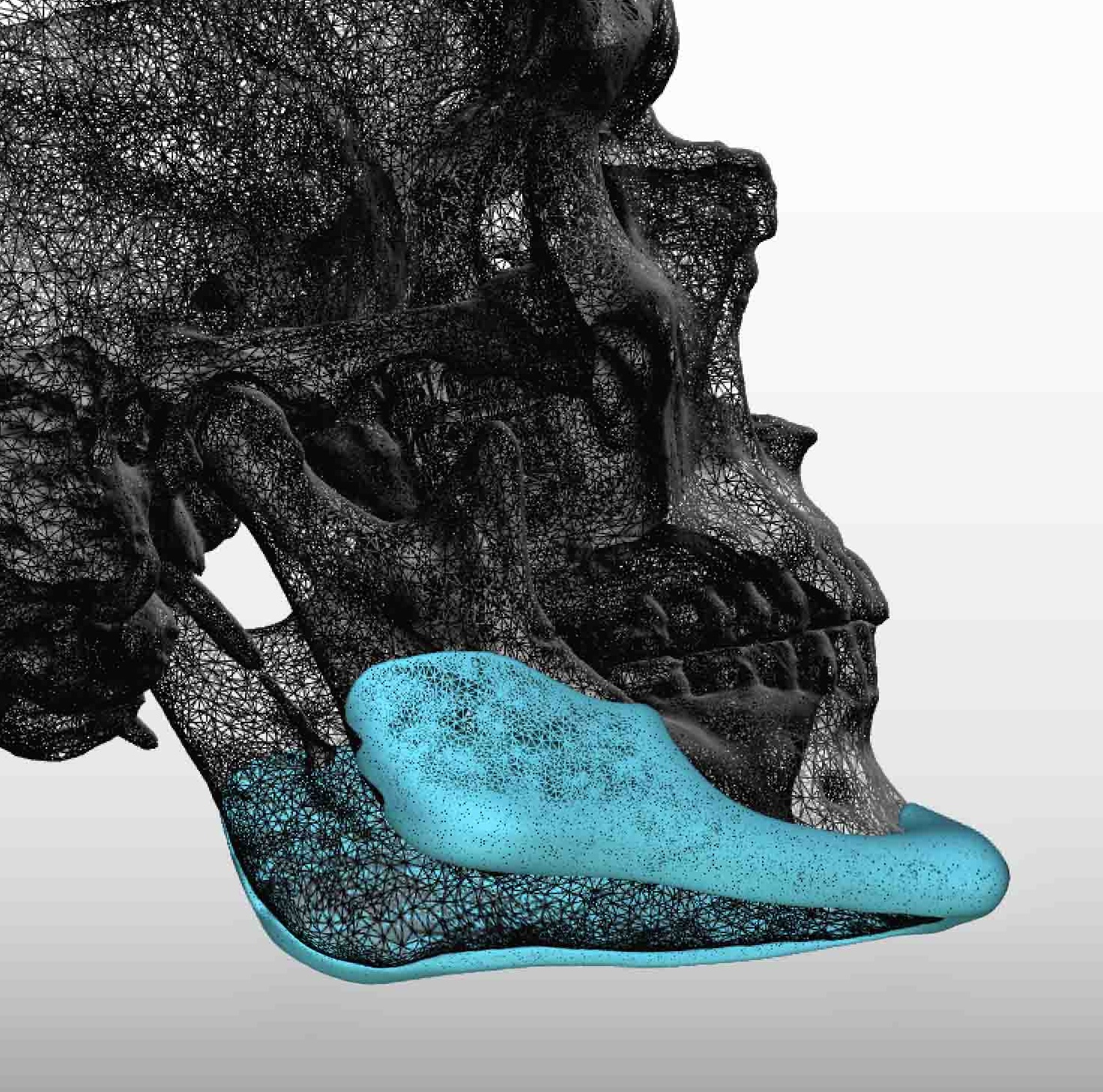
 Custom jawline implants create one the most powerful augmentation changes of the face. Their wraparound surface area coverage of the entire inferolateral border of the lower jaw can cerate a dramatic contour change between the face and the neck. But despite these potential benefits not every jawline implant patient is satisfied with and may consider removal.
Jawline Implant Removal: What Happens After?
Jawline implant removal is a relatively straightforward procedure, but the changes that occur afterward are often misunderstood. While removing the implant is simple, how the face looks afterward depends on several anatomic and time-related factors.
Does the Jawline Go Back to Normal?
Not exactly.
Once a jawline implant has been in place, the surrounding tissues adapt to it. After removal, the face does not always return precisely to its original pre-implant appearance.
What patients typically notice:
- A reduction in jawline definition
- Some degree of soft tissue relaxation
- A less angular or structured lower face
The longer the implant has been in place and the larger it was, the more likely these changes will be visible.
What Happens to the Bone?
Jawline implants rest directly on the bone and can create a mild pressure effect over time.
- A shallow indentation in the bone often develops
- This is not a health concern
- It may have some minor influence on the external contour
This is a common and expected finding, not a complication.
What Happens to the Soft Tissue?
The soft tissue envelope (skin and muscle) expands to accommodate the implant.
After removal:
- The tissue contracts, but not always completely
- Mild looseness or “deflation” can occur
- This is usually subtle but noticeable in certain lighting or angles
This is why implant removal is not always a purely “reversal” procedure.
What About Scar Tissue?
All facial implants develop a surrounding capsule (scar layer).
At the time of removal:
- The capsule may be partially or completely removed
- Or it may be left to contract naturally
This decision is made intraoperatively based on what will produce the best contour.
Recovery After Jawline Implant Removal
Recovery is typically uncomplicated:
- Swelling and tightness: 1–2 weeks
- Early shape changes: several weeks
- Final result: 6–12 weeks
There is usually minimal downtime compared to the original implant placement.
When Is Additional Treatment Needed?
In some cases, implant removal alone does not produce an optimal aesthetic outcome.
Additional options may include:
- Placement of a smaller or reshaped implant
- Fat grafting for contour smoothing
- Soft tissue tightening procedures
This is particularly relevant in patients with long-standing or larger implants.
The Key Point
Jawline implant removal is not simply a reversal procedure—it is a reductive change in facial structure.
The effects of doing so can differs amongst patients and the outcome is highly dependent on:
- Implant size
- Duration of placement
- Soft tissue characteristics
Dr. Barry Eppley
Plastic Surgeon