
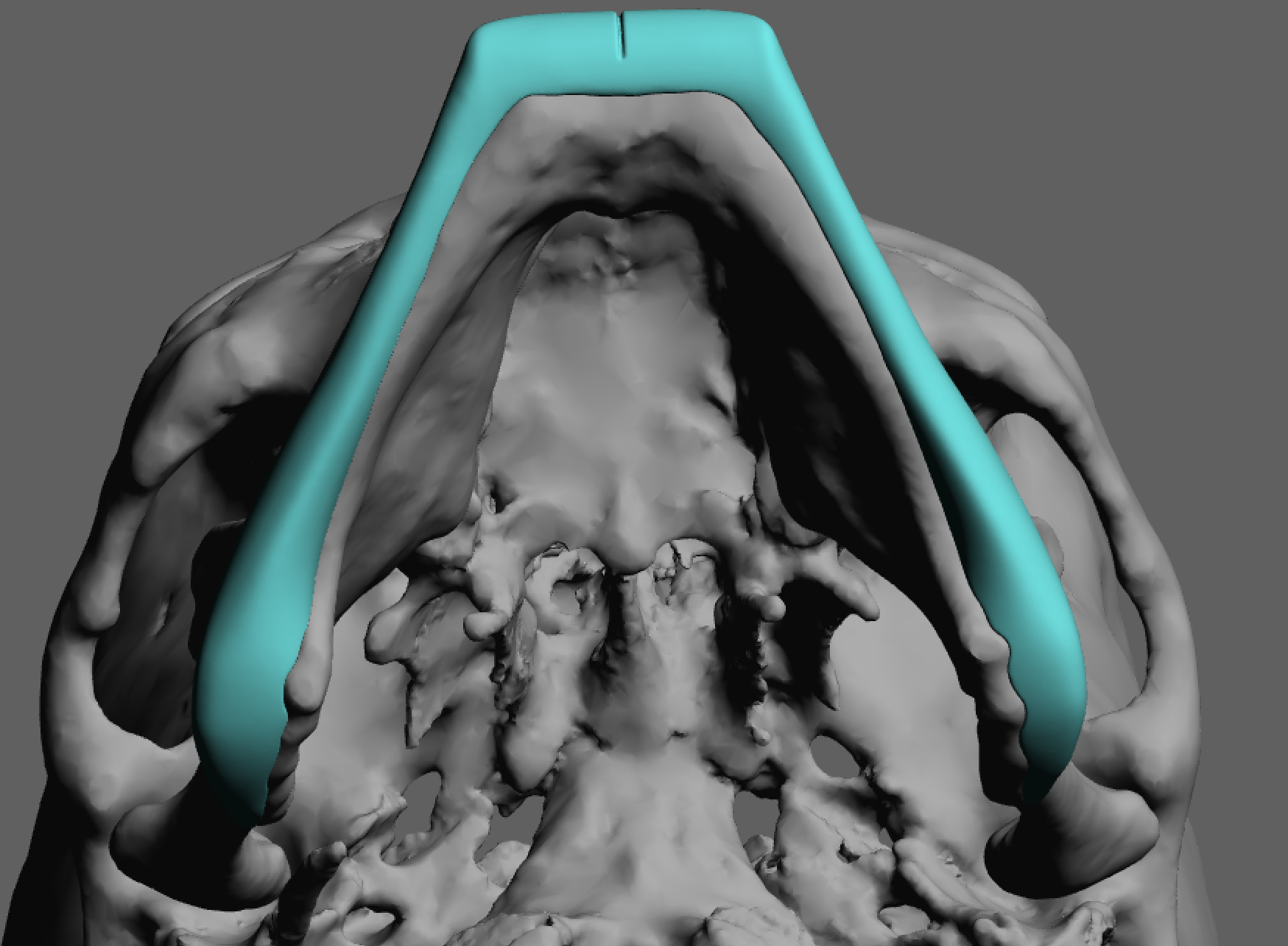
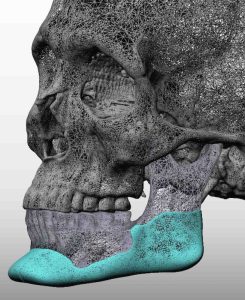
 Jawline implants can create a “mini-neck-lift effect” in younger patients because the improvement comes from skeletal support and soft-tissue redraping, not from removing skin or tightening muscles. Younger necks still have elastic skin and relatively tight platysma, so when the underlying framework changes, the tissues can reposition themselves.
Here are the main mechanisms.
1. Upward redraping of the neck skin
When a jawline implant enlarges the inferior mandibular border, the skin and soft tissues must re-conform to the new contour.
In younger patients:
- skin elasticity is high
- ligament attachments are strong
- platysma tone is good
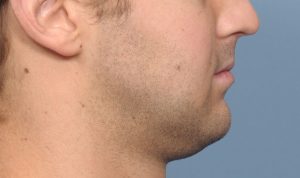
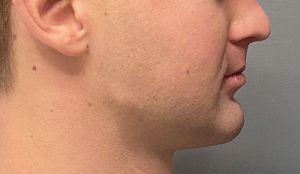 Because of this, the neck skin often redrapes upward and backward over the expanded jawline.
Result:
- mild tightening of the upper neck
- improved cervicomental angle
- less submental fullness.
2. Expansion of the mandibular “scaffold”
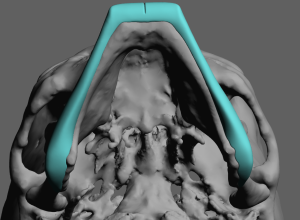 The mandible acts as a structural frame for the lower face and upper neck.
A custom jawline implant increases:
- chin projection
- mandibular body length
- jaw angle width/verticality.
This effectively expands the skeletal scaffold, which stretches the soft-tissue envelope.
Think of it like tightening fabric over a larger frame.
3. Recruitment of submental tissues
Some of the tissue that appears as neck fullness is actually located just beneath the chin.
When the chin and jawline project forward:
- the submental soft tissue is pulled anteriorly and upward
- the cervicomental angle sharpens.
This can reduce the appearance of a small early double chin even without removing fat.
4. Stronger jaw–neck separation
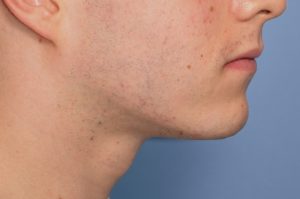
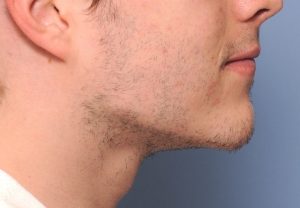 A key aesthetic feature is the shadow line along the inferior mandibular border.
Jawline implants deepen this border and increase projection.
That creates:
- a sharper facial outline
- stronger contrast between jaw and neck.
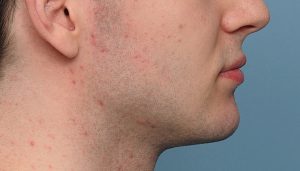
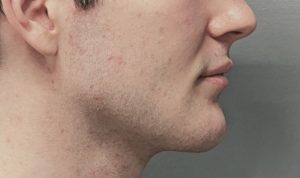 This visual separation alone can make the neck appear much tighter.
5. Posterior jaw angle support
Many young patients with a “soft neck” actually have weak jaw angles.
Weak posterior jaw structure causes:
- the neck to blend into the face
- loss of mandibular definition.
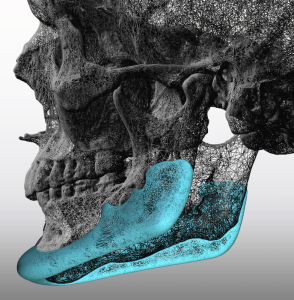 Jawline implants restore posterior mandibular support, which improves the neck contour from the side.
Why this works best in younger patients
The mini neck-lift effect relies on skin elasticity and minimal true neck aging.
Younger patients typically have:
- little loose skin
- minimal platysma banding
- limited submental fat.
So the neck contour problem is often structural rather than aging-related.
When the structure improves, the neck appearance improves automatically.
Summary
Jawline implants can mimic a mild neck lift because they:
- expand the mandibular framework
- recruit and redrape upper-neck tissues
- increase soft-tissue tension along the jawline
- sharpen the cervicomental angle
- create stronger jaw–neck separation.
All of this happens without operating on the neck itself.
Dr. Barry Eppley
Plastic Surgeon