
What Are Custom Testicle Implants?
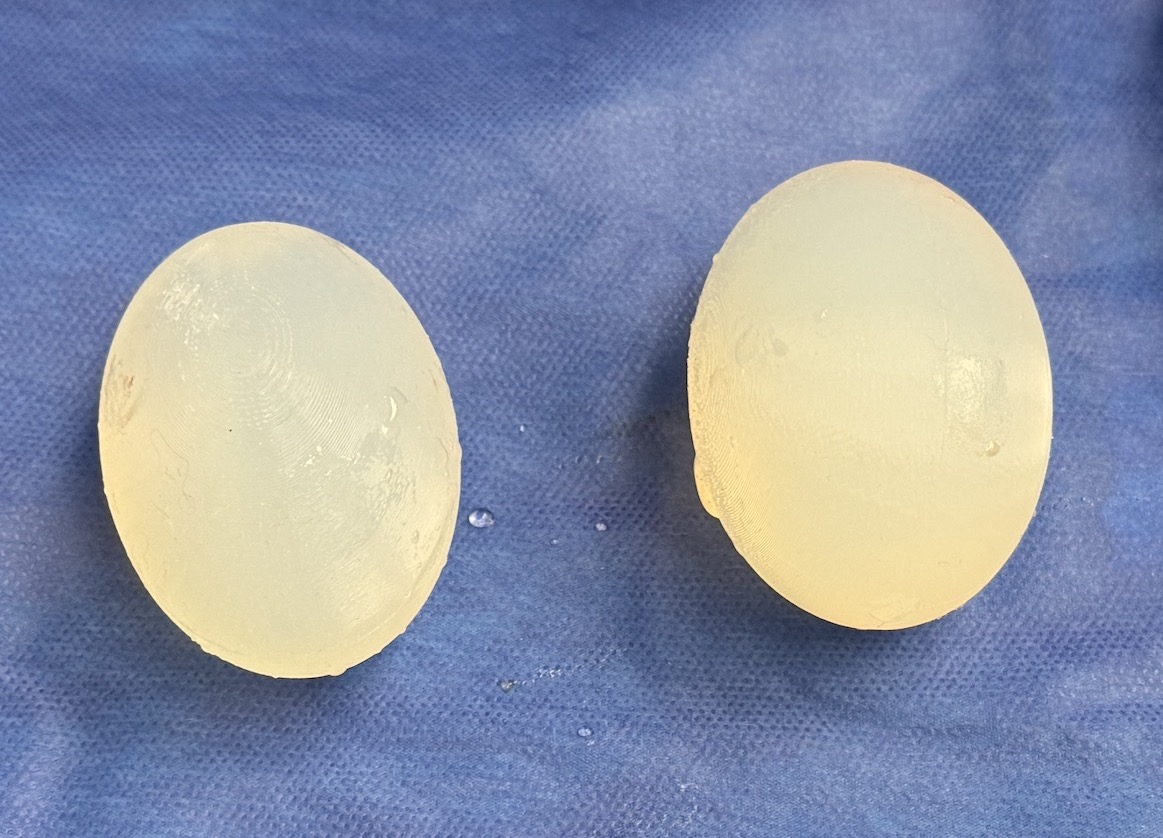
 Custom testicular implants are individually designed silicone implants created when standard, off-the-shelf testicle prostheses don’t achieve the desired shape, size, or fit. They are most commonly used for:
- Congenital absence of one or both testicles
- Testicular removal after cancer or trauma
- Gender-affirming surgery
- Revision of unsatisfactory results from standard implants
- Cosmetic enlargement or symmetry improvement
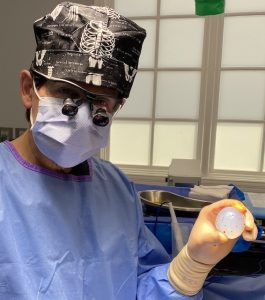 Dr. Eppley is one of the only surgeons worldwide specializing in fully custom silicone implants for the body, including the testicles.
Why Go Custom?
A custom implant is recommended when:
1. Standard sizes don’t match your anatomy
 Commercial implants come in limited sizes. Some patients need:
- Larger dimensions
- A specific shape that doesn’t conform to a 0.7 width to length ratio.
- A softer more realistic feel
- Two different sizes.
2. You need an implant designed around existing anatomy
Examples:
- Only one side has a native testicle
- Scar tissue or prior surgeries limit pocket space
- You want bilateral implants designed to look symmetrical
- You need a special shape that off-the-shelf implants don’t provide
3. You want a non-spherical, more realistic look
Many standard implants are too round. Custom implants can be:
- Anatomically contoured
- Slightly asymmetrical (just like natural testicles)
- Softer or firmer depending on preference
 How Custom Implants Are Made
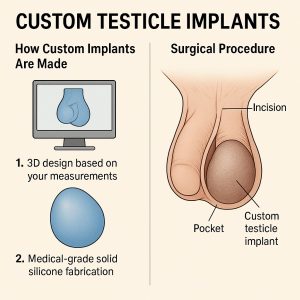 How Custom Implants Are Made
- 3D design based on your measurements
Measurements come from exam, ultrasound, or 3D imaging.
- Prototype model creation
A 3D-printed model may be made to confirm size and shape.
- Medical-grade solid silicone fabrication
These implants are not gel-filled—they are solid silicone, meaning:
-
- No risk of rupture
- Very durable
- Long-lasting
- Hollow chamber for soft feel (Malakon Rex design)
- No risk of rupture
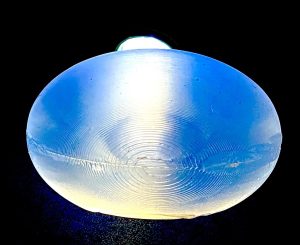 Hollow chamber for soft feel (Malakon Rex design)
- Sterilization and surgical preparation
The entire design process usually takes 3 – 4 weeks.
Surgical Procedure
Placement
- Outpatient 1 hour surgery
- Usually under general anesthesia
- Incision typically at the midline of the scrotum
- Pocket creation to seat the implant securely
- Closure with dissolvable sutures
Implant Stability
- Free-floating for a natural hang
- NO suture fixation
Recovery Timeline
Week 1:
- Swelling, tightness, and soreness common
- Supportive garment recommended
Weeks 2–4:
- Most swelling resolves
- Return to work (depending on job type)
Weeks 4 – 6:
- Resume exercise and sexual activity
- Implants settle into final position
Risks & Considerations
While custom implants are generally safe, risks include:
- Asymmetry of implant position
- Infection
- Capsular contracture (rare in scrotal implants)
- Dissatisfied with size (too big/too small)