
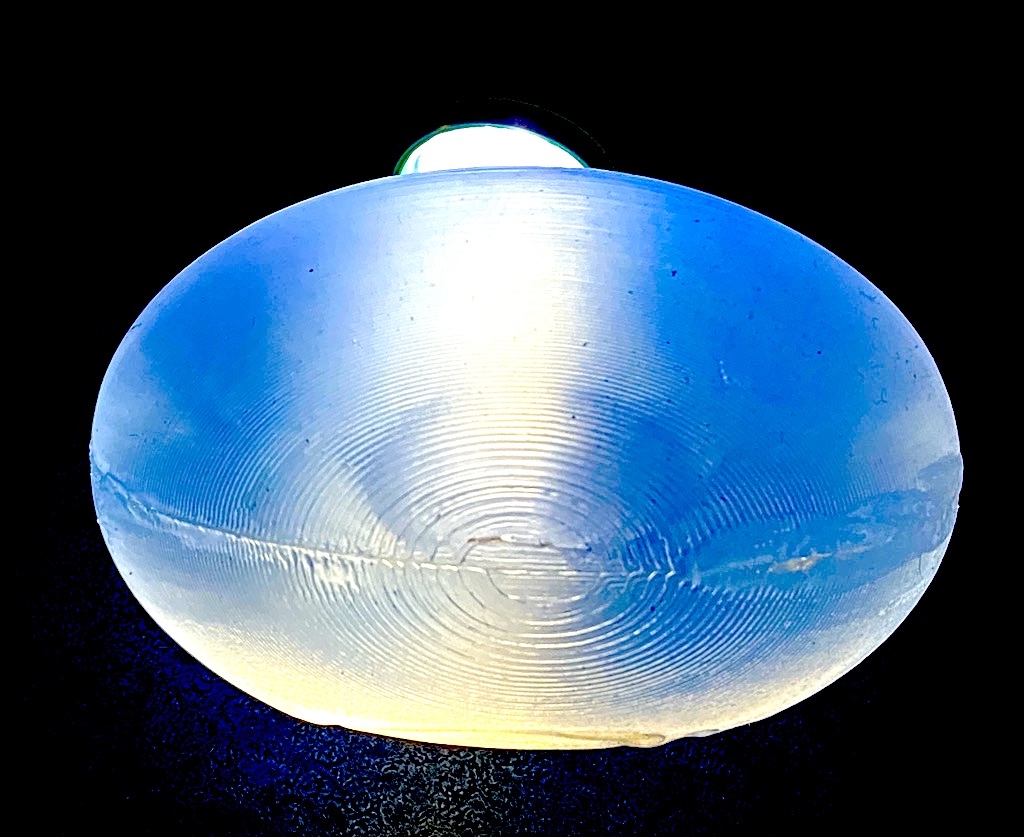
Hollow-chamber testicle implants are a specialized implant design developed to address two distinct clinical goals, depending on the size and function of the internal chamber.
What They Are
- Constructed from a silicone elastomer shell
- Contain an internal hollow chamber, which varies in size based on intended use
There are two primary designs:
- Small-Chamber Hollow Implant
Designed to improve the feel of a solid silicone testicle implant, making it softer and more similar to a natural testicle (implant improvement).
- Large-Chamber Hollow Implant
Designed to wrap around the natural testicle to increase its apparent size (natural testicle enhancement).
Rationale for Development
Hollow-chamber implants were developed to address two limitations of existing approaches:
- Traditional solid silicone testicle implants tend to become firmer than natural testicles, especially as implant size increases.
- There was no reliable method to enlarge natural testicles without replacing or displacing them.
Implant Types & Clinical Implications
1. Hollow-Chamber Solid Testicle Implant
Clinical Uses
- Replacement of one or both testicles (all implant sizes)
- Testicular enhancement via the displacement method for implants larger than 5 cm
- Implant must be at least 70% larger than the native testicle
- Implant must be at least 70% larger than the native testicle
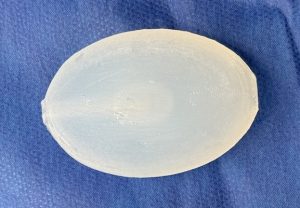
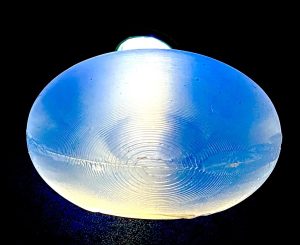 Chamber Size
- Determined by implant length and width
- Typically 1.5–2.0 cm in length and approximately 0.7 cm in width
- Malakon Rex is the brand name for this type of solid testicle implant design.
Surgical Technique
- Straightforward procedure via a low midline scrotal incision
- Approximate operative time: 1 hour
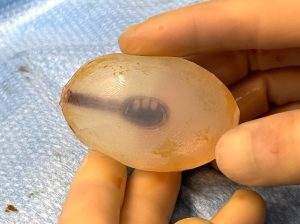 Benefits
- Improved implant softness and compressibility
- Hollow chamber serves as a reservoir for antibiotic solutions or powders, released postoperatively through a 4 mm access channel to help reduce infection risk
- As an unattached implant, it can achieve a naturally low scrotal position
Risks / Complications
- Primary risk is infection, as with all implants
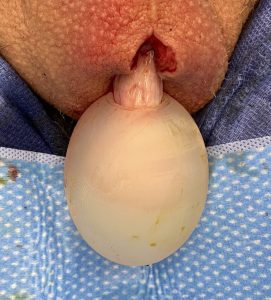
2. Wrap-Around Testicle Implant
Clinical Uses
- Enhances the size of the natural testicles by adding a circumferential implant layer
- Appropriate for any natural testicle size
- Indicated when the displacement method is not feasible
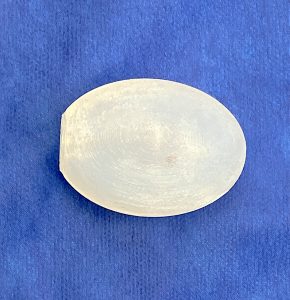
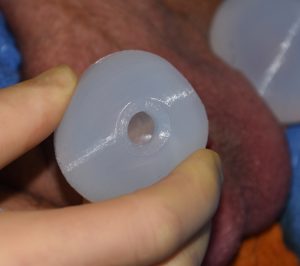 Chamber Size
- Hollow chamber is sized to match the natural testicle, based on ultrasound measurements
- Thickness of the surrounding solid silicone layer is customized to achieve the desired degree of enhancement
 Surgical Technique
- More complex procedure via a low midline scrotal incision
- Approximate operative time: 1.5 hours
- Requires:
- Dissection and isolation of each testicle on its neurovascular pedicle
- Suture fixation to secure the implant around the testicle
- Dissection and isolation of each testicle on its neurovascular pedicle
Benefits
- Provides near-complete testicular coverage
- Open end accommodates the neurovascular pedicle
- Implant edges are not palpable
Risks / Complications
- Infection risk
- Potential secondary disengagement of the implant from the testicle (primary unique risk)
- Risk of fluid collection due to testicular mobilization
- As an attached implant, may not achieve as low a scrotal position as desired
- Because this technique is most commonly performed in younger patients, the long-term effects on fertility (spermatogenesis) are currently unknown
Summary
The hollow-chamber implant concept allows for two distinct approaches to testicular enlargement:
- Improving the feel and performance of solid testicle implants
- Enhancing the size of natural testicles through a wrap-around design
Each method offers specific advantages and carries unique surgical considerations.
Dr. Barry Eppley
World-Renowned Plastic Surgeon