
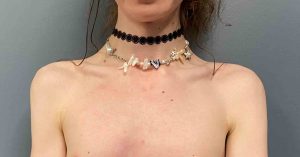
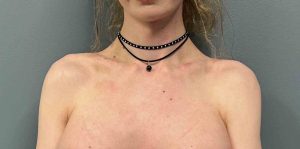
 In aesthetic shoulder narrowing, the goal is to reduce bi-acromial width by shortening the length of the clavicle(s). This is achieved via:
- midshaft clavicle osteotomy
- Segmental bone resection
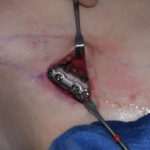
- Closure of the bone gap by pilling the outer bone segmented inward with internal fixation with low-profile plates
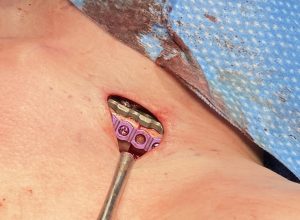 The plate(s) are essential to:
- Maintain clavicular alignment after shortening
- Ensure bony union
- Preserve shoulder girdle stability during the healing process
How it appears postoperatively (X-ray / CT)
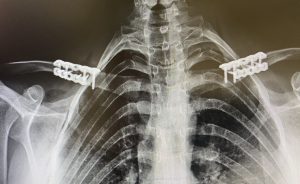 Typical postoperative findings include:
- Plate fixed along the superior or anteroinferior clavicle
- Shortened clavicle length compared to preoperative imaging
- Symmetric narrowing
- Multiple bicortical screws securing the osteotomy site
- Maintained:
- AC joint alignment
- SC joint alignment
- Glenohumeral joint position
Distinction from clavicle fracture repair
Key differentiators from fracture fixation:
- Clean transverse osteotomy (not comminuted) like a fracture
- Elective bilateral surgery
- Absence of traumatic soft-tissue signs
- Surgical intent is cosmetic contouring, not stabilization of injury
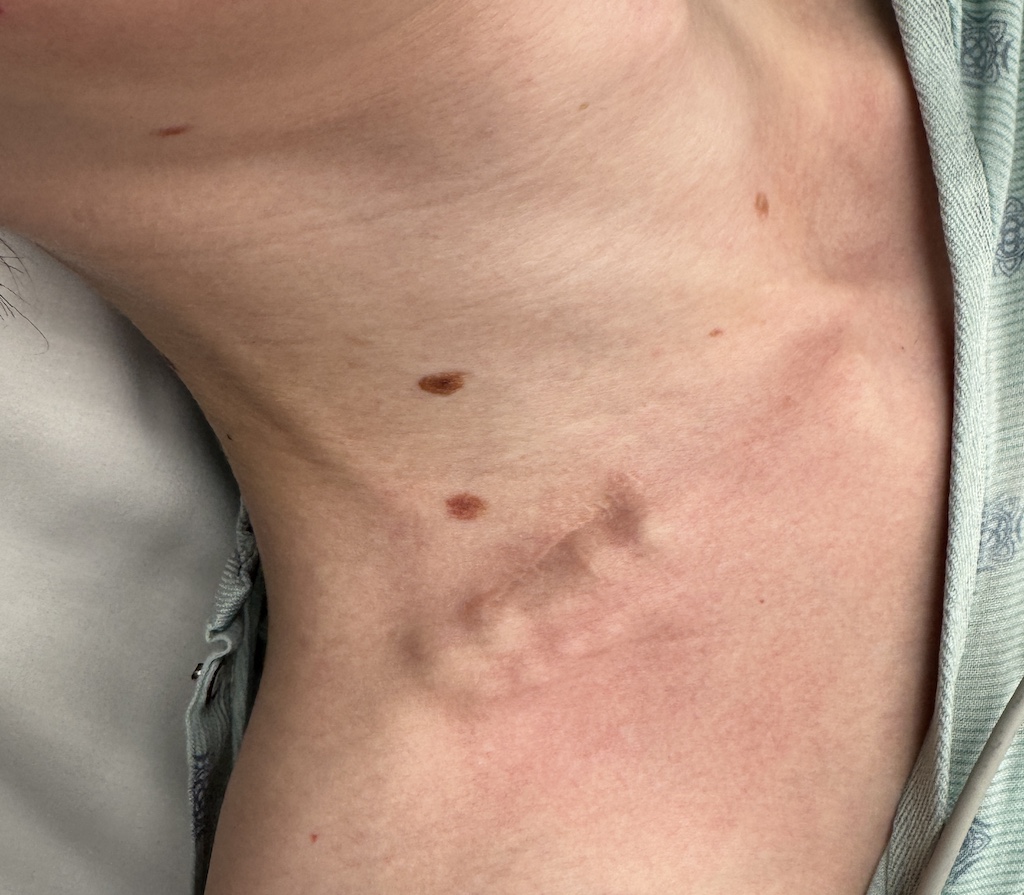
What Is Plate Show
 The outline of the plates is seen through the skin as a potential aesthetic concern
- While not exclusively unique to the clavicles it is the most site on the body for ‘hardware reveal’.
- Is not seen initially due to need for all swelling to resolve and the overlying tissues to contract down around the hardware (shrink wrap effect)
- Is a risk in very thin patients with prominent preoperative clavicle show.
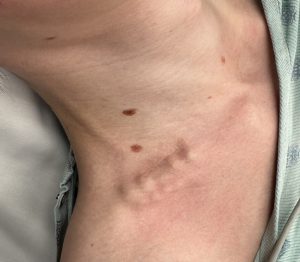
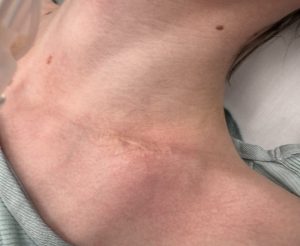 The outline of the plates is seen through the skin as a potential aesthetic concern
Does plate show need to be treated
- Plate show is often asymptomatic and is an aesthetic concern only.
- Discomfort may occur in some patients with clothes or purse straps crossing over/rubbing the visible plates.
How and when is plate show treated
- If either aesthetic and/or discomfort exists plate removal is the cure.
- Plate removal should not be done until 9 to 12 months after the initial surgery.
- Removing the clavicle hardware does not involve the recovery associated with their initial placement.
- Residual holes in the bone left from the removal of the screws will fill in with new bone months later.
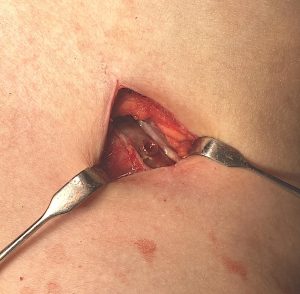 If either aesthetic and/or discomfort exists plate removal is the cure.
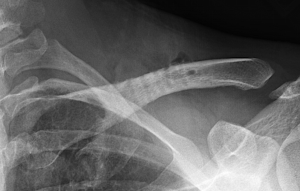 Residual holes in the bone left from the removal of the screws will fill in with new bone months later.
While plate reveal after clavicle reduction osteotomies is not common thin patients with preoperative clavicle show are at increased risk or it. Interestingly in some of the patients I have seen with it are not interested in plate removal. Only a handful of patients have actually ever removed their hardware secondarily.
Dr. Barry Eppley
World-Renowned Plastic Surgeon