
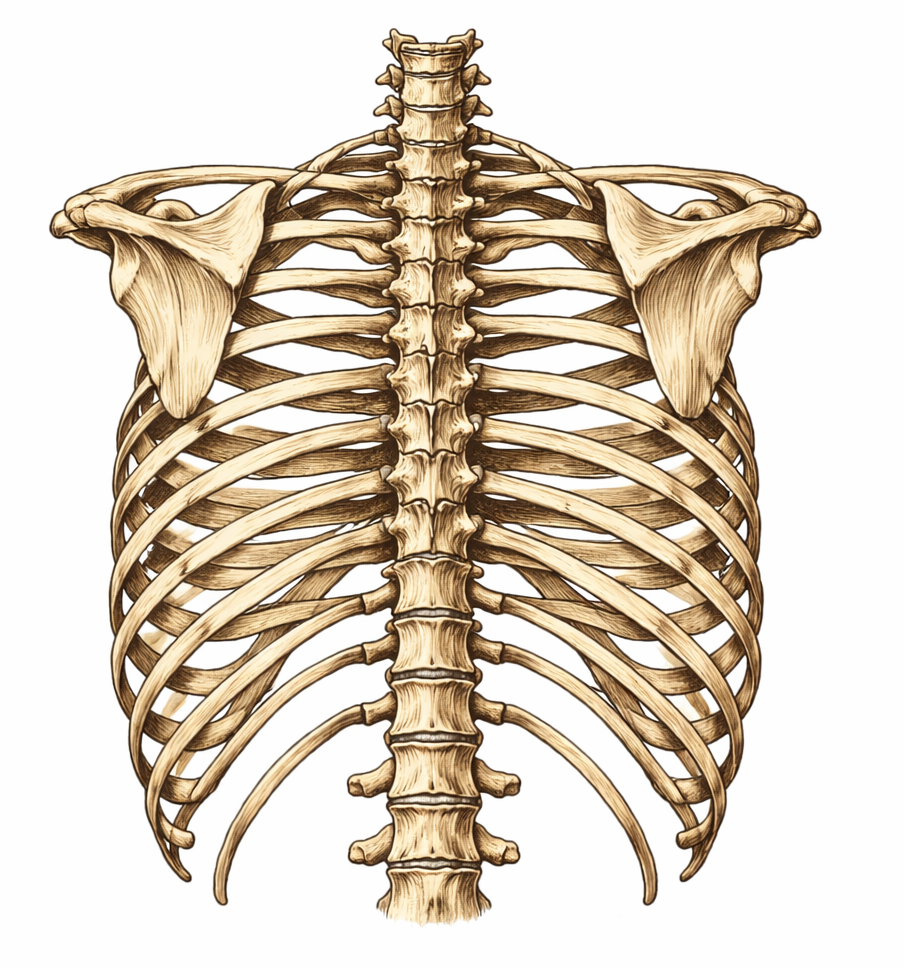
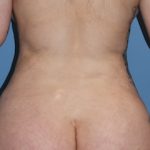
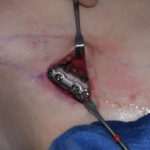
 Rib 12 removal—also called 12th rib resection or floating rib excision—is a surgical procedure to partially or completely remove the 12th rib, the lowest rib in the rib cage. Because it does not attach to the sternum, it’s termed a floating rib.
Aesthetic / body-contouring indications
- Waistline narrowing or flank contour refinement
- Typically partial resection is used to maintain stability
What the surgery involves
 Approach: Small posterolateral incision, centered over rib 11, most natural oblique skin crease.
- Extent: partial rib resection is performed, tip removal
- Muscle handling: Muscles are split to do the resection, muscle is taken and plicated inward to improve the result
- Anesthesia: General
- Duration: Often 1–2 hours
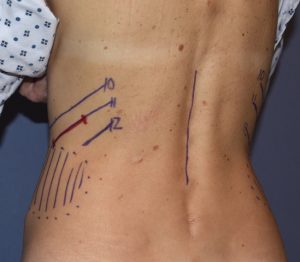 Approach: Small posterolateral incision, centered over rib 11, most natural oblique skin crease.
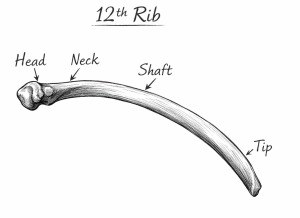 Extent: partial rib resection is performed, tip removal
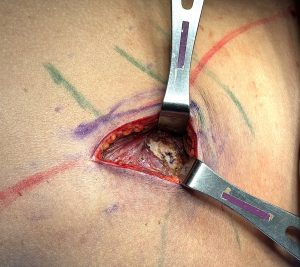 Muscle handling: Muscles are split to do the resection, muscle is taken and plicated inward to improve the result
Recovery & aftercare
- Hospital stay: Same day or overnight
- Pain control: Oral meds; discomfort decreases over 1–2 weeks
- Activity: Light activity in days; avoid heavy lifting ~4–6 weeks
- Scars: Typically small and well hidden posteriorly
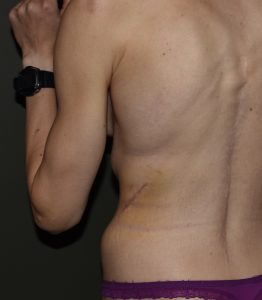 Scars: Typically small and well hidden posteriorly
Risks & considerations
- Pain or prolonged soreness
- Temporary numbness or nerve irritation
- Seroma/hematoma, infection (uncommon)
- Aesthetic benefit varies with body type and rib anatomy
Candidacy
Ideal candidates generally have:
- Can palpate the rib externally
- Clear aesthetic goals with realistic expectations
- Good overall health and stable weight
Expected Contour Change After Rib 12 Removal — Based on Anatomy
The visible contour change from 12th rib removal alone is subtle and depends heavily on your underlying anatomy.
1. Rib Length & Lateral Projection (Most Important)
- A long, laterally projecting 12th rib that pushes outward into the flank
- Expected change
- ?? Noticeable inward softening of the lower waist
- ?? Reduced “shelf” or bump at the lower rib margin
- ? No dramatic hourglass by itself
 A long, laterally projecting 12th rib that pushes outward into the flank
Clinical takeaway
Patients who can feel or see the rib edge in the mirror benefit the most.
2. Rib Angle (Horizontal vs Downward)
More favorable
- Rib has some horizontal angulation (less than 45 degrees)
- Acts as a rigid support pushing soft tissue outward
Less favorable
- Rib angles steeply downward (60 degrees or greater)
- Already tucked under the waist soft tissue
Expected change
- Horizontal ribs ? clearer waist indentation
- Downward ribs ? minimal visual change
3. Waist Soft Tissue Thickness
Lean patients
- Skin + muscle drape inward once rib support is gone
- ?? Sharper waist contour
- ?? More visible change even with partial resection
Higher subcutaneous fat
- Fat layer limits inward collapse
- Change may only be visible in certain poses
- Often combined with liposuction for effect
4. Muscle Anatomy (Quadratus Lumborum & Obliques)
After rib removal:
- Muscles reattach and scar inward
- They do not collapse, but they relax medially
Result
- Smooth inward contour, not a hollow
- No functional weakness when done conservatively
5. Partial vs Complete Rib 12 Resection
Partial resection
- Removes lateral projecting tiPreserves posterior support
- ?? Natural contour change
Complete resection
- Never done for aesthetic reasons
- More technically challenging to perform
Realistic Visual Outcome
Think of rib 12 removal as:
- ? Not a corset waist
- ? Not comparable to rib 10–11 removal
- ?? A refinement procedure
- Rarely ever done as the only rib for waist contouring
Best description patients use:
“My waist looks smoother and less boxy from the back and oblique views.”
When Results Are Most Noticeable
- Rear oblique views
- Arms raised
- Athletic or fitted clothing
- Post-lipo combination cases
Summary Prediction Guide
|
Anatomy Feature |
Expected Change |
|
Long, palpable rib |
Moderate |
|
Short/downward rib |
Minimal |
|
Lean build |
More visible |
|
Thick flank fat |
Less visible |
|
Combined with lipo |
Enhanced |
Dr Barry Eppley
World-Renowned Plastic Surgeon