
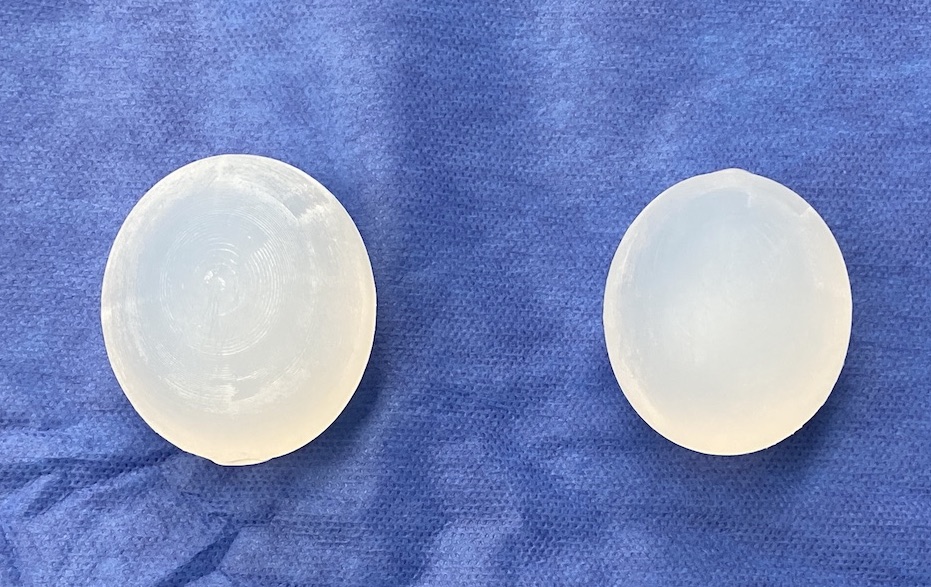

 Testicle implants are used in two different clinical situations. The traditional use is in reconstruction of a lost testicle where a natural testicle remains on one side and the implant on the other. From a pure esthetic standpoint they can be used for testicular enhancement, making the natural testicles look bigger. This is done by either a displacement or a wrap around implant approach. But with either method two implants and two testicles exist inside the scrotum.
But whether it is one testicle implant or two an important medical question is how their presence may affect the ability to detect testicular cancer.
How testicular cancer is usually detected
- Self-exams (feeling for new lumps, firmness, or size changes)
- Clinical physician exams
- Ultrasound of the scrotum (gold standard)
- Blood tumor markers (AFP, ?-hCG, LDH)
Impact of testicular implants on cancer detection
If both natural testicles are present (Testicular Enhancement)
- An implant is placed separately in the scrotum, not inside the testicle.
- Ultrasound can clearly distinguish a silicone or saline implant from real testicular tissue.
- Detection of cancer in a natural testicle is generally not impaired.
If one testicle was removed (Testicular Reconstruction)
- The implant replaces the missing testicle.
- No cancer can arise in the implant itself, but:
- Patients may be less familiar with what’s “normal” on exam.
- This can sometimes delay noticing changes in the remaining natural testicle.
Imaging considerations
- Scrotal ultrasound easily differentiates:
- Implant (uniform, avascular)
- Normal testicle
- Tumors (solid, vascular masses)
- MRI can be used if ultrasound findings are unclear (rare).
Best practices for patients with implants
- Perform monthly self-exams, focusing on the natural testicle (s).
- Learn the feel of the implant vs. real testicle.
- Report any:
- New lump
- Firmness
- Size or shape change
- Persistent ache or heaviness
- Maintain routine urologic follow-up if there’s prior cancer history.
Special Consideration
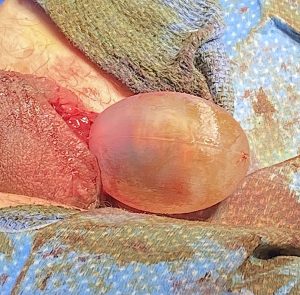 The one caveat about testicular implants and cancer detection. is in the wrap around implant technique. While not commonly used the implant does encase the entire testicle making external palpation of it unreliable. It does not, however, preclude accurate assessment of the testicle by ultrasound or MRI.
Key Takeaway
Testicular implants do not increase cancer risk and do not prevent diagnosis. But awareness and proper examination technique are essential of the existing natural testicles.
Dr. Barry Eppley
World-Renowned Plastic Surgeon