
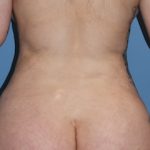
In rib removal surgery, the latissimus dorsi (LD) muscle matters a lot because of where it sits, how it’s used for access, and how it’s altered during the operation.
Latissimus Dorsi Muscle Anatomy
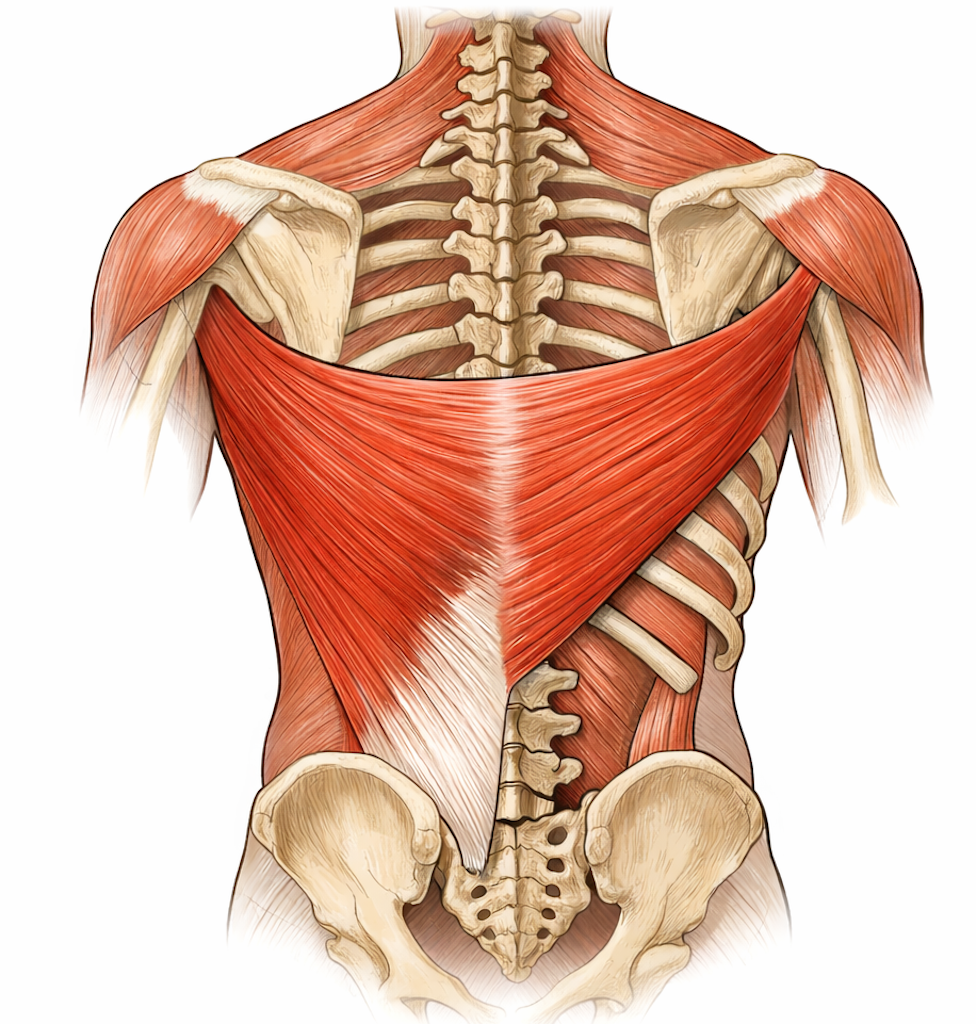
 The latissimus dorsi is a large, flat, superficial muscle that:
- Covers the posterolateral chest wall
- Originates from:
- Spinous processes of T6–L5
- Thoracolumbar fascia
- Iliac crest
- Lower ribs
- Inserts into the humerus
- Most importantly it extends more laterally than the ribcage, at all levels from ribs 1 through 12. This means it has a role to play in the width and shape of the waist and the torso (right side of illustration has part of the muscle removed to show the ribs underneath it)
Key point:
Most posterolateral rib resections (for waist narrowing or thoracic contouring) require working deep to and through the LD muscle.
Role of Latissimus Dorsi Muscle in Surgical Access
Surgical approach
- The LD is typically:
- Split along its fibers well inside its lateral border
- Retracting the lateral border and trying to work under it is very difficult and procedure limiting
 This exposes:
- Serratus anterior
- Intercostal muscles
- Target ribs (8–12)
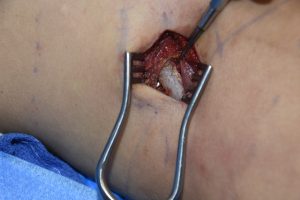
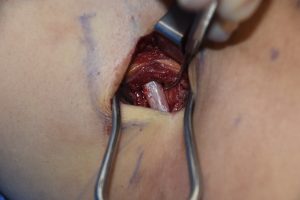 This exposes:
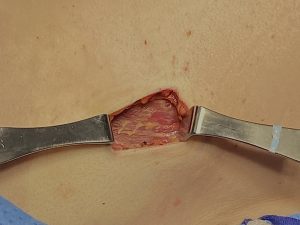 The LD acts as a muscular curtain that must be gotten behind to reach the ribs. Once the incision is made the first structure encountered is the large surface area of the LD muscle.
Protection of LD Function and Aesthetics
Because the LD is:
- A major shoulder adductor and extensor
- Important for upper-body strength and contour
Surgeons aim to:
- Preserve muscle integrity
- Minimize denervation or ischemia
Proper handling reduces:
- Risk of postoperative weakness
- Visible contour deformities
LD Muscle and Incision Planning
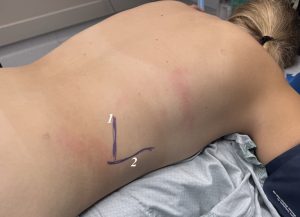 The location and direction of the incisions does not matter for the LD muscle as it is always split in the direction of its fibers. It is never cut transversely for access to the ribs no matter the direction of the skin incision (type 1 oblique, type 2 vertical)
- Align with LD fiber direction
- Allows access while minimizing scarring and muscle trauma
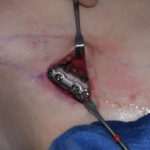
- The vertical splitting of the LD fibers is most dramatically seen in a more open backlift when done in conjunction with rib removal surgery
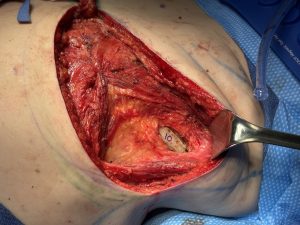 The vertical splitting of the LD fibers is most dramatically seen in a more open backlift when done in conjunction with rib removal surgery
This is especially important in aesthetic rib removal, where postoperative appearance matters as much as access.
Bottom line
The latissimus dorsi:
- Overlies the ribs commonly removed
- Must be strategically split
- Serves as a key anatomic gateway
- Requires careful handling to preserve function and contour
Dr Barry Eppley
Plastic Surgeon