The benefits of breast augmentation are many including a changed physical appearance, increased clothing options, and most importantly an improved self-image. But undergoing breast implants has recently added an additional benefit…the opportunity for some extra cash.
From the Mentor corporation, who has the largest share of the breast implant market in the United States, comes the Memory Gel referral program. Memory Gel is the tradename for their silicone gel breast implants. After having received a silicone (Memory Gel) breast augmentation procedure, the patient is given a Memory Gel Referral Program brochure from her plastic surgeon.
In the brochure the patient is referred to the manufacturer’s patient website, LoveYourLook. Once on the website, the patient fills out all the requested fields including her implant’s serial numbers. At this point, she can then enter the name and email address of a friend she would like sent information from the Referral Program.
An email from Mentor is then automatically sent to the friend whose name and email address was provided. If the friend goes on to have breast augmentation surgery (breast reconstruction does not count), a $50 American Express Gift card is sent to the patient who referred her. (for whatever reason, this offer is not available to patients in Texas and Florida)
While $50 may not seem much to someone who has spent $5,000 to $7,000 for breast surgery, it is a token gesture that speaks to an aspect of breast augmentation that few think of. Unlike any other medical device used in the United States, breast implants share many features similar to that of a retail product. First, breast implants are paid in cash directly from the patient and often financed to do so. That is clearly different than other implantable medical devices which are sold and paid for by the hospital, surgery center or physician, leaving the patient out of any financial involvement or burden. Secondly, breast implants carry warranties that provide some financial protection for the patient. Lifelong implant replacement for failures and actual cash reimbursement if these failures occur in the first 10 years after surgery. No other medical devices carry such financial patient protections. And now thirdly, the use of a referral incentive which is very common across the retail industry. By so doing, they are encouraging friends (who were likely going to have the surgery anyway) to use Mentor implants and not the competitors.
The business of breast augmentation is unique amongst medical devices. It is a significant cash product that offers some financial assurance to the patients receiving them. Because the surgery is entirely elective and paid for out of pocket, confidence in the devices implanted is essential.
Dr. Barry Eppley
http://www.eppleyplasticsurgery.com
Indianapolis Indiana
The Psychological Differences between Anti-Aging vs Structural Facial Plastic Surgery
Author: barryeppleyThere are many aesthetic changes that can be made to one’s face. The list of potential plastic surgery procedures for cosmetic enhancement numbers over one hundred. Such procedures are usually thought of as the specific region that is being changed. (e.g., nose, eyes, brow, chin, neck, etc.) Some think of these procedures by the anatomic tissues which are being manipulated, hard or soft tissues. And others may classify them by anatomic region. (upper, middle third, and lower face)
But there is also another way to think about facial plastic surgery procedures, and that is from an underlying psychologic or motivational perspective. Why is one having the procedures and how does this influence one’s preparation and expectations from the surgery? By this view, cosmetic facial procedures can be classified into structural and anti-aging operations.
The anti-aging procedures are very well known and include facelifts, blepharoplasty, browlift, midface (cheek)lift, lip lifts, and neck lifts. These are exclusively soft tissue-based because the restoration comes from removing and lifting (nips and tucks so to speak) excess or sagging skin and soft tissues. The word, restoration, is deliberately used because the goal is to try and make one look younger or rejuvenated, trying to return to an earlier look that one had years ago. The common phrase many plastic surgeons use is ‘turning back the clock’. This is a very appropriate phrase because the clock will continue to tick and one will eventually return to looking older. (provided nothing is done for maintenance and other touch-up procedures)
Structural facial procedures, some of which are well known while others are not, include rhinoplasty, otoplasty, forehead reshaping, and a variety of facial implants. (chin, cheek, and jaw angles) These are more hard-tissue based including bone and cartilage. To no surprise, these are foundational anatomic structures onto which the overlying soft tissues attach and are suspended. These procedures change or alter the face and create a look that is not genetic or how one was destined to appear. The key word here is change. One is trying to look different, to look better. The term that is bantered about by plastic surgeons is a ‘balanced or more proportionate’ look.
The psychological difference between anti-aging and structural facial surgery is significant. One who undergoes a facelift, for example, wants to know many aspects about the procedure (recovery, risks, etc) but is not overly concerned about the outcome. While no one wants to look overdone or unnatural from a facelift (the most common patient concern), the comfort lies in going to a place where one once was. When one is undergoing a rhinoplasty, for example, the concerns about the outcome are much different. One is heading to a place where they have never been and that can cause great uneasiness. Even though one knows that the goal is to look better, not being exactly familiar with what that is can be unsettling. It is for this reason that many structural facial patients will spend a great deal of time analyzing their photos, doing drawings and measurements, and in general doing much more research before the procedure(s).
Structural facial surgery patients require more preoperative time and discussions. It is critically important that a good connection and rapport is developed between plastic surgeon and these surgery patients to avoid a misunderstood outcome. It is also vital that computer imaging is done before surgery to aid this communication process and lower the potential revision rate.
In some cases, most commonly anti-aging surgery, the two types of facial plastic surgery procedures are simultaneously used. But one of them is the dominant approach and the opposite facial procedure is complementary. (e.g., facelift with a chin implant)
http://www.eppleyplasticsurgery.com
Indianapolis
There are many physical signs that can give away one’s age. Women know these signs very well and they include such areas as the back of one’s hands, the neck at the sternal notch area, and the mouth. The mouth area is a particularly bothersome area for many women. As a plastic surgeon, the mouth seems to be an area that unfairly ages in women much more than in men. It is actually rare to see deep vertical lip lines in men, even if they have thin lips, until they get quite elderly.
In the November 2009 issue of the Aesthetic Surgery Journal, a study was reported to investigate the differences between men and women around the mouth area.To determine how bad the wrinkles were, the upper lip of male and female fresh cadavers were analyzed using three-dimensional digital imaging and as well as histologic assessment of full-thickness lip resections in different male and female cadavers. Their results showed that women had more and deeper wrinkles than men. Men had a significantly higher number of sebaceous, sweat glands, and blood vessels in their skin. Somewhat surprisingly, the number of hair follicles did not significantly differ between men and women, although men had a higher number of sweat glands per hair follicle.
This study provides scientific evidence as to why women are more susceptible to the development of mouth and lip wrinkles.The skin around the mouth in women has lesser numbers of skin appendages (hair follicles and oil glands) as well as different connections between the skin and the muscles of the lips.
The key anatomic factor is that with less oil glands, there is less oil production to help keep the skin softer, smoother and better protected. I think the observation that the muscles around the mouth are closer to the skin in women than men is also important. This may allow the muscles to pull the skin in tighter, creating a ‘purse-string effect’ and causing more wrinkles.
Outside of this study, there are likely other contributing factors that accentuate these anatomic findings. One of these is the drop in estrogen in women with aging. This hormonal change causes a decrease in the fat (sebum) secreted by sweat glands. Coincidentally, women on hormone replacement therapy have been reported to have fewer wrinkles than those not taking the hormones. Also, most men perform a daily wrinkle treatment, shaving which is a form of microdermabrasion. Such superficial skin exfoliation done tens of thousands of time over one’s lifetime will help lessen wrinkling also.
While avoiding smoking and sun exposure and using daily moisturizers are extremely helpful and will reduce the amount of wrinking which will develop, that advice does little for the women who already has significant signs of mouth aging.
Several treatment strategies exist that can help significantly with lip lines and wrinkles. These include injectable fillers, Botox, laser resurfacing, chemical peels, and fat injections. The fundamental concepts of these strategies (with the exception of Botox) is inflation (volume fill or restoration) and smoothing. While everyone does not need all or even most of them, a combination of inflation and smoothing will work better than just one of the concepts. Most commonly, the combination of injectable fillers and laser resurfacing is used. But treatment approaches can differ and I do not always do the same approach for everyone.
The anatomy of lip wrinkles indicates that no matter what is done, none of the treatment approaches actually ‘cures’ the problem. The skin of the lip can not be made permanently thicker and the natural oil production of the skin can not be improved. This indicates that no matter what treatments are done, they will have to be eventually repeated to maintain the improvement.
http://www.eppleyplasticsurgery.com
Indianapolis
Injectable fat grafting is becoming increasingly popular for a variety of cosmetic and reconstructive indications in plastic surgery. Because it uses one’s own natural fat, there is no risk of graft rejection. Most of injectable fat uses are for indications in which other treatment methods are more invasive or do not have the potential to interfere with any important medical functions. When it comes the breast, however, implants have a great track record of effectiveness and safety and have been proven to not interfere with breast cancer detection. Fat grafting to the breast, therefore,\ needs to be considered more carefully than any other bodily area.
In the July 2009 issue of Plastic and Reconstructive Surgery, a task force from the American Society of Plastic Surgery reported on the current state of scientific knowledge about injectable fat grafting to the breast. Their recommendations are based on review of case reports and series and the few experimental studies which currently exist. Injectable fat grafting has been done in the breast for small breasts, deformities after breast implant augmentation and reconstruction, congenital breast deformities, and for nipple reconstruction. The total number of clinical cases numbers around 300 or so, which is a very small number of patients. There is only one registered prospective clinical trial with the FDA (BRAVA system)
The highlights of this report are worth summarizing:
1) Fat grafting may be considered a safe methof for breast augmentation and correction of breast defects from cancer resection and its reconstruction and other medical conditions of the breast.
2) The longevity of fat grafts is unpredictable. Patients considering injectable fat grafting should be accepting of the potential of the need for additional treatment sessions to get the desired effect.
3) How well injectable fat grafts work is highly influenced by the surgeon’s experience and technique.
4) There is currently no one standard way to prepare fat grafts or inject them.
5) Changes in a patient’s weight can alter the size or shape of the retained fat graft.
6) Infection appears to be the only real medical risk and is usually solved by antibiotics.
7) High-risk breast cancer patients (family history of breast cancer, BRCA 1 and 2 positive) should be treated with caution. Although no evidence exists that fat grafting interferes with breast cancer detection, too few patients have been done to know with greater certainty.
Fat grafting is in its scientific infancy and more experimental and clinical research is needed to improve its survival after grafting as well as fully explore and develop its potential clinical uses.
For patients interested in autologous fat grafting to the breast, this report provides educated insight into its safety and cautious optimism about its potential. Unpredictable fat graft volume retention is its one downside.
Dr. Barry Eppley
http://www.eppleyplasticsurgery.com
Indianapolis
Injectable fillers are one of the most popular in-office aesthetic facial treatments. Used primarily to fill nasolabial and marionette lines as well as lips, they provide an instantaneous result. As of today, there are over a dozen commercially-available injectable fillers of various compositions. Patients frequently ask about what is different between them and which is best for them.
From a practical perspective, you can argue that their differences are only… how long do they last and how much do they cost. Since no injectable filler is permanent, they all have a limited time frame of effectiveness. (silicone oil may be permanent but it is not an FDA-approved injectable material for aesthetic use)
But one very important distinction between some of them is their composition…what are they made of? This can be important because there are some potential adverse outcomes that can occur with some of them that is negligible with others. One of the basic concepts that have been pursued over the years to increase the longevity of injectable fillers by using particles, either resorbable or permanent. Because these beads or particles either do not go away or slowly resorb, the injectable filler will last longer. Because of the need for the material to flow through a small needle, the particulate part of the filler usually only makes up less than 30% of the total volume of the filler. The rest is the carrier material, which often is either collagen or some other biocompatible liquid(s).
While the bead or particle concept does extend the longevity of the injectable filler, there is a potential trade-off for that benefit. The potential always exists for foreign body or granuloma formation the longer any material persists under the skin. This is a well known phenomenon that is known to occur from buried sutures for example. The occurrence of granuloma formation from injectable fillers is rare with estimates in the range of 0.01 to 0.02 percent. While I have read that there are no differences in granuloma formation between the pure gel (hyaluronic acid) or collagen fillers and the particulate fillers, that statement does not make good biologic sense.
The particulate fillers include materials such as polymethylmethacrylate, poly-hydroxyethyl methacrylate, hydroxyapatite, and dextran beads. When a foreign body reaction develops from them, it will usually not appear for at least 6 months or even years later. This is due to the ‘frustrated’ phagocytosis that occurs as the macrophages are unable to clear the material. Because of this frustration, the cells become ‘giant’ and a granuloma may develop. Treatment of injectable granulomas may be tried with steroid injections and some may resolve this way or on their own. Persistent ones may require actual incisional drainage or excisional removal.
The choice between shorter vs longer lasting injectable fillers involves more than just cost. Another consideration is the risk of granuloma formation. This is why the particulated fillers should never be injected into the lips where the risk of lumpiness and foreign body reactions is even higher.
http://www.eppleyplasticsurgery.com
Indianapolis
Patients considering facelift surgery seek an improved neck and jowl line. Such surgery requires the use of incisions around the ears to accomplish that goal. Patients are understandably concerned about the location of the scars, but once explained where they will lie, are reassured that they will not be noticeable to the general public. However, one’s hairdresser will be able to find them because they do potentially disrupt the temporal and occipital hairlines.
One of the most important keys to a ‘good’ facelift is avoiding visible scars and not changing or altering the hairline around the ears. The two locations of hairline disruption are the temporal (sideburn) and occipital (behind the ear) areas. The hairline above the ear is never disrupted as this is not where any facelift incision would usually go.
One of the most common potential hairline problems is loss of the temporal tuft or sideburn hair. This is a problem best avoided as there is no simple correction of a sideburn tuft that has been raised into the temporal area. No female wants to undergo a facelift only to loss the option of wearing their hair up afterwards. The classic facelift incision in front of the ear goes up vertically into the temporal scalp hair. With this approach, the redraping or upward pull of the facial skin shifts the sideburn hair up higher. If one has a low enough sideburn tuft this may not be an issue. (most women do not have a low or long sideburn hair) But if the bottom portion of the tuft is just at the level of the attachment of the ear, its loss from the face will occur.
The technique that I use to avoid this problem is to not use the vertical incision up into the hairline. Rather, a horizontal incision is made once the vertical preauricular crease incision reaches the superior helical attachment. The horizontal incision comes forward paralleling the hair follicles along the natural outline of the sideburn tuft. This usually creates a V-shape tuft incision which technically creates a Z turned on its sides if you include the vertical ear portion of the upper incision. This geometric tissue rearrangement disrupts any tension along the suture line and prevents any scar widening.
The other common hairline problem that occurs in many facelifts is that the skin redraping behind the ear alters the occipital hairline. This is the area where your hairdresser can potentially see that a facelift had be done. As the skin behind the ear is pulled up and back, a step-off or notch in the occipital hairline can occur as skin without hair replaces scalp hair. The key to this incision is to start its horizontal extension from the ear high (at the level of the ear canal) and then back into the occipital hair. When the postauricular skin is redraped it is pulled straight up and not back. This enables the occipital hairline to be maintained as the excess post-auricular skin is removed. When the incision is this high behind the ear, there is sufficient hair below the incision to adequately hide it.
While understandable focus in a facelift is on how the neck and jowl line looks, one of the keys to avoiding a telltale sign of having had a facelift is how well the hairline around the ear is managed. Preserving the sideburn tuft of hair and keeping a smooth unaltered occipital hairline are important finesse maneuvers of facelift design and execution.
http://www.eppleyplasticsurgery.com
Indianapolis
Liposuction is one of the most commonly performed of all cosmetic procedures. From the neck down to the ankles, fat can be effectively removed with good outcomes and high patient satisfaction. It is estimated that over 500,000 liposuction procedures are performed in the United States each year. The vast majority of these are done in adults and for cosmetic purposes.
But liposuction can be used for more than just cosmetic changes but for reconstructive purposes as well. I would estimate that less than 5% of liposuction procedures performed are for some type of reconstruction or treatment of a medical problem.
The most common medical indication for liposuction is gynecomastia. Male breast enlargement affects teenagers and younger men but is also an issue in older men (elder or senile gynecomastia) as well. Most forms of gynecomastia can be treated by liposuction which is the foundation of most treatment strategies. Only when there is a significant breast mound or a sagging mound with nipple ptosis is skin reduction with subsequent scars necessary as a complement to the use of liposuction. In mild cases of gynecomastia, only a 100ccs or so may need to be removed from each side of the chest. In larger gynecomastias, volume removals may be as high as 500cc to 600cc per side. In these larger cases, liposuction must be extended around the side of the chest wall to get a good chest contouring.
Some types of lipomas may be removed with liposuction. Usually these have to be of significant size. Small ones are easily removed through very small incision because, even though they do have a true capsule, they can be popped out intact. If one elects to aspirate small lipomas, I prefer the use of syringe or microcannula aspiration using wall suction. This reduces the risk of creating irregularities and asymmetries. One disadvantage to lipoma liposuction is that the process destroys the tissue and prevents getting a good pathologic evaluation of the tissue. At the least, it would be unreliable.
Liposuction is also useful for tailoring or shaping reconstructive flaps. This is particularly useful in breast reconstruction when TRAM and DIEP laps are used or any type of flap which has a significant fat component to it. While such flaps can be thinned by re-elevation and direct fat removal, liposuction avoids opening any significant length of the incisions and eliminates the potential need for a drain after surgery.
One very relevant question to ask is whether insurance will pay for any reconstructive technique which uses liposuction. In theory, the method or tool used to do or modify a reconstructive procedure should not affect insurance covering a procedure which is medically necessary. But this is not always how insurance views what should otherwise be an obvious answer. If liposuction is coded as the method (CPT codes), it will raise a red flag and a likely denial. While this may be overturned in a subsequent appeal, it is better to avoid that entire process. Therefore, the procedure should be coded using the specific revisional codes that apply to the initial procedure. (e.g., breast reconstruction revision)
http://www.eppleyplasticsurgery.com
Indianapolis
A good looking nose is about balance of its many nasal parts, particularly the three thirds of the nose. One of these, the upper third, also known as the bridge is a frequent source of dissatisfaction. When it is overgrown or too high, a hump or bump on the nose results. In rhinoplasty terms this is referred to as a high dorsum. When the dorsum is high relative to the rest of the nose, the dorsal line (line from the bridge of the nose to the tip) is curved rather than not straight. This creates an unpleasing profile and makes the nose look too big.
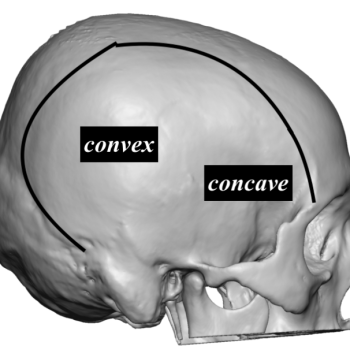
When a nasal hump deformity is combined with a plunging tip, a hooked nose results. In profile, the nose is convex with a nasolabial angle that is less than 90 degrees. This type of nasal shape can also be called a witch’s nose. The hooked nose can also create the appearance that one’s chin is short. (pseudo microgenia) This becomes particularly magnified when the chin is actually horizontally short in projection.
A hump reduction (dorsal management)is an integral part of rhinoplasty correction in the hook nose. The hump is a combination of bone and cartilage as the hump occurs where the bone of the nose stops and the cartilage of the nose begins. This may seem like a trivial anatomic point but reducing this area involves removing both. Taking the hump down lowers the dorsal line and often requires osteotomies (breaking the nasal bones) to close down the open roof deformity which frequently results.
While it is natural to assume that the hump reduction is the major maneuver in the treatment of a hooked nose, but it is not. In some cases, it may not even be the most significant part of the rhinoplasty operation. Correction of the plunging tip is often more important. Raising and shortening the tip of the nose can make any hump look smaller as the lower end of the dorsal line is shortened and becomes closer to the line of the hump. While hump reduction may not be eliminated, the amount of reduction may be less than one may think. Without this consideration, it is possible to reduce the hump too much resulting in a saddle nose deformity long-term and possible impairment of one’s breathing.
There are also small rhinoplasty techniques that can help both the hump and tip changes. Adding a cartilage graft to the radix (upper part of the hump) as well as at the base of the nose (opening up the nasolabial angle) helps further refine and enhance smaller, less often appreciated, deficiencies in the hook nose.
Like all rhinoplasties, consideration of adequate chin projection is important. This is particularly so in the hook nose which is larger and disproportionate to the rest of the face. This is not an illusion. Even in those that may only be slightly so, chin augmentation (usually by an implant) can make a dramatic facial profile difference as it makes the nose appear less large.
Hooked nose correction involves a variety of nose and chin changes. Hump reduction alone is inadequate and must be combined with top rotation and shortening and crushed cartilage augmentation to the radix and anterior nasal spine areas. Chin augmentation completes the correction and at least 5 to 7mms of increase is needed in most cases.
http://www.eppleyplasticsurgery.com
Indianapolis Indiana
One of the common questions from potential liposuction patients is how much weight should they try to lose before surgery. Should they not try to loss any weight, loss some weight, or loss as much weight as they can before liposuction body contouring? The crossing of paths between surgical and non-surgical weight loss is frequent and there are no absolute answers that apply to everyone.
In the Monday March 1 2010 issue of USA TODAY in the Life section, a story was run on a common problem with those losing weight. Besides being hard to do, weight loss in those middle aged or older often runs into a brick wall. Once a certain amount of weight has occurred, usually 10 to 15 lbs, weight loss stalls. While weight may have come off easier with a few changes when one was younger, this does not occur so easily as one ages. According to the story, national obesity experts aren’t surprised by this common experience amongst older weight loss patients. They report that studies show that 5% to 10% of one’s starting weight comes off in the first 3 to 6 months. (10 to 20 lbs) After that, however, many people hit the weight loss wall and their weight refuses to budge much further. There are many reasons for this effect which include a combination of hormonal changes, genetic make-up, and a busy lifestyle which limits diet and exercise options.
This story speaks to the weight loss before liposuction issue. In my Indianapolis plastic surgery practice, I often speak to patients about what I refer to as one’s ‘physiologic weight’. This is the body weight that patients trying to loss pounds can get to with reasonable lifestyle changes. Doing what one can do with sustainable dietary reductions and an exercise program that one can follow consistently. While heroic efforts can be made to loss even greater amounts of weight, such results are usually not maintained. This is exactly what the USA article was discussing and what is a reasonable approach before liposuction surgery.
The best advice for weight loss before liposuction is to lose what you can. Make the best effort and establish lifestyle habits that will serve your surgery efforts afterwards. Try for a period of 6 months before surgery to see what you can do and delineate those areas that are truly non-responsive to your weight loss efforts. For some patients, this may mean just a few spot areas will need to be treated. For others, it will still be the treatment of a larger section such as the overall abdomen. But either way, the results of liposuction will be better both in short-term contour and long-term maintenance.
http://www.eppleyplasticsurgery.com
Indianapolis
Like the appearance of the back of one’s hands, the mouth area can be a telltale sign of one’s age. The best facelift ever done will do little for this expressive island of the central face. Focused treatment strategies must be applied to the lips and mouth. As their aging problems do not respond to other lifting and excisional tissue techniques that work well for the rest of the face.
What is it about the mouth are that makes it age? Most will think of an older mouth as one that looks ‘shrunken and wrinkled’, or at least is headed down that pathway. The lips thin, vertical wrinkle lines develop and the entire mouth seems smaller and less supported. While there are many factors that can contribute to this appearance, most pertinently the support and presence of the underlying teeth, the visual perception of volume loss certainly seems to be a major factor.
In the July 2009 issue of Plastic and Reconstructive Surgery, Drs. Rohrich and Pessa have studied one of the major issues of facial aging, fat loss. As a continuum of their ongoing and longitudinal anatomical studies of facial fat and what happens to it as we age, they have studied the submuscular fat compartments of the mouth. (perioral facial region) Cross-sectional anatomic sections were analyzed of older cadavers, ages 59 to 72. The highlights of their work demonstrated that there is fat deep to the sphincteric orbicularis oris muscles of the lip[and large vertical-oriented mentalis muscle that envelopes the chin. This fat layer is distinct from that which exists just under the skin of the chin or the mucosa and vermilion of the lips. It is postulated that loss of this fat contributes to lip ‘collapse’ (inversion) and deepening of the labiomental sulcus with aging.
How does this information help with mouth and perioral rejuvenation methods? It strongly suggests that the traditional techniques of laser resurfacing for wrinkles and augmentation of the vermilion-cutaneous borders of the lips alone is not a comprehensive approach. Neither treats one of the fundamental causes but is directed to the symptoms of the aging problem. It also suggests and explains why some augmented lips by injectable fillers may look unnatural and not ideally rejuvenated.
While increasing the visible lip roll (vermilion-cutaneous border) is the most common area where injectable fillers are placed, it misses one of the important areas of what creates a youthful lip. The wet-dry border, or rolling out or exposing of the wet-dry mucosa, is one of the signs of a fuller and more youthful lip. As the authors of this paper have pointed out, adequate volume of the submuscular fat can help recreate a more natural curvature and projection of the lips.
These deeper fat compartments of the lip and chin are not areas that are injected today by most practitioners. Besides an underappreciation of its significance is that their treatment requires a good local anesthetic block and a fair amount of injection filler volume to do so. That is a rate-limited step for some patients, particularly when the effect may only be temporary.
But in the operating room and as part of a more complete facial rejuvenation surgery, fat injections to the submuscular perioral compartments make more sense and is easy to do. While injectable fat is not always predictable, placement into deeper submuscular areas may be associated with better survival rates.
http://www.eppleyplasticsurgery.com
Indianapolis