Explore the World of Cosmetic Plastic Surgery, Medical Spa, and Skin Care from Indianapolis Plastic Surgeon, Dr Barry Eppley

Archive: breast augmentation

ActiPatch Recovery in Breast Augmentation
Posted on 09 April 2008 | Category: actipatch, breast augmentation, breast implants

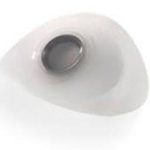
ActiPatch is a non-drug, anti-inflammatory device that has been used for multiple medical conditions from facial surgery recovery to plantar fasciitis. It helps reduce swelling and inflammation through the use of pulsed electromagnetic fields contained in either a patch design or a loop configurations. The patch or loop devices contain a tiny circuit which is operated by a small low-voltage battery. Beneath the geometry of the circuit, a penetrating electromagnetic field or zone is created which penetrates into the tissues under the skin. The frequency of the generated signal works by decreasing intercellular fluid and inflammation in the injured site. As a result, the amount of swelling and associated pain around a surgery site is reduced and recovery is accelerated.

I first starting using ActiPatch for my own back and shoulder pains from years of long hours of surgery. It worked as well as any non-steroidal anti-inflammatory medication and I began to use it on my breast augmentation patients. By positioning a crescent patch over the upper medial pole of the breast (where the raised pectoralis major muscle exists) and another patch over the lateral pole of the breast (4 patches per patient), I have been equally impressed with the results. My past 25 breast augmentation patients have used it with good success. It is now part of my routinue postop breast augmentation protocol and I have each patient wear them around the clock for the first 48 hours after surgery. In most cases, patients are off pain medications within 24 hours. While I aggressively place them on an arm exercise program after surgery (http://www.rapidrecoverybreastaugmentation.com), which makes a big contribution to their recovery as well, the use of the ActiPatch is a simple and easy adjunct to this recovery protocol. Breast augmentation patients are extremely appreciative of any efforts made to decrease any potential pain, which is their biggest fear about breast augmentation surgery. Based on my experience with it in the breast implant patient, I can see no reason why it would not be of benefit for all kinds of breast surgery as well.

Dr Barry Eppley
http://www.eppleyplasticsurgery.com
http://www.ologyspa.com
Clarian North Medical Center, Carmel, Indiana
Clarian West Medical Center, Avon, Indiana
Indianapolis

Non-Visible Scars in Breast Augmentation
Posted on 07 April 2008 | Category: breast augmentation, breast implants, incisions, scars

Breast augmentation continues to be one of the most popular plastic surgery procedures with over 300,000 women undergoing the procedure last year. With the return of silicone gel breast implants, in addition to existing saline breast implants, women now have two good choices for their breast augmentation procedure. Whether saline or silicone gel breast implants are ‘better’ for any single patient depends on a thorough knowledge of each implant type’s advantages and disadvantages.
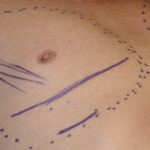
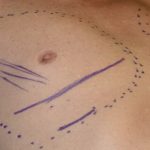
Regardless of whether one chooses saline or silicone gel breast implants, every breast augmentation procedure requires a scar to be created somewhere. The choices for the incision location are either the armpit, nipple, under the breast, or the belly button. In my practice, the incision choices narrow down to either the armpit (for saline breast implants) or under the breast (for silicone breast implants). While I have always enjoyed the armpit (axillary) approach for saline breast implants, and I have never had to do a single scar revision with this approach and it certainly is hard to impossible to find later, I have come to really appreciate the scar under the breast (inframammary crease) with silicone gel breast implants. I have observed this is certainly a great place to put the scar, particularly with silicone gel breast implants which require a slightly longer incision. Since the breast usually hangs over the inframmary crease in most patients, it is really difficult to see. My patients are extremely happy with this approach even though the scar will have some potential redness and unevenness in the very beginning, which is normal. Using the nipple incision approach is difficult in many women because there is often quite a mismatch in nipple size and desired size of the breast implant that the patient wants. This makes it virtually impossible to put the proper size of breast implant through such a small incision area. Furthermore, the brown color of the nipple (areolar) margin can make even a well-healed scar look noticeable with its whiter color.
Both armpit and under the breast scars heal well, making them really ‘non-visible scar’ techniques for breast augmentation.
Dr Barry Eppley
http://www.eppleyplasticsurgery.com
http://www.ologyspa.com
Clarian North Medical Center, Carmel, Indiana
Clarian West Medical Center, Avon, Indiana
Indianapolis

Implant Augmentation in Breast Asymmetry
Posted on 17 March 2008 | Category: breast asymmetry, breast augmentation, breast implants

Despite the tremendous popularity of breast augmentation, and the relatively common occurrence of differences in most women’s breasts, there is little public knowledge about what occurs when both are mixed together in a surgical enhancement. All plastic surgeon’s made a good effort to point out a patient’s breast asymmetries beforehand, and that breast asymmetry is likely to continue to exist after surgery, but I have found that most patient’s still have misconceptions in this area.
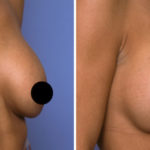
First and foremost, I have found that many women don’t even know that their breasts are not ‘even’. Many do when the differences are more significant but in small differences it is often not even perceived until it is pointed out. Secondly, breast augmentation may either improve or worsen the breast asymmetry dependent upon what type of asymmetry it is. In my experience, if the asymmetry involves different positions of the nipples before surgery, it is quite possible an enlargement of the breast will make it worse. In this cases, a superior nipple lift may be considered in the more ’southern’ nipple if it is the one not at the right height. If it is a more ‘northern’ nipple, then there is no real solution to that problem short of keeping the implant higher on that side and living with mound asymmetry but with the nipples centered on the breast mound. (either choice is not great). If the nipples are fairly even and the differences are mainly in mound size (amount of skin, level of the inframmary crease), then an implant enhancement may improve the asymmetry by different fill volumes or sizes between the two sides. This is a more desireable situation and , while some asymmetry may still exist, it is likely to be better than dealing with nipple aymmetry.
With all of the options available in breast implants today, saline vs silicone and different projections, it is tempting to get too clever by making changes not only in implant volumes but in styles or projections as well. While this may work in some cases, it is equally possible that you may merely create a different asymmetry problem. I have found it best to usually keep it simple using some differential volumes of implants is some cases but generally not mixing implant projection styles.
In short, if breast asymmetry improves after augmentation that is a bonus but is not assured. It is not possible with any degree of certainty to predict final breast shape outcomes in asymmetry. The goal is improvement in shapes, but not perfection. To use a great quote (to whom I cannot remember to give credit), this is sister surgery, not twin surgery.
Dr Barry Eppley
http://www.eppleyplasticsurgery.com
http://www.ologyspa.com
Clarian North Medical Center, Carmel, Indiana
Clarian West Medical Center, Avon, Indiana
Indianapolis

Dr Barry Eppley of Indianapolis Answers Some Common Breast Augmentation Questions
Posted on 09 March 2008 | Category: breast augmentation, breast implants

Breast Augmentation is the number one cosmetic body procedure performed in plastic surgery, even outdoing liposuction which has the advantage of potentially treating many body areas as opposed to breast augmentation’s one. Because the operation is fairly ’standard’, many potntial patient’s questions and concerns are quite similar I get them on almost every consult that I see. Here are some typical ones of which I will try and provide some general answers. Neither of those questions, however, has a definite answer to any specific patient as there are many variables that control what an implant looks like and how much volume makes a certain cup size. The implant plays a role but the patient’s own anatomy and type and amount of breast tissue and skin play an equally important role.

Will the breast result be better if the implant is above or below the muscle?
The issue of how a breast implant looks above or below the muscle highly depends upon what type of implant that is used, saline vs silicone. They will look somewhat different, silicone will generally be smoother at the edges, saline will likely have some rippling at the bottom and teh sides (eventually). Either way, the shape (due to the weight of its filler content) of the breast will be slightly fuller up top for saline and potentially less full on top with silicone, although the style or projection (low, medium, high) of the braest implant will also play a role. However, how much or how little breast tissue one has and whether the skin is tight or saggy will influence the final appearance as well.
How many implant ccs (volume) does it take to make a full C breast?
The concept of breast size based on cup size and what a certain implant volume may due…..is a little like looking at art. What does a full C look like? What I think it looks like and what you think that looks like may be very different…or similar. Unless we are looking at actual breasts in pictures and asking that same question…one can never know for certain. Even if we agree on what a full C is….every patient’s chest and breast size will require a different volume implant to get there. For example, if you are 5’ 0” tall and weigh 105 lbs, most likely 350 – 375cc will get close to that size….but if you are 5’7” tall and weigh 145 lbs, than 400 – 425cc may be needed to get to that size. Also, how wide your breast is, what we call base diameter, plays a very important role in size and how far to the side the breast implant may go. (which generally is undesired by most patients) We want to choose a breast implant that gets you the size you want but does not go too far to the side. If the size implant chosen for your desired look is too wide, then we need a higher projecting style implant. Sounds confusing, doesn’t it?

These questions are excellent ones and very common. For most patients, these are two of the most important questions (what type of implant, saline vs silicone, is best for you is the most important one) But the answers are not straight forward and each women’s chest and breast size anatomy must be taken into consideration.

Dr Barry Eppley

http://www.eppleyplasticsurgery.com

http://www.ologyspa.com

Clarian North Medical Center, Carmel, Indiana

Clarian West Medical Center, Avon, Indiana

Indianapolis

Dr Barry Eppley, Love Your Look, and Mentor
Posted on 09 March 2008 | Category: Love Your Look, breast augmentation, breast implants

Dr Barry Eppley, board-certified plastic surgeon from Indianapolis, is now listed on the Mentor (http://www.mentorcorp.com) website entitled Love Your Look. (http://www.loveyourlook.com) This website is a great resource location for those women looking for comprehensive information on breast implants and breast augmentation. Dr Eppley, an exclusive user of Mentor saline and silicone gel breast implants, has many before and after photographs posted on this site.

Silicone Breast Implants and Risk of Platinum Toxicity
Posted on 03 March 2008 | Category: breast augmentation, breast implants, silicone breast implants

Just when I thought I had reviewed all of the known issues relating to silicone breast implants, from the risk of autoimmune disorders to breast feeding, one appears that I not yet heard of…..the risk of platinum toxicity.
The metal, platinum, is used as a catalyst in the cross-linking reaction of the silicone gel and elastomer in silicone gel breast implants and is present in the finished implant at a parts-per-million level. As such, there is the theoretical risk that residual amounts of platinum may diffuse from the breast implant into the surrounding tissues, posing a potential health risk to patients. Dr. Roger Wixtrom of Virginia, a toxicologist, reviews the platinum issue and its risks in the December 2007 Supplement to Plastic and Reconstructive Surgery. Diffusion studies of current manufactured breast implants indicates that only very minute levels of platinum are released and more than 99% of the original platinum is retained in the implant. Also, the platinum that is present is in its most biocompatible form. (zero valence or oxidation) An FDA report on this issue was released on June 16, 2o06 which states..”Based on the existing literature, the FDA believes that the platinum contained in breast implants is in the zero oxidation state, which would pose the lowest risk, and thus the small amounts of platinum that leak through the shell do not represent a significant risk to women with silicone breast implants.”
Allergic reactions to plastinum are known, but these are to higher valence forms of platinum which are not present in current silicone breast implants. Furthermore, in unpublished studies, over 100 human volunteers have been exposed to repeated applications of the platinum catalyst in patches without any evidence of sensitization. Current evidence would indicate that this potential platinum toxicity concern in breast implants does not represent a significant health risk.
Dr. Barry Eppley
http://www.eppleyplasticsurgery.com
http://www.ologyspa.com
Clarian North Medical Center, Carmel, Indiana
Clarian West Medical Center, Avon, Indiana
Indianapolis

The Health of Children Born to Women with Silicone Breast Implants
Posted on 02 March 2008 | Category: breast augmentation, silicone breast implants

An exhaustive amount of investigations have been done relating to the health of women who have had silicone breast implants. Little work has been published on a more obscure, often not thought about, but very relevant issue…..do silicone breast implants have an any adverse effects on children born to mothers who have had breast implants?
In the December 2007 Supplement in Plastic and Reconstrucive Surgery, Dr Kjoller and others from Denmark examined published findings of epidemiologic studies that have examined that very issue. Based on four epidemiologic studies from Scandinavia where population records and birth registers are historically well tracked, a total of 11,445 women with breast implants and 3,248 children born after the mother’s breast augmentation surgery were examined. Comparisons were made to general population controls. Outcomes evaluated were a variety of birth defects and rheumatic disorders. Their conclusions were that congenital deformities , rheumatic disorders, and perinatal mortality were comparable between children born to motehrs with breast implants and children born to mothers who had under gone other cosmetic surgery.
While these study findings don’t surprise me, I was not aware that this interesting and very relevant issue had actually been studied.
Dr Barry Eppley
http://www.eppleyplasticsurgery.com
http://www.ologyspa.com
Clarian North Medical Center, Carmel, Indiana
Clarian West Medcal Center, Avon, Indiana
Indianapolis

The Effect of Silicone Breast Implants on Breast Cancer Detection
Posted on 29 February 2008 | Category: breast augmentation, breast cancer, silicone breast implants

While not commonly asked, one of the first questions a potential breast augmentation should ask is…does the breast implant interfere with being able to detect breast cancer? Since breast cancer in the United States affects one in 11 women during their lifetime, this is a fairly important question. As breast augmentation procedures continue to be on the rise, this important question should be thoroughly addressed.
In a recently published analysis of this topic by Dr. Neal Handel of Santa Barbara, California in the December 2007 Supplement issue of Plastic and Reconstructive Surgery, he does exactly that. Using over 4,000 patients over a 23 year period, he assessed how easily mammography detected breast lesions. Women with breast implants presented more frequently with breast masses, invasive tumors, and axillary node spread. However, there was no significant difference in stage of disease, tumor size, recurrence, or survival between the two groups. Despite the diminished sensitivity of mammograms to detect breast cancer in women with implants, nonaugmented women and augmented women are diagnosed at similar stages of disease and have similar prognoses.
In a companion study in the same Supplement, Dr. Dennis Deapen of Los Angeles, California evaluated literature over the past 20 years which examined breast cancer-related risks among breast implant patients. He found that women with breast implants do not experience delayed detection of breast cancer. He summarized that breast implants are not associated with an increased risk of breast cancer incidence or death and these patients do not experience delayed detection or poorer survial after breast cancer treatments.
These two published studies should go far to alleviate any concerns in potential and existing breast implant patients about the detection and treatment of breast cancer.
Dr Barry Eppley
http://www.eppleyplasticsurgery.com
http://www.ologyspa.com
Clarian North Medical Center, Carmel, Indiana
Clarian West Medical Center, Avon, Indiana
Indianapolis

The Safety of Breast Feeding with Silicone Breast Implants
Posted on 28 February 2008 | Category: breast augmentation, breastfeeding, silicone breast implants

Now that siicone breast implants are back for breast augmentation, they are rapidly becoming the preferred implant over saline for primary breast augmentation. Due to their more natural feel, lack of implant rippling, and lower risk of detectable implant failure, they now represent 90% of implants that I put in for breast augmentation. One of the many ’safety’ questions that arises with the use of silicone breast implants for younger women is……do they interfere with the potential for breast feeding?……and will any silicone ‘leak’ into the breast milk and potentially harm my baby?
First and foremost, the vast majority of implants in breast augmentation are submuscular…meaning that the breast tissue between the nipple and the muscle is undisturbed. Therefore, the breast implant does not impinge on the breast ducts and no interference is possible. Furthermore, the most common incisional approach for silicone breast implants is through the inframmary fold, not the nipple, completely eliminating any potential damage to the breast ducts.
The blood and breast milk chemistries (content) of women with silicone implants has now been studied and published. Dr John Semple from Toronto has published the definite work to date on this subject entitled ‘Breast-Feeding and Silicone Implants’ in the Supplement to Plastic and Reconstructive Surgery, December 2007, Silicone Breast Implants: Outcomes and Safety. In his study, he compared women with silicone breast implants to women without and showed that the mean silicon levels were not different in these two groups in either their breast milk or in their blood. Interestingly, silicon levels in other methods of infant nutrition, such as store-bought cow’s milk and commercially-available infant formulas, were much higher. Cow’s milk had a nearly 10 fold increase in silicon levels and commerecial infant formualas were as high as 50 times greater!
It would be fair to say based on this evidence that silicone breast implants pose no significant known risks to breast feeding. Our clinical experience would back this finding as well.

Dr Barry Eppley
http://www.eppleyplasticsurgery.com
http://www.ologyspa.com
Clarian North Medical Center, Carmel, Indiana
Clarian West Medical Center, Avon, Indiana
Indianapolis

Dr Barry Eppley discusses Saline versus Silicone Implants for Breast Augmentation
Posted on 24 February 2008 | Category: breast augmentation, saline breast implants, silicone breast implants

Since 2006, siicone breast implants have been approved again for breast augmentation. These are new-generation silicone breast implants that are filled with a new gel formulation of silicone that promises not to leak or bleed and be more durable than the old silicone breast implants that were used from the late 1970s to 1992. The long-term data on these newer silicone breast implants is relatively short, while we have 15 years of long-term data on saline breast implants. How, then, do they compare?
In a recent February 2008 editorial by Dr Rod Rohrich, Editor of Plastic and Reconstructive Surgery journal, he does exactly that….comparing the scientific data of both types of breast implants. Here are the highlights of his analysis:
1) Patient satisfaction is high with either saline or silicone breast implants.
2) Saline breast implants need a smaller incision to be placed and cost less than silicone.
3) For breast cancer imaging, both breast implant types require additional views on
mammography to adequately image the breast.
4) Saline implants have a decreased capsular contracture and rupture rate than
silicone breast implants.
5) Saline breast implant rupture can be seen, silicone breast implant rupture can not be
seen on the outside and requires an MRI to detect.
6) Breast augmentation is not a forever, one-time operation. Many patients will eventually
require revisional surgery at some point in their remaining lifetime, often to replace their
implants.
These findings support what I tell every breast augmutentation consult. Neither saline nor silicone breast implants are perfect, each has its own unique set of advantages and disadvantages. Both of them will do the job and do it satusfactorily, make the breasts bigger. Saline breast implants have an exceptional safety history, are less expensive, and can be placed through a small incision that is away from the breast (armpit)…….but one has to accept some implant rippling/wrinkling, less of a natural feel, and the immediate deflation of the breast should the implant rupture. Silicone breast implants are not as well studied, require a bigger incision in the crease of the breast fold to place, and are more expensive…. but with the benefits of a more natural feel, virtually no rippling, and lack of any breast changes (in the short-term) if the implant should rupture.
How does a patient choose? I tell patients make your choice based on which of their disadvantages you can live with the best. Both saline and silicone implants work for breast augmentation…which of their disadvantages is more acceptable to you?

Categories

This is a list of the categories. Every post is categorized by the author to help you find what you need.

Archives

This is a list of the monthly archives. Click on the appropriate month to see the historical posts.

Links

This is a list of the links to related resources and websites. Use this list if you'd like to do some additional, relevant reading.