EXPLORE
Plastic Surgery
Dr. Barry Eppley

Explore the worlds of cosmetic
and plastic surgery with Indianapolis
Double Board-Certified Plastic
Surgeon Dr. Barry Eppley

Archive for the ‘buttock implants’ Category

Buttock Implants, Silicone Lip Injections and Facial Threadlifts - Three Procedures To Avoid?

Wednesday, August 24th, 2011

In today’s world of internet and TV shows, plastic surgery is a frequent topic of great interest to the public. While I have seen very few of such shows, I do hear of them from time to time as patients ask me specific questions on procedures that they have been presented on them. Today one of my patients asked me about a show on Dr. Oz that appeared last week. She stated it was about the ‘three plastic surgery procedures you should not have’. These included buttock implants, silicone lip augmentation and facial threadlifts.

One of the two established ways to increase buttock size is either the placement of an implant or by fat injections. The popularity of buttock augmentation today is primarily due to the use of fat injections. Known as a Brazilian Butt Lift, it offers the simultaneous benefit of unwanted fat reduction elsewhere since donor fat is needed. But before fat injections, buttock implants were the only option. The use of such implants is actually very successful and it offers permanent volume retention. But it was never widely popular because the recovery is significant due to the submuscular placement of the implant. On the Dr. Oz show it was stated that you shouldn’t have this procedure because you can not sit for weeks after surgery. This is not true. The buttock implant is actually not placed on where you sit, the lower buttocks or ischium. It actually sits higher in the upper half of the buttocks region so you never actually sit on the implants.

Lip augmentation has become both possible and very popular due to injectable fillers. Largely done through the use of hyaluronic acid-based fillers, the increase in lip size is both immediate and very visible. Its only downside is that the results are not permanent and lasts only as long as the material’s properties permit. (between four and eight months) Silicone oil is a permanent injectable soft tissue filler but it is not FDA-approved. It also has a long history of known soft tissue problems that date back from the late 1960s. It is true that the material today (Silikon 1000) is a medical-grade material which is FDA-approved for eye fluid replacement. Some injectors use it employing a micro-droplet technique that purportedly eliminates the soft tissue problems of the past. I would have no doubt that a better material and injection technique is much more likely to be successful. But when the successful use of any permanent implantable material is highly technique-dependent, a significant rate of complications will ensue. Stay with the more temporary injectable fillers which have a proven track record of safety.

Threadlifts were very popular in the mid-1990s as a minimally invasive facial rejuvenation procedure for lifting of the brow, cheeks and neck. It has faded in use because it was realized that it could only produce a limited lifting effect and the results were not long-lasting. More traditional soft tissue excision and lifting procedures (e.g., Lifestyle lift, Quicklift etc) are more effective and offer a much better value. As one ages, it is possible that the subcutaneous linear location of these threads could become obvious due to fat atrophy and tissue thinning. Apparently the show stated that the removal of these implanted threads, if needed, was very difficult. I have removed numerous of these threads over the years and have not found their removal difficult or a particular problem. The reason to avoid threadlifts is because they do not work well. Because these facial threads are no longer manufactured, avoiding this procedure is no longer a concern.

Dr. Barry Eppley

www.eppleyplasticsurgery.com

Indianapolis, Indiana

The Danger of Silicone Injections - Opt for Safe and Proven Buttock Enlargement Procedures

Sunday, August 15th, 2010

While immigration issues, largely that of the Hispanic and Latino origin, have dominated the national headlines for a while and will continue into the future, there is a cosmetic medical issue also brewing within these U.S. communities. In large urban areas such as L.A. New York and Chicago, this influx of legal and illegals have become prime targets for cosmetic surgery scams.

The desire to have a larger or enhanced buttocks is a common aesthetic desire to the Latin and South American communities. In addition to African-Americans, they make up the overwhelming majority of those patients in the U.S. seeking buttock  enhancement by enlargement. While buttock implants is the most assured and immediate way to increase buttock size, it is major cosmetic surgery that involves significant recovery and expense. As a result, the allure of more ‘simple’ buttock injections is significant with less cost and minimal recovery.

When done by a board-certified plastic surgeon who uses your own fat, buttock injections are perfectly safe and one also gets the benefit of some body contouring from the harvest site. The problem with buttock fat injections is not safety but reliability. Patients often have to be content with less of a size than they want from a single surgery or be willing to undergo multiple fat grafting sessions.

But a subculture of buttock injections exist that uses unapproved silicone oil and is done by nothing short of cosmetic charlatans or black marketers. And they pray upon the most susceptible of patients….the uneducated and those who can not afford the real and proven surgery. The result has been a rash of such patients who have suffered complications including death. From cases in New Jersey to the  most recent one in California,  a pattern of illegal cosmetic surgeries is occurring in the largely Hispanic communities.While silicone is an FDA-approved filler material for breast implants, it is in a gel form that is contained in a bag and placed in a single tissue location. Silicone as an oil only exists as an approved medical procedure for replacement of eyeball fluid. It is not approved by the FDA or has ever proven to be safe when injected into fat. There are some plastic surgeons who may use it off-label as a facial soft tissue filler but for this application only small micro-droplets are injected. Such small quantities may not kill you but it could turn into small hard lumps and look irregular or lumpy. When large quantities are pumped into the buttocks, severe allergic reactions may develop or it could accidentally find its way into a large vein, going to the lungs and creating a potentially fatal embolus or blood clot. When poor quality or low-grade silicone oil is used, or worse some other material, severe complications are inevitable.


Despite these published complications, some patients persist in pursuing these black market buttock enlargement procedures. In my Indianapolis plastic surgery practice I just saw a buttock enlargement consult this week who specifically came in for silicone oil injections. Why she thought I ever did this illegal procedure I do not know. But she was young and naïve and had clearly done no research on the procedure. She was only focused on ‘immediate results that would be permanent’ and ‘she could return to work with no recovery or pain’.When it comes to buttock enlargement, like all cosmetic procedures, stay with the safe and proven. While fat injections and implants may not be perfect, they are safe and are accepted standards of medical practice. The allure of convenience and low cost should be reserved for fast food and coffee, not surgery.


Dr. Barry Eppley

www.eppleyplasticsurgery.com

Indianapolis, Indiana

Buttock Implant Incision and Scars

Tuesday, March 10th, 2009

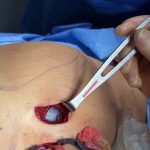
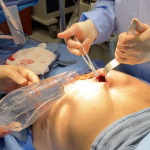
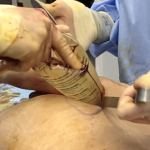
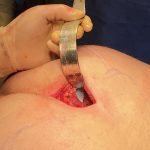
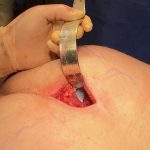
When one wants assured buttock enhancement, the use of a synthetic implant is needed. Whether the implant is placed above the muscle (subfascial) or inside it (intramuscular), an incision is needed to get to the desired recipient site. The standard incision for buttock implants is placed at the apex of the gluteal crease and extends upward to the very low back region for a total length of about 7 cms. Closure of this incision and the use of postoperative drains is critical in preventing postoperative problems with it.


The few inches of the intragluteal incision is surprisingly all that is needed to insert the soft and flexible buttock implants. Because it is a single incision that provides dual access for both implants, how it is closed is absolutely critical. All layers must be carefully reapproximated from fascia up to skin to provide tissue separation of the two implants and to be able to resist the shearing forces from sitting and sliding across this area in the early postoperative period. While some minor incisional separations can occur, major wound breakdown is to be avoided. The concomitant use of drains, one under each implant, is important with the placement of buttock implants to prevent the most common complication from their use, that of fluid accumulation or seroma formation. They will exit from the sides of the incision, about one to 2 cms to the side, until they are removed 7 to 10 days after surgery.


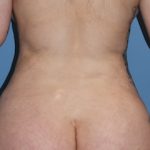
Understandably, most patients are concerned about how these scars will look after surgery. This scar is mostly well hidden in the crease with only a small part just above the ‘crack’ area. The drain tube exit scars appear as small circles just to the side of the vertical scar. While these scars will be red for up to six months after surgery, eventual fading of them will make their appearance as a fine white vertical line and small white dots. Most patients consider these scars as negligible and a very small trade-off to make for the benefits of a larger and more shapely buttocks appearance.


Dr. Barry Eppley

http://www.eppleyplasticsurgery.com

http://www.ologyspa.com

Clarian North Medical Center, Carmel, Indiana

Clarian West Medical Center, Avon, Indiana

Indianapolis

Subfascial and Intramuscular Placement of Buttock Implants

Monday, January 12th, 2009

The desire for a pleasing appearing buttocks is an historic one. The ancient Greeks had a name for it…callipygeny…meaning beautiful buttocks. A well-developed buttock is uniquely human and developed as a result of standing erect on two feet. The buttock shape is primarily a result of the underlying muscle (gluteus maximus) and the amount of fat between the skin and the muscle. Among different ethnic groups and cultures, there are significant variations in the size and shape of the buttocks. Today, buttock augmentation is more popular than ever as a result of improved implant materials and the popularity of fat grafting. Improved surgical technique has also led to fewer complications, making implant enhancement in particular, more successful and more commonly done than in the past.


Buttock augmentation with implants is a very effective procedure but has not risen to the popularity of other body implants such as breast augmentation. There are many reasons for this but historically, buttock implants, had a significant rate of complications. Some of these were related to the implant material and shape but more were the result of the location of implant in the buttocks itself. Placing the buttock implant right under the skin (subcutaneous approach) and under the gluteus muscle (submuscular approach) cause significant medical and cosmetic problems and have largely been abandoned by most plastic surgeons. Accepted approaches today include implant placement in the gluteus muscle (intramuscular) and between the muscle and its covering. (subfascial)


If you are considering buttock implant enhancement, the question of whether your implants should be placed in the intramuscular or subfascial location is an important one. As a general rule, intramuscular implant placement is reserved for those with a flat buttocks and with little fat between the muscle and the overlying skin. It is important to have a good pad of tissue to cover the implant so deeper in the muscle is a good choice with this type of anatomy. More often than not, thin Caucasian patients need intramuscular placement. For patients who have more buttock substance in both shape and fat content, subfascial placement is acceptable. Enough fat exists already to provide good implant coverage. Usually this approach is used in African-Americans and Hispanics who may already have more than just a flat buttocks to begin with and desire enhancement of existing buttocks substance.


Dr. Barry Eppley

http://www.eppleyplasticsurgery.com

http://www.ologyspa.com

Clarian North Medical Center, Carmel, Indiana

Clarian West Medical Center, Avon, Indiana

Indianapolis

Gluteal Implants or Fat Injections for Buttock Enlargement Surgery

Sunday, January 4th, 2009

Enlargement of the buttocks or buttock enhancement is a plastic surgery procedure that has become more commonly requested and performed in the past several years than ever before. Ten years ago, this was a procedure that was unheard of and rarely done. Due to cultural influences and a changing population mix, the shape and size of the buttocks has become an aesthetic issue of importance.

The buttocks is a three-dimensional structure of which its size and shape are both important. For some patients, their buttocks is too flat and lacks any definition, for other patients it is an issue of size more than shape.  As a result, when it comes to buttock recontouring, one has to consider what procedures can increase size as well as shape. It often takes a combination of procedures to create the best buttock result.

When it comes to increasing buttock size, it is a choice between natural fat injections or the use of synthetic implant. Both work and are capable of adding volume to the buttocks, but they are different in the results achieved and their associated potential risks and complications.

Buttock implants remain the gold standard for buttock enlargement. They have a long-standing history of success and their primary advantage is that the volume they add to the buttocks is both stable and permanent. The implants will not change in size over time as the material of which it is made (silicone rubber) does not degrade in the  body. While implants do have traditional risks of malpositioning, infection, and seroma (fluid) development, improved surgical techniques with intramuscular placement has gone a long way in decreasing these issues.  Nonetheless, these potential risks still exist and a patient must be willing to accept that a small percentage of buttock implants will develop these problems.

Fat injections, using the patients own fat, is a ‘newer’ buttock implant approach that has only become popular in the past few years. Its recent popularity is linked to the emergence of fat grafting in plastic surgery in general and as an easier alternative than traditional implant placement. Fat injections into the buttocks is less invasive and has a quicker recovery than an implant. It also uses the patient’s own fat which, if one is having liposuction anyway uses the discard, or if done by itself offers an aesthetic contouring benefit from the donor site. The primary disadvantage to fat injections is their unpredictability and that only a modest gain in buttock size can be achieved with one surgical treatment. It is far to say that fat injections can not create the same volume size that an implant can……in one surgical session. Multiple fat injections sessions, however, can create the same volume but at the disadvantage of considerable more expense and effort.

Which is better for any buttock enlargement patient….fat injections vs implant?  If one is opposed to the thought and risks of an implant, then fat injections are the way to go with the understanding of the limitations in size that can be obtained. Or if one is having liposuction anyway, then fat injections are worth trying since enlargement of the buttocks may not be the sole objective of the surgery. But if considerable buttock size is wanted and one wants the most predictable result, buttock implants are the best choice…..if one can accept their risks.

Dr. Barry Eppley

http://www.eppleyplasticsurgery.com

http://www.ologyspa.com

Clarian North Medical Center, Carmel, Indiana

Clarian West Medical Center, Avon, Indiana

Indianapolis

Buttock Enhancement Surgery in Indianapolis

Tuesday, December 25th, 2007

Buttock Enhancement Surgery in Indianapolis by Dr Barry Eppley:
An Overview of Techniques to Beautify the Buttocks

The appearance and shape of the buttocks has taken on great interest in the past few years. Whether it be too big, too flat, or sagging with age, the interest in improving one’s buttocks has never been this great in the world of plastic surgery. Much of this recent interest in the appearance of the buttocks in the United States is due to the northern immigration of South American culture. Each of the many different buttock problems is treated with various plastic surgery techniques. As I consult with patients here in Indianapolis, it is important to carefully analyze the shape of the buttocks and the patient’s desires and then match the appropriate plastic surgery procedure(s).


By far, the ‘simplest’ buttock problem to treat is the one in which the buttock is too big. The problem is ‘simple’ only because the only treatment approach is that of liposuction. The results from liposuction of the buttocks is usually modest. One must avoid too aggressive liposuction as this may cause the skin of the buttocks to sag after being ‘over-deflated’ by the fat removal. In rare cases, liposuction combined with a lower buttock lift (cutting a strip of skin and fat from the lower buttock crease) may produce a better overall result.


The flat buttock is treated either by implants or fat injections. Solid rubbery implants (which cannot leak) can be placed inside the muscle through a small incision in the upper buttock crease. Buttock implants are best for those patients who don’t have enough fat to transfer and want extra fullness in the upper portion of the buttocks. The implants generally don’t add much fullness to the lower portion of the buttocks. The discomfort with buttock implants is considerable and physical activity must be restricted for several weeks after surgery. Once you have buttock implants, removing them (if necessary) will lead to further disfigurement due to the extra skin that has been created. Fat injections are useful when only a small increase in buttock size is needed. It is unpredictable how much injected fat will survive and multiple surgery sessions may be needed to get the desired result. As fat is needed to inject, a double benefit is achieved by contouring two areas at once, reduction in size of the donor site (usually abdomen or thighs) and a larger buttocks.


The sagging buttock can be treated by two types of buttock lifts. When only a small amount of skin is sagging over the crease, a lower buttock lift as previously described can be used. The trade-off is a scar in the lower buttock crease. When a larger amount of buttock skin is hanging down (after bariatric surgery, for example, where a lot of weight loss has occurred), the buttock shape is addressed by a circumferential body lift where a low back scar is the result of removing a wedge of skin and fat from above.


As you can see, there are a lot of different approaches to buttock enhancement and a consultation with an experienced plastic surgeon can help you pick the right buttock operation(s) for your problem.


Dr Barry Eppley
http://www.eppleyplasticsurgery.com
http://ologyspa.com
Clarian North Medical Center, Carmel, Indiana
Clarian West Medical Center, Avon, Indiana
Indianapolis

Buttock Implants in Indianapolis

Tuesday, December 25th, 2007

Enhancing the Shape and Size of the Buttocks with Butt Implants (Gluteoplasty) in Indianapolis by Dr Barry Eppley


For those women, and rarely for a few men, the desire for a larger more shapely buttocks is more prevalent today than ever in the history of plastic surgery. This buttock enhancement trend is undoubtably fueled by fashion style issues such as the well known ‘J-Lo Butt’ and the northern influence by immigration of Hispanic and South American cultures, which is a larger buttock with no crease underneath. (known as the Brazilian buttocks) As a result, buttock size increase can be done with either implants or fat injections. I will talk here only about the use of buttock or gluteal implants for buttock enhancement or medically known as, implant gluteoplasty.


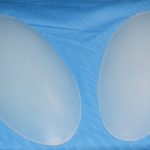
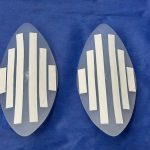
Buttock implants or gluteal implants are semisolid, rubbery silicone implants that have several basic shapes and sizes for the buttock area. They are not liquid filled nor should any surgeon ever use those type of implants for anything other than the breast. The buttock implants are fairly soft and flexible and don’t feel that much different from dense buttock tissue. The main plastic surgery issue with buttock implants is the surgical technique by which they placed. This has been controversial over the years. Should the buttock implant go into the gluteal muscles (intramuscular) or on top of them? (subfascial) While some controversy probably still exists, I think the best technique is that advocated by plastic surgeon Dr Gonzalez in Brazil. He probably has the world’s largest buttock implant experience and I was privileged to work with one his disciples, Dr. Jose Flores, in Indianapolis for several months.


Through a midline incision in the upper buttocks crease, a pocket is carefully developed in the gluteus maximus muscle. The pocket is developed with an instrument staying within carefully determined markings done prior to surgery with the patient standing. The size and shape of the buttock implant (round or oval) is determined prior to surgery during the initial consultation based on the size and shape of the buttocks and what area of the buttock needs to be increased in size the most. The buttock implant is then slipped into this carefully made pocket. No type of compression garments is needed after surgery. Walking and sitting are allowed after 24 hrs. Sleeping should be done on the patient’s side for 1 week and driving is allowed after 7 days. Working out and running should not be resumed for at least one month after surgery.


I have found buttock implant surgery to be very gratifying for most patients, However, be aware that buttock implant surgery is painful and some sufficient recovery time is needed. The most common complication of buttock implant surgery is fluid collection (seroma) around the implant which may require drainage.


Dr Barry Eppley
http://www.eppleyplasticsurgery.com
http://www/ologyspa.com
Clarian North Medical Center, Carmel, Indiana
Clarian West Medical Center, Avon, Indiana
Indianapolis

Buttock Contouring - Different Operations for Different Problems

Monday, November 5th, 2007

The shape of the buttocks has taken on great interest in the past decade. Whether it be too big, too flat, or sagging with age, the interest in changing one’s buttock has never been greater. Each of these buttock problems are treated differently.


By far, the ‘simplest’ buttock problem to treat is the one in which the buttock is too big. The problem is ‘simple’ only because the only treatment approach is that of liposuction. The results from liposuction of the buttocks is usually modest and the patient must not have to high an expectation. Contrarily, one must avoid too aggressive liposuction as this may cause the skin of the buttocks to sag after being ‘over-deflated’ by the fat removal.


The flat buttock is treated either by implants or fat injections. Solid rubbery implants (which cannot leak) can be placed inside (intramuscular) or on top of the muscle (subfascial) through a small incision in the upper buttock crease. Buttock implants are best for those patients who don’t have enough fat to transfer and want extra fullness in the upper portion of the buttocks. The implants generally don’t add much fullness to the lower portion of the buttocks. The discomfort with buttock implants is not insignificant and physical activity must be restricted for several weeks after surgery. Exercise can not be resumed for about 6 weeks after surgery. Surgical risks include infection, bleeding, fluid collections (seroma) around the implants, shifting of the implants, and uneven appearance between the two sides. Once you have buttock implants, removing them (if necessary) will lead to further disfigurement due to sagging skin. Conversely, fat injections are useful when only a small increase in buttock size is needed. It is unpredictable how much injected fat will survive and multiple surgery sessions may be needed to get the desired result. Usually fat is simply redistributed……sucked from one undesired location and transferred to the buttocks. This gets a double benefit of contouring two areas which creates a better overall result.


The sagging buttock can be treated by two types of lifts. When only a small amount of skin is sagging over where the crease joins the back of the thigh (banana roll). This more limited buttock lift creates a scar in this crease and helps shape this lower buttock area. When the entire buttock needs to be lifted (usually in the bariatric surgery patient where a large amount of weight has been lost), a more aggressive lift is done by creating a ‘cutout’ of upper buttock and back skin (often done in conjunction with a tummytuck around the front, thus creating a 360 degree scar, a.k.a. a body lift). The buttock skin is then lifted and sewn upward, providing a lift to more of the entire buttocks.


Dr Barry Eppley
www.eppleyplasticsurgery.com
www.ologyspa.com
Clarian North Medical Center, Carmel, Indiana
Clarian West Medical Center, Avon, Indiana
Indianapolis


Dr. Barry EppleyDr. Barry Eppley

Dr. Barry Eppley is an extensively trained plastic and cosmetic surgeon with more than 20 years of surgical experience. He is both a licensed physician and dentist as well as double board-certified in both Plastic and Reconstructive Surgery and Oral and Maxillofacial Surgery. This training allows him to perform the most complex surgical procedures from cosmetic changes to the face and body to craniofacial surgery. Dr. Eppley has made extensive contributions to plastic surgery starting with the development of several advanced surgical techniques. He is a revered author, lecturer and educator in the field of plastic and cosmetic surgery.

Read More


Free Plastic Surgery Consultation

*required fields


Pricing

The cost of any type of elective plastic surgery plays a major role in the decision to undergo the procedure(s).

More Info


Military Discount

We offer discounts on plastic surgery to our United States Armed Forces.

More Info


Categories