EXPLORE
Plastic Surgery
Dr. Barry Eppley

Explore the worlds of cosmetic
and plastic surgery with Indianapolis
Double Board-Certified Plastic
Surgeon Dr. Barry Eppley

Archive for the ‘cheek augmentation’ Category

Common Questions about Cheek Augmentation (Implants)

Saturday, January 16th, 2010

The appearance of a well-defined cheekbone helps provide a sculpted and youthful look as it provides midfacial prominence and give the appearance of a thinner lower face. Flat cheekbones can make a large nose look larger and a receding chin smaller. The cheekbones are one of the three convex prominences that help define your face, highlighting the eyes and adding balance to your features.

Cheek augmentation (also known as malar augmentation or malar implants) is a surgical method to bring the cheeks into better balance with your other facial features.


  1. How do I know I am a good candidate for cheek augmentation?

People who benefit by cheek implants have smaller or flatter cheek bones naturally and/or have sagging of the cheek soft tissues due to normal aging. With aging can also come deflation, or loss of healthy fat which normally lies just under the cheek bones. This can give a gaunt look to one’s face.

A cheek implant can build out the flat cheek bone, provided a lifting effect to sagging cheek skin, and can partially fill out a sunken in look. Think of it as adding substance which may just make the cheekbone bigger or help hold up sagging or collapsed tissues.

That being said, whether anyone would benefit by a cheek implant is as much an  artistic feel as a facial feature that can be precisely defined. Unlike other facial implants, such as chins or jaw angles which can be measured and morphed with computer imaging, cheek implants defy such analytical evaluation as the area is not a clean profile or silhouette. This is an area that requires a good evaluation and discussion with your plastic surgeon using a mirror and finger technique.

  1. What are cheek implants made of?

The vast majority of cheek implants are made of solid silicone rubber that is very flexible. While there are a few other materials of which they are made, they are not very popular. What material they are made of is not as important as two other critical issues; what styles and sizes are available and how easy are they to insert. This is where silicone rubber has a huge advantage over other materials.

One type or style of cheek implant is not right for everyone. The cheek bone shape and geometry and the soft tissue overlying them is different for each patient. Just like the obvious benefits of different sizes, style or shape of the implant needs to be individualized. That is why there are nearly a half-dozen different cheek implant styles. Only a silicone rubber material can offer this diversity of selection.

The flexibility of silicone rubber and the ability to have feathered edges allows it to be the easiest material to position on the bone without having an edge that can be felt or seen.

  1. How is cheek augmentation surgery done?

There are two approachs to placing the implant, from inside the mouth and through the lower eyelid. By far, the intraoral method from a small incision up high under the lip is preferred. The only reason to use the eyelid approach is if a midface lift or suspension is being done at the same time.

From inside the mouth, a path is made up onto the cheek bone. It can be extended out onto the zygomatic arch if necessary. Sizers are used to determine what will look the best. The final implant is then inserted. Some plastic surgeons secure the implant in place with a small titanium screw, others do not. Closure of the incision is done with dissolveable sutures.

  1. Is cheek implant surgery painful? How long does the swelling last?

I would not call it painful, rather it is more uncomfortable due to the swelling. Often there is some numbness of the cheek skin  which goes away in the first month after surgery. There rarely is any bruising because the surgery is very deep on the surface of the bone. Any bruising that occurs will not be seen on the skin but will present only as swelling. While remnants of swelling take six to eight weeks to completely go away, you will look fairly normal within two to three weeks. The initial abnormal fullness will have go away by then.

  1. What are the risks and complications that can occur?

The standard surgical risks of bleeding and infection apply but they are very uncommon. The risk that is more significant and probably accounts for most instances of revision or secondary surgery is implant asymmetry or sizing issues. Because the cheeks have two sides, the placement of the implants must be perfectly symmetrical. That may seem easy but even slight changes in orientation of the implant may be able to be seen. Implants can also shift or slide downward towards the direction in which they were placed. Oversized cheek implants are especially noticeable because they can make the face look very unnatural. Cheek implants are always best done smaller than bigger.

One risk of having cheek implants is delayed infection, even many years later. This is caused by one specific event…dental injections. This can happen when your dentist is numbing your upper teeth. The needle can tract bacteria near or onto the implant. Advise your dentist if you have cheek implants.

  1. I’d like higher cheekbones but I don’t want them to look fake. How can this be avoided?

There are many well known examples of famous people that look strange and overdone after facial rejuvenation surgery. In some of these cases, it is obvious they had cheek implants and it is because they are too big. This ‘error’ is most likely to occur when cheek augmentation for anti-aging purposes and are being used to fill out sagging cheek tissues. A cheek implant is not the same as a breast implant…its size should not be pushed to do too much.

  1. I have very flat cheeks that extend down below my eyes. It makes me look sad. Will cheek implants help?

Having flat cheekbones can give the face a long drawn look that many may describe as sad. In the facial expression of smiling, we naturally see more prominence in the cheek area. When it is flatter it adversely affects how one’s smile looks. More fullness in the cheek allows a more  youthful look, whether one is smiling or not.

Dr. Barry Eppley

http://www.eppleyplasticsurgery.com

http://www.ologymd.com

Clarian North Medical Center, Carmel, Indiana

Clarian West Medical Center, Avon, Indiana

Indianapolis 


Common Concerns about Cheek Implant Surgery

Sunday, December 20th, 2009

A face that has good skeletal contours, which some would call sculpted, is desired by many young men and women. The appearance of high cheekbones is one important element of achieving such a look. Cheekbones create a well-defined face by creating an upper facial prominence which makes the lower face look thinner. Such a facial look is seen as ‘model-like’ as is reflected in much of our society’s advertising.

In performing cheek augmentation, there are numerous typical questions that prospective patients may have about the procedure. In my Indianapolis plastic surgery practice, here are some of the most common.

Q: I am afraid if I get cheek implants that it may look unnatural. I have seen some Hollywood people that supposedly have them and they look fake. Will this happen to me?

A: That is an avoidable result. In choosing the right cheek implant for any patient, three factors are considered…the selection of the patient, the size and shape of the implant, and properly positioning them  during surgery. Not every person will benefit from cheek implants, the whole face must be considered. Rounder and fuller faces are not usually good candidates. There are different styles and sizes of implants available. As a general rule, it is always best to not overdo them. A subtle enhancement is more aesthetically pleasing than being too big. The implant must be positioned and secured over the curve of the cheekbone that is most deficient.

Q:  I want higher cheekbones but do I need to have a scar to get that look?

A:  All facial implants need an incision to be placed into the bone site. Surgical access to the cheek is done from inside the mouth high up under the upper lip so there is no visible scar.

Q: My face looks very flat. Do I need more than just cheek augmentation?

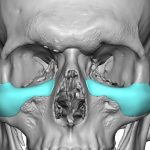
A: Some patients have more significant flattening of the middle part of their face that involves the upper jaw (maxilla) as well. While increasing cheek projection is helpful, that alone may not be enough. In this case, another set of implants can be placed along the paranasal area. (base of the nose) These two sets of implants can help bring out the entire middle part of the face into better balance with the lower jawline.

Q: What is the most common complication that occurs with this type of cheek surgery?

A: Implant asymmetry. Because cheek augmentation is a ‘paired’ surgery, both implants must be placed exactly the same. That sounds simple but slight differences in angulation and orientation of the implant may be able to be seen when the swelling subsides after surgery. This may require adjustment secondarily.

Q: How much time will I need off work to recover from cheek enhancement surgery?

A: Cheek implants will cause some obvious swelling but it is not significantly painful. Once can return to any type of work in one week but the cheeks will still be noticeably swollen. It will take at least two weeks before the cheeks will not temporarily unnatural.

Dr. Barry Eppley

http://www.eppleyplasticsurgery.com

http://www.ologyspa.com

Clarian North Medical Center, Carmel, Indiana

Clarian West Medical Center, Avon, Indiana

Indianapolis

Cheek Implants - Different Styles for Different Problems

Wednesday, November 5th, 2008

The cheek area is a central and critical element of one’s facial appearance. Situated between the pyramidal landmarks of the eye, mouth, and jaw angle, its prominence (or lack thereof) provides projection to the middle of the face. In today’s society, the perception of high or prominent cheekbones is one that is a positive statement about attractiveness and beauty. It is not clear why high cheekbones cast this image, but we all know the emotional response when we see it.


Today’s plastic surgery techniques and modern facial implants now make it possible to provide a wide range of cheek enhancements. Highlighting different areas of the cheek complex is made possible because of the many different styles of cheek implants that are available. Different cheek implant shapes are available that can enhance the front, side, underside, as well as the bone underneath the eye in front of the cheek. Because of these different style options, it is critical that a plastic surgeon look carefully at the anatomy of the cheek to determine which parts of it should be improved.


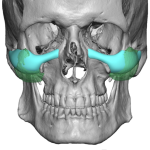
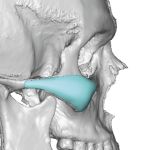
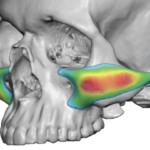
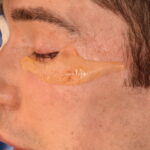
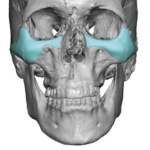
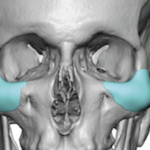
The ‘traditional’ cheek implant is really like a shell which covers all aspects of the curved cheek, adding volume to the front and sides of it in equal amounts. For those patients with really flat cheeks, this is usually a good choice. The implant can be slid further forward or further to the back of the cheek to customize its effects. Submalar cheek implants sit more on the underside of the cheek bone. They push up loose overhanging cheek tissue and , as a result, are more ideal for the aging patient with loose or sagging cheek skin. They also are good for patients who have had loss of the buccal fat pad and hollowing of this area. (facial lipoatrophy, e.g.,  HIV disease)  Because the submalar implant fills the upper part of the buccal space as well as the underside of the bone, a dual effect is achieved. Tear trough implants are not really cheek implants per se. They fill underneath the eye area which is in front of the cheek. For those patients with some good cheek width but flattening of the bone in front of the cheek, this is the only facial implant made for that use. Sometimes it can be used in combination with a traditional cheek implant for greater fill of a flat midface. 


To get the best effect from these different cheek implant styles, their position on the bone is critical. For this reason, I always secure any style of cheek implants to the bone with screws. This is the only way to be certain of their long-term position after surgery.


Dr. Barry Eppley

http://www.eppleyplasticsurgery.com

http://www.ologyspa.com

Clarian North Medical Center, Carmel, Indiana

Clarian West Medical Center, Avon, Indiana

Indianapolis

Cheek Enhancement - A Missing Part of Facial Rejuvenation

Tuesday, September 2nd, 2008

When one thinks of facial aging, they inevitably look to the jowl and neck area.While this lower facial area is of big concern to many and is the foundation of facial rejuvenation surgery (usually through a facelift-type procedure), the underlooked area is the midface or cheek. As one ages, the cheek area sinks in and sags for many as it loses volume through fat atrophy. This is partly why a heavy person with a full face may still look somewhat youthful as they age. (known as the Santa Claus effect) A gaunter, thinner face, while interesting when one is young, can really show age when one is older.


Adding volume to the cheek has been recently shown to to help make a more youthful face. Based on cadaver work by Dr. Joel Pessa at the University of Texas at Southwestern, a deep fat compartment was identified in the cheek. When this fat compartment was enhanced through implants or fillers, there was an immediate improvement in the hollowing of the face. Not only does restoring volume to this cheek compartment make the cheek/midface area more youthful, it also helps improves the look under the eyes as well as around the nose and upper lip area.


The jury is still out, however, on the best method to do this cheek volume addition. Fat injections would be the simplest and the most versatile, but fat survival remains unpredictable particularly in the older patient. I currently add PRP (platelet-rich plasma extract from the patient) to the injections and isolate the fat through a unique centrifguation method. Early results are encouraging but only one year results count when it comes to fat grafting. Cheek implants are simple to do, remain stable in volume over time, and come in a few styles to add volume to some different areas around the cheek. Unfortunately, the more lateral cheek area, which is not over bone is not affected by the introduction of an implant. And there is always the risk of infection or malpositioning. Injectable fillers are as versatile as fat injections and don’t involve an operating room experience. But their effects are only temporary and, when adding up the cost per volume injected, can potentially rival surgery fees if a large cheek area needs to be treated.

 
Not every aging face patient needs cheek enhancement nor is it the mainstay treatment of most aging faces. But it can be a good complement to more conventional facelifting procedures and is a ‘missing component’ of some patient’s treatment plans whether they are young or old.

 
Dr. Barry Eppley
http://www.eppleyplasticsurgery.com
http://www.ologyspa.com
Clarian North Medical Center, Carmel, Indiana
Clarian West Medical Center, Avon, Indiana
Indianapolis

Cheek Augmentation with Injectable Fillers

Wednesday, May 28th, 2008

As we age, one of the many facial changes is the loss of volume in the cheek area. This is most apparent in patients that are thin or have a normal age-appropriate weight. The cheek prominences become less and more saggy. In addition, the area below the cheek bone known as the submalar or buccal cheek area will often become more indented. In some patients, this can create a ‘gaunt’ or aged look. People who are heavy rarely develop this sign of facial aging as their cheeks remain fuller and more rounded, creating the ‘Santa Claus’ effect. (round and jolly but vibrant)

 
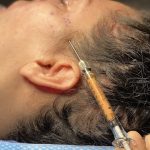
While the most effective long-term solution to cheek volume loss is surgical (midface lift, cheek implants, submalar implants, or fat injections), injectable fillers offer a quick and effective method of a subtle cheek enhancement. By injecting volume into the cheeks or below in the buccal area, the face can appear more youthful and ‘uplifted’. The effect is not designed to be dramatic, nor should it be, but a subtle improvement that looks natural. This is a quick solution that has immediate effects without the swelling and potential bruising from surgery.

 
While the effect injectable cheek augmentation is only temporary, how long it lasts will be influenced by what type of injectable filler is used. The hyalurons, such as JuvaDerm and Restylane, will last in the range of 4 to 6 months, in some cases maybe a few months longer. When using the particulated fillers, such as Radiesse or ArteFill, I would expect the effect to last longer in the range of 9 to 12 months. (or basically double that of the hyalurons)

 
Injectable cheek augmentation can be enhanced by the simultaneous use of Botox injections in the crow’s feet and cheek areas. The objective being to weaked the expression lines around the eyes so that the amount of wrinkling with smiling is less. The combination of these injectable midface treatments makes for a nice rejuvenation of the middle third of the face that looks very natural and relaxed. All done in less than 30 minutes and you are on your way back to work or home for the evening without anyone being the wiser!

 
Dr. Barry Eppley
http://www.eppleyplasticsurgery.com/
http://www.ologyspa.com/
Clarian North Medical Center, Carmel, Indiana
Clarian West Medical Center, Avon, Indiana
Indianapolis

Cheek Implants in Indianapolis by Dr Barry Eppley

Monday, December 31st, 2007

Cheek Implants for Facial Enhancement in Indianapolis

In the pursuit of a more balanced and shapely facial appearance, the cheek is an often overlooked facial feature. Even though strong or ‘high cheekbones’ is frequently commented on as desireable, the cheek is not as visible as that of its more protruding cousins, the nose and the chin. The cheek area is more subtle but an integral facial element that must be in balance with the nose, chin, and overall facial shape. With the cheek bones are diminished, the face will have a flatter appearance which  may make the nose look bigger than what it is. In the aging face, the cheek tissues are more probe to sag off of smaller cheek bones, creating bags below the cheeks and deepening of the lip-cheek groove. It is extremely rare to have cheekbones that are too big in Caucasians. I have done cheek bone reductions only in Asians, where this is more of a cosmetic problem.


In my practice here in Indianapolis, I discuss cheek bone enhancement through the use of implants. There are no practical bone-moving procedures for cosmetic purposes for the cheek area, so implants are always used. While cheek implants are available in different materials, I prefer the use of solid silicone (rubber) cheek implants, which are by far the most commonly used. They are soft, flexible, and slide easily into place along the upper jaw and cheek bones. A cheek implant is inserted through a small incision hidden underneath the upper lip. This leaves no visible scar. Usually the cheek implant is sutured into place, however, I sometimes use a metal screw to secure the implant to the bone. This screw fixation method can eliminate one of the very few complications of cheek implants, that of shifting position after surgery causing cheek asymmetry and loss of the desired cheek projection.While any implant (foreign-body) has some risk of infection, cheek implant infections are quite uncommon.


Enhancing the cheek with an implant is not as commonly performed as that of a chin implant. The goal of a cheek implant is to provide a subtle fullness to the cheekbone area. The key to cheek augmentation is not to overdo it. It is not a facial feature in which a dramatic enhancement usually results in a better aesthetic change. There are several different styles of cheek implants today. The most basic differences in cheek implants styles are whether they are malar or submalar-type designs. Submalar (below the cheek or on its lower edge) cheek implants add fullness to the buccal area which lies below the cheekbone. This style of cheek implant is good in the aging face (where it can pick up sagging cheek soft tissues) or in the face with too much hollowing in the buccal area. The different sizes and styles of cheek implants makes it possible to make a subtle or a dramatic facial change, dependent upon the patient’s cosmetic needs.


Cheek implants are commonly in conjunction with other facial procedures including rhinoplasty, facelifts, and chin augmentation.


Dr Barry Eppley
http://www.eppleyplasticsurgery.com
http://www.ologyspa.com
Clarian North Medical Center, Carmel, Indiana
Clarian West Medical Center, Avon, Indiana
Indianapolis


Dr. Barry EppleyDr. Barry Eppley

Dr. Barry Eppley is an extensively trained plastic and cosmetic surgeon with more than 20 years of surgical experience. He is both a licensed physician and dentist as well as double board-certified in both Plastic and Reconstructive Surgery and Oral and Maxillofacial Surgery. This training allows him to perform the most complex surgical procedures from cosmetic changes to the face and body to craniofacial surgery. Dr. Eppley has made extensive contributions to plastic surgery starting with the development of several advanced surgical techniques. He is a revered author, lecturer and educator in the field of plastic and cosmetic surgery.

Read More


Free Plastic Surgery Consultation

*required fields


Pricing

The cost of any type of elective plastic surgery plays a major role in the decision to undergo the procedure(s).

More Info


Military Discount

We offer discounts on plastic surgery to our United States Armed Forces.

More Info


Categories