
Explore the World of Cosmetic Plastic Surgery, Medical Spa, and Skin Care from Indianapolis Plastic Surgeon, Dr Barry Eppley

Archive: chin augmentation

Chin Implant Augmentation in Indianapolis
Posted on 26 May 2008 | Category: chin augmentation, chin implant

One of the most straightforward and most satisfying procedures is plastic surgery is chin augmentation. Enhancement of the deficient chin can make a dramatic difference in one’s facial profile. Like the nose, although not as well appreciated, the position of the chin not only plays an important role on the silhouette of the face and neck but helps form an impression (accurate or not) on one’s character. A well-defined chin that is in proportion to the rest of the face suggests strong character traits and portrays an image of strength. Conversely, a recessed or weaker chin can cast quite the opposite image.
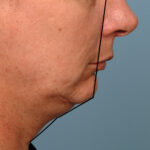
The decision (need) to perform chin augmentation is dependent on an assessment of the chin as it sits relative to the rest of the face. This is done exclusively by a profile assessment where a straight line is dropped down from the junction of the nose and forehead with the face looking straight forward and as level as possible. Where the most projecting point of the chin rests relative to this vertical line determines whether chin augmentation is beneficial, and how much, to one’s facial profile. If it rests anywhere behind this line, then chin augmentation will be helpful. How much it sits behind this line in millimeters also helps one choose the amount the chin must be brought forward. This number determines the thickness in millimeters of the chin implant or how much the chin bone must be advanced.
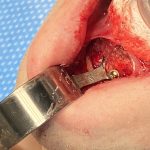
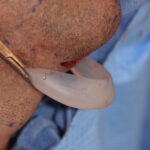
The most common method of chin augmentation is with a silicone rubber (silastic) implant. Implant placement is very simple and uncomplicated. Through a small incision under the chin, the implant can be inserted onto the bone and screwed into place. This direct approach makes it easy to place a chin implant of any size or shape, of which there are numerous styles and thicknesses from which to choose. The extended (anatomic) styles are my personal favorites as they blend into the surrounding jawbone the most naturally. The results from chin implant augmentation are instantaneous although there will be some temporary swelling (no bruising) from having to lift up the chin muscle to put it into place.
Complications from chin implants are quite few. The most common would be implant asymmetry but I avoid this problem by using a small screw to hold the implant in proper position so it can never move after surgery. Implant shifting around the pocket is the cause of this complication. Bleleding and infection, while possible, I have yet to see. Sometimes, the chin and lower lip will ‘move funny’ for awhile afterwards due to temporary swelling and the muscel being manipulated. In other words, the chin area will seem quite stiff after surgery which does impact on how the lower lip may move. This is a self-solving problem as the swelling goes away.
Dr. Barry Eppley
http://www.eppleyplasticsurgery.com
http://www.ologyspa.com
Clarian North Medical Center, Carmel, Indiana
Clarian West Medical Center, Avon, Indiana
Indianapolis

Jaw Angle Implants for Men and Women
Posted on 16 April 2008 | Category: chin augmentation, chin implants, jaw angle implant, mandible implant, mandibular angle implants

A more defined jaw angle is a not uncommon request of men, particularly younger men. I am seeing more of these patients recently than ever before. This is presumably driven by the desire for increased facial angularity and jaw line definition as seen in many male models. Surprisingly, I have also seen a few women with the same request although the female models that I have seen with this look (surgically created or natural?) look a little cartoonish to me.
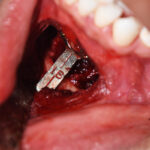
Either male or female, the procedure is the same. An intraoral incision is used along the back part of the jaw. The large masseter muscle is lifted up along the entire angle of the jaw. The only ‘difficult’ part of a jaw implant angle procedure, in my opinion, is in the selection of the type of implant material (silicone rubber vs. polyethylene (Porex) and the exact style and size of the implant. There are theoretical differences between silicone vs polyethylene but, in the big picture, I am not sure any real differences exist in terms of postoperative outcome. I think the plastic surgeon should use whichever implant material thay are most comfortable. Whether to drop the existing jawline by an extended implant or simple along the current jawline to be widened is another decision. I found that most of the time an extended implant that lowers the jawline is most useful in those patients who have an ill-defined jawline that is both narrow and obtuse in angularity. Many men will get an extended style of implant, the few women I have done get a little increased width only. Whatever jaw implant is chosen and placed, it is very important to secure it in place with a screw or two. The only complications I have ever seen with jaw angle implants has been implant migration toward the incision. This risk is completely eliminated by secure screw fixation.
After surgery, there is a fair amount of discomfort due to muscle trismus and swelling. Unlike any other facial implant, jaw angle implants produce the greatest amount of discomfort and dysfunction. (difficulty with opening your mouth for a few weeks) However, jaw angle implants produce a nice lower profile change that is second only to what a chin implant can do. Sometimes, for maximum effect, jaw angle implants and chin implants may be done together to accentuate the entire jawline.
Dr Barry Eppley
http://www.eppleyplasticsurgery.com
http://www.ologyspa.com
Clarian North Medical Center, Carmel, Indiana
Clarian North Medical Center, Avon, Indiana
Indianapolis

Chin and Jawline Augmentation in Male Plastic Surgery
Posted on 02 April 2008 | Category: cheek implants, cheek lift, chin augmentation, chin implants, jaw angle implant, mandible implant, mandibular angle implants

The facial features most associated with masculinity is the chin and jawline. A stronger chin and jawline conveys increased masculinity, smaller chins and ill-defined jawlines convey timidity and weakness. While this perceptions may not always be true (and often aren’t), they certainly help create a first impression by their appearance. In today’s plastic surgery, newer generation implants and fillers make this look possible more than ever before.
Chin implants have really evolved over the past decade with many new styles and sizes. The most important change has been that they have been extended in their shape rather than small ‘buttons’. The idea is to have an enhanced chin that flows better into the surrounding jaw. This requires an implant that ‘extends’ back from the chin to create a smooth transition from the augmented chin to the back of the jaw. These newer implants are longer and more tapered at the ends, although they can still be placed through a small incision right under the chin. Because they extend back further they give an enhanced but natural appearance to the chin. This is achieved by filling in the jawline between the chin and the back of the jaw, slightly widening the anterior jawline making the overall look more balanced. In addition to jawline width, chin and jawline height can also be lengthened by having a ‘wrap-around’ implant that extends lower than the existing edge of the bone. Prior to these type of implants, only cutting the bone or bone grafting could have achieved this look. This increases the height of the lower third of the face, a very male-enhancing effect.
New implant options also exist for bolder cheekbones and more square jaw angles. Small cheekbones generally are not as obvious as a smaller chin but the effect on the appearance of the face is just as real. Small cheek bones create a flatter facial appearance or even a longer thin face look. Several styles of cheek implants exist to fill out different areas of the midface, from creating higher cheekbones to improving that sunken cheek look. Cheek implants are placed through an incision in the mouth so there is no scarring. A more square and well-defined jaw angle is a very masculinizing look and can only be created with implants. Jaw angle implants can eitehr widen the back of the jaw, make it more longer and more square, or both. Like cheek implants they are placed inside the mouth so scarring is never any issue.
It would not be uncommon to perform several areas of facial enhancement in the male to get the overall look that they want. Since an appreciation of facial shape and how the different areas can be changed and how they would look from implants mandates that computer-imaging be used. I find it usually takes at least two consultations to thoroughly cover all the options and make sure the patient has complete understanding of the facial look that they desire.
Dr Barry Eppley
http://www.eppleyplasticsurgery.com
http://www.ologyspa.com
Clarian North Medical Center, Carmel, Indiana
Clarian West Medical Center, Avon, Indiana
Indianapolis

Chin Augmentation With An Implant
Posted on 24 February 2008 | Category: chin augmentation, chin implant, clarian north medical center, clarian west medical center, discover plastic surgery, dr barry eppley, indianapolis

How is a Chin Implant done?
Short chins (both in height and in length) are good indications for what we call alloplastic mentoplasty, otherwise known as a chin augmentation using a synthetic implant. Chin implants are by far and away the most common method for enlarging one’s chin. Its principal advantage is that it is simple and quick to do, allows for a rapid recovery, and the result is very predictable with a high patient satisfaction rate.
A wide variety of synthetic materials have been used in the chin but the standard over time continues to be solid silicone. It is well tolerated, flexible, easy to insert and remove, can be easily manufactured in an endless number of configurations and sizes, and is inexpensive. Its flexibility allows even large extended implants to be placed through small incisions. As of this writing, porous polyethylene (Medpor) is the lone alternative and good results can be achieved with its use although it is more expensive, requires greater intraoperative time and effort for fashioning and placement, and is more difficult to remove should that ever be necessary.
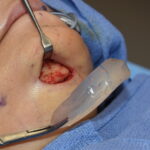
The chin implant is almost always put in through a small incision on the underside of the chin in the submental crease. This provides a direct approach for placement of the implant (shortest distance to the bone) and allows liposuction and neck tightening procedures to be done through the same incision. The chin implant is slide into position on the bone after a pocket has been made that will accomodate its size. Once in place, it is either sewn or screwed into place and the tissue closed over it. While a chin implant can also be placed through the mouth (a common approach done by many oral surgeons), placing it this way disrupts the main chin muscle and the risk of having the implant riding too high on the chin bone after surgery unless the implant is secured by screws to the bone.
The chin implants used today are quite different from those used in the past. Today’s chin implants are better by having ‘wings’ that extend out further to make a smoother transition to the bone on the side of the chin out on the jaw. This allows for the creation of increased width to the chin and improved blending into the lateral body of the mandible without irregular transition zones. The size and style of chin implant chosen is done by pre-surgical imaging of the face and chin and looking at how the different sizes change one’s profile.
Chin implants are a very safe procedure that has few complications if done well. Infection after surgery is rare but the implant could be salvaged by antibiotics alone if it occurs in the early postoperative period. Thereafter, implant removal is usually required for resolution. Some temporary lower lip numbness can occur but this resolves quite quickly after surgery.

Dr Barry Eppley
http://www.eppleyplasticsurgery.com/
http://www.ologyspa.com/
Clarian North Medical Center, Carmel, Indiana
Clarian West Medical Center, Avon, Indiana
Indianapolis

Chin Augmentation by Osteotomies in Indianapolis
Posted on 15 January 2008 | Category: chin augmentation, chin osteotomy

Chin Augmentation by Osteotomies in Indianapolis by Dr Barry Eppley

When one thinks of chin augmentation for cosmetic purposes, the use of a chin implant typically comes to mind. And while the vast majority of chin augmentations are, in fact, done with an implant, there are some patients who may better benefit by a different approach. As opposed to putting an implant on top of the chin bone to bring it forward, an alternative approach is to cut the chin bone itself and bring it forward.

A chin implant is a very effective, simple and safe procedure that has very few complications. This accounts for why chin implants are widely used. While chin implants infections and migration (shifting from its desired position) after surgery is uncommon, they are risks nonetheless. Furthermore, when large chin implants are used, they may ‘settle’ into the bone over many years, a phenomenon known as pressure bone resorption. For these reasons, in select patients, moving the chin forward may be a better treatment option.

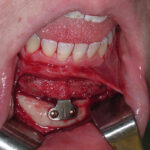
Chin osteotomies (cutting the bone and moving it forward) is done through an incision inside the mouth. (rather than under the chin as with an implant. It is technically more difficult than an implant and has more swelling and recovery than a simple chin implant. Also, there is usually temporary loss of feeling of the lip and chin after that takes several weeks to months for full return of sensation.

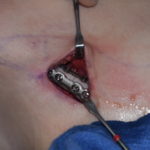
The important question is……who is a better candidate for a chin osteotomy as opposed to a chin implant ? The criteria that I use is….if you have a large chin deficiency and are young (under 30 or so), then the use of a chin osteotomy is a valid consideration. In this type of patient, a bigger operation with more recovery is worth the long-term benefits. Once the bone heals after surgery (which is held into place by small permanent plates and screws), it will stay that way forever without any risks of infection, implant migration, or loss of augmentation (settling into the bone) for the rest of your life.

Dr Barry Eppley
http://www.eppleyplasticsurgery.com
http://www.ologyspa.com
Clarian North Medical Center, Carmel, Indiana
Clarian West Medical Center, Avon, Indiana
Indianapolis

Chin Implants in Indianapolis by Dr. Barry Eppley
Posted on 30 December 2007 | Category: barry eppley, chin augmentation, chin implants, dr barry eppley

Chin Implants for Facial Enhancement in Indianapolis by Dr. Barry Eppley

In the pursuit of improved facial balance and shape, the chin is one of the most prominent facial features. When combined with the nose, these two protruding structures have great influence on the overall appearance of the face. We usually don’t give the chin much thought, until it is either too weak or too prominent, and then it becomes the defining part of one’s face (in a negative way). When the chin is deficient (weak), the facial profile has a very convex appearance with the appearance of a short neck as well. As long as the chin deficiency is not too great and the overall jaw is not short with a malocclusion (bad bite), when jaw lengthening surgery may be more appropriate, the use of a chin implant is a simple and proven method. In my practice here in Indianapolis, I always discuss with the patient the two methods of chin enhancement; implants vs osteotomy (moving the bone forward). Over 90% of the time, a chin implant is chosen.

While chin implants are available in different materials, I prefer the use of solid silicone (rubber) chin implants, which are still by far the most commonly used. They are soft, flexible, and slide easily into place along the chin bone. The chin implant is inserted through a small incision hidden underneath the chin below the jaw line. This leaves no visible scar. Usually the chin implant is sutured into place, however, I sometimes use a metal screw to secure the implant to the bone. This screw fixation method can eliminate one of the very few complications of chin implants, that of shifting or changing position after surgery causing chin asymmetry. I rarely insert a chin implant through the mouth as it is more painful, has more swelling, and is more easily displaced upward off the chin prominence.While any implant (foreign-body) has some risk of infection, chin implant infections are quite uncommon.

Enhancing the chin with an implant is the most commonly performed facial implant procedure. The goal of a chin implant is to bring the chin forward enough so that it is in balance to the nose and lips. Unlike the old style ‘button’ chin implant, there are many different styles of chin implants today. From curved anatomical styles, to a more box shape, to chin implants with a central dimple, there are many options to custom tailor a chin implant to fit most patient’s faces. The different sizes of chin implants makes it possible to make a subtle or a dramatic facial change, dependent upon the patient’s cosmetic needs.

Chin implants are commonly in conjunction with other facial procedures including rhinoplasty, neck liposuction, and facelifts. In some cases, the use of different implants in the same patient, such as a chin and jaw angle implants in a male, can provide dramatic changes in one’s facial appearance. Chin implants are a powerful procedure, that is simple and usually uncomplicated, to achieve better facial balance.

Dr Barry Eppley
http://www.eppleyplasticsurgery.com
http://www.ologyspa.com
Clarian North Medical Center, Carmel, Indiana
Clarian West Medical Center, Avon, IndianaIndianap

Rhinoplasty and Computer Predictions in Indianapolis
Posted on 17 December 2007 | Category: chin augmentation, computer imaging, rhinoplasty

Rhinoplasty and Computer Imaging in Indianapolis with Dr Eppley

Rhinoplasty (nose) surgery is one of the most sought after procedures for cosmetic facial changes. The prominence of the nose in the center of the face guarantees that any change done to it will have an impact on overall facial appearance. Because of its facial importance, it is very helpful for a patient to have a good understanding of what can be achieved with rhinoplasty surgery.

The use of digital imaging through the computer has long made it possible to do surgical predictions. Such technology has been available for nearly 15 years and the initial use of it was for…..rhinoplasty surgery. The earliest software programs were best used for profile changes, which is still the most important predictions to see today. But the rapid development of imaging software, such as Adobe photoshop, have made changes in the frontal facial view very accurate as well. With today’s digital cameras and computer software, it is possible to have facial surgical predictions done within minutes.

All potential rhinoplasty patients today should have surgical predictive imaging done. I would not do any rhinoplasty surgery without it, because the patient needs to have a good understanding of what the rhinoplasty procedure can achieve. Predictive imaging also allows the patient to appreciate if other facial changes may be complementary to the rhinoplasty. Most likely, this would be chin augmentation which is a common companion procedure done with a rhinoplasty.

An important concept to understand about computer surgical predictions is……they are just predictions, not guarantees of rhinoplasty and facial outcomes. They are great methods of communication between a plastic surgeon and the patient to help both understand what may be possible.

Dr Barry Eppley
http://www.eppleyplasticsurgery.com
http://www.ologyspa.com
Clarian North Medical Center, Carmel, Indiana
Clarian West Medical Center, Avon, Indiana
Indianapolis

Chin Augmentation by Osteotomy
Posted on 05 November 2007 | Category: chin augmentation

CHIN ADVANCEMENT THROUGH OSTEOTOMIES: WATCH OUT FOR THE MENTAL NERVE

Using cross-sectional anatomic studies of the bony course of the inferior alveolar nerve,
significant insight to the execution of osteotomies of the mandibular symphysis (chin)
can be obtained. The relatively simple horizontal osteotomy of the anterior
mandible (chin) is a very versatile technique for multiple improvements in the shape and
projection of the chin and lower face. An integral part of this procedure is the horizontal
angulated cut, usually performed with a reciprocating saw, that goes below the easily
identified mental foramen. While some limited postoperative disruption of the nerve’s
sensory distribution (feeling) is to be expected due to the dissection, the incidence of
permanent numbness of the mental nerve is thought to be very low.

It is historically believed that the course of the inferior alveolar nerve comes directly
out of the mental foramen in a straight horizontal projection from its posterior course.
This is how it is depicted in most textbooks and anatomic drawings. However, its
neurosensory supply goes anterior to the 1st premolar tooth and this may account
for the anterior loop that has been discovered in anatomic studies. I have always assumed
this direct horizontal nerve exit and usually keep the bony cut only several millimeters
from the foramen. In this way, the pedicled inferior bone flap (chin segment) is as large
as possible, regardless of the angle of the bony cut. A detailed anatomic study shows
that this technical approach, however, may expose some nerve branches to irreversible
injury. I have now modify my technique accordingly with a minimum of 4 to 5 mms
below the foramen when performing this cut. This should avoid any potential for
permanent numbness of the lip or chin and still leaves an adequate amount of bone for
plate and screw fixation.

Dr Barry Eppley
www.eppleyplasticsurgery.com
www.ologyspa.com
Clarian North Medical Center, Carmel, Indiana
Clarian West Medical Center, Avon, Indiana
Indianapolis

Categories

This is a list of the categories. Every post is categorized by the author to help you find what you need.

Archives

This is a list of the monthly archives. Click on the appropriate month to see the historical posts.

Links

This is a list of the links to related resources and websites. Use this list if you'd like to do some additional, relevant reading.