Archive for the 'lip augmentation' Category
The most common method for lip augmentation is with injectable fillers. While other more surgical options exist such as lifts and implants, making the lip bigger by injections are quick, easy to do, and have instantaneous results. (notice that I did not say painless!) While five years ago, only two injectable filler options existed (collagen and a first-generation hyaluronic acid filler, Restylane), the choice between them was pretty clear. But as of today, there are now eight commerically-available injectable filler options and more are sure to come in 2009. With so many choices, it is impossible for any patient to know which injectable filler is best for the lips and certainly some physicians are in a quandry as well.
The simple answer is…..none of the injectable fillers is the best. Each has their own individual advantages and disadvantages although certain trends amongst them are clear. First, understand that no injectable filler has ever been FDA-approved for use in the lips in the United States although it is common practice. Technically, the use of injectable fillers in the lips is ‘off-label’ use. Why it has never been approved by the FDA is a regulatory technicality and processing issue from the manufacturer, not one of safety. Lip augmentation probably accounts for nearly half of all injectable filler use for many years so its safety track record is well established. Secondly, the composition of the injectable filler is critical to understanding its effectiveness and safety in the lip. Lip tissue is different from skin as lips are like fingers, we use them alot and they are very sensitive to touch and feel. For this reason, non-particulated fillers such as collagen and hyaluronic acid fillers are best suited for the lips. Those injectable fillers with particles (Radiesse and Artefill) should not be placed in the lip as their risk of irregularities and nodules (foreigh-body reactions) is definitely higher.
I would say that the hyaluronic acid fillers ( boned sugar molecules) are the gold standard for lip augmentation. All of them will work and their effectiveness is the same no matter the marketing name or manufacturer. The only difference between them is……how long do they last and how much do they cost? In short, the question is an issue of value with their use. The only way to figure out how long hyaluronic acid lip injections will last is to know the concentration of hyaluronic acid in the product and how well it is cross-linked together. Both issues which a patient can not determine. As there are no studies that directly compare one hyaluronic acid product to another in a prospective lip augmentation study (someday there will be but none exist as of now), patients have to guided by what their physician injector tells them.
In my experience, some hyaluronic acid (HA) fillers last longer in the lips than others. The range of persistence is anywhere from 4 to 12 months. For the sake of simplicity, for example, the newest hyaluronic acid filler Prevelle (HA concentration of 5 mg/ml) lasts about 3 to 4 months while Juvaderm (HA concentration 24 mg/ml) lasts around 8 to 9 months in my experience. And, not surprising, the cost in my practice is also different with the longer lasting one priced higher. (as it should be) With such an array of HA injectable fillers, I have found that it is now possible to ‘get what you pay for’. You can now choose your injectable lip augmentation result pretty much on the price you want to pay. Some HA injectable fillers cost more than others but they last longer too.
Dr. Barry Eppley
http://www.eppleyplasticsurgery.com/
http://www.ologyspa.com/
Clarian North Medical Center, Carmel, Indiana
Clarian West Medical Center, Avon, Indiana
Indianapolis
The upper and lower lips are one of the five main facial features that makes up and helps define the most recognizeable central third of the face. In today’s society, full lips are viewed as healthy and sensual, thin or wrinkled lips cast the opposite image. While the lips are paired, they are not identical due to their embryological origins. The upper lip is uniquely different than the lower as it has a central cupid’s bow or two-peak wave form which differentiates it from the smooth and continuous lower lip. That is a key aesthetic difference and very important consideration in any form of lip augmentation.
While injectable fillers are the most common form of lip augmentation, they are not for everyone and every form of injectable filler is not for lips. Patients who have thin lips can not be injected and end up with full pouty lips. The pink part of the lip will only stretch so much before it begins to look distorted, too full, and unnatural. Results like this are evident everywhere on TV and in the movies. Injections will not make a well-defined cupid’s bow nor make the height of the lip bigger either. While it acceptable to try a small amount of injectable filler in a thin lipped patient, and I frequently do, it is best to not overdo it. Let the patient decide whether the result is worth it. I always place injectable fillers in layers and ask the patient to give me their opinion with each new layer. Enough is when they tell me so. Surprisingly, no injectable filler is formally approved by the FDA for injection into the lip even though it is common practice. Only the hyaluron-based fillers such as JuvaDerm, Restylane or Perlane should be used in the lip as they flow in smoothly and have little risk of a foreign-body reaction….and they are completely reversible with time. The particulated fillers such as Radiesse and ArteFill should not be used in the lip as they do have risks of lumpiness and potential reaction to their particle component. As for silicone oil…be very wary. Not only is it not FDA-approved for any injectable application at this time, its track history from the 1960s and early 70s is not reassuring. (even if this is a newer more purified form)
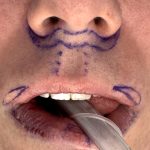
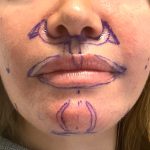
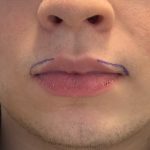
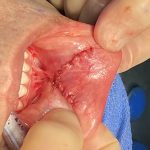
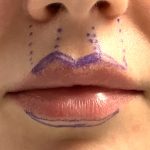
For those thin-lipped patients, some consideration may be given to lip lifts and advancements if careful thought is given to the permanent scar. While these are powerful lip procedures and can do wonders in increasing the size of the pink part and in making a well-defined cupid’s bow, they do produce a fine line scar at the junction of the pink lip and skin. If the patient is certain they can live with that trade-off and has a high lipstick use frequency, this may be the procedure for them. That decision becomes a little easier in the older female where the thinning of the lips and the development of vertical wrinkles on the lip requires more than a simple lip fill with an injectacble can do. If the procedure is done well, it can look fairly natural. If the lip is advanced too much or the peaks of the cupid’s bow made too sharp, it can look very unnatural.
Often patients who have had temporary lip injections desire a more permanent fix. Options include fat injections and synthetic implants. Since fat has to be harvested from the patient in a sterile fashion, I always do this procedure in the operating room and is a strong consideration when the patient is going to be there for other plastic surgery procedures anyway. There really is very little to lose by doing it in that setting. While the take of fat grafts is definitely variable, some patients will do well with it. The test is what it looks like at three months after surgery, not in the first few weeks. If fat takes well, it will last longer than any synthetic injectable but it may not last forever as the lip does continue to age. Therefore, further fat inejctions may eventually be necessary. Permanent lip implants (Advanta) have been around for over a decade and in the right ‘qualified’ patient can do well. Qualifying a patient is one who has had lip injections and is really ready to accept a permanent implant over a temporary filler. My experience with Advanta, a soft spongy tube, has been quite good even though all patients will definitely be able to feel it.
Two of the most important things in creating natural lip results is that they must not be too big or have treatments which result in them ending up stiff or irregular. We touch the lip area very frequently so we are quite attuned to how it feels And the lips need to be soft and flexible to support easy and painless movement.
A good artistic sense in shaping the lips (they enhance the face but should be the focal point), consideration of the many lip treatment options, and preservation of soft flexible lips are needed to get the most natural lip augmentation results.
Dr. Barry Eppley
http://www.eppleyplasticsurgery.com
http:.//www.ologyspa.com
Clarian North Medical Center, Carmel, Indiana
Clarian West Medical Center, Avon, Indiana
Indianapolis
Lip Enhancement in Indianapolis by Dr Barry Eppley
Improving the size and shape of the lips is a frequent cosmetic request and a very commonly performed aesthetic procedure done in the office. While the vast majority of lip enhancements are done by injectable fillers, and most patients are only aware of this approach, there are other less common but equally effective options.
Injectable fillers are the most common lip enhancement method and the hyalurons such as Restylane and Juvaderm are usually used. The longevity of hyaluron fillers, while touted differently amongst manufacturers, is in the range of 4 to 6 months. While longer-lasting injectable fillers exist, such as Radiesse and Aretfill, these contain particles which may be prone to lumpiness and foreign-body reactions. Because of their predictability and safety, with very few complications, hyaluron lip enhancement is the current gold standard.
There other other types of non-injectable lip fillers. Over the years, many collagen-based implants have been tried, such as Alloderm and Fascian. Unfortunately, while conceptually appealing, their longevity has not been shown to be any greater than the hyaluron fillers. But they are more expensive and cause much more lip trauma to place. As a result, they have fallen into disuse.
Despite the frequent touting of your own fat as an injectable filler, and reports of great longevity and possible permanency, most plastic surgeons have not had that experience. Fat in the lip is simply unpredictable. I will still use it…..when I am performing other procedures in the operating room where the use of fat is ‘easier’ than in the office and there is little to lose by doing so. I suspect that repeat fat injections over time do consistently work but that is fairly traumatic for a patient to go through.
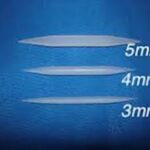
Permanent lip augmentation can be done by synthetic implants known as Advanta. These very soft implants are threaded into the lips, corner to corner, by a metal trocar under local anesthesia. They are non-resorbable, fairly soft, and the volume added is permanent. They can definitely be felt in the lips but I have not had a patient yet who has reported that as a problem. I use Advanta when the patient is ‘qualified’, meaning they have tried injectable fillers first and want to move on to something permanent.
More surgical lip enhancement is known as vermilion advancements or subnasal lip lifts. While these are highly effective are making the lip bigger, they have a trade-off of permanent scars. A patient must be very willing to make this trade-off and accepting of fine-line scars. I use these in patients that have very thin lips and a very flat cupid’s bow and have ‘failed’ lip enhancement by fillers. (meaning it does not look good or do what the patient expected. Lip lifts are often most effective in the older patient whose lips (which were not big to start with) have shrunken with age.
As you can see, lip enhancement has lots of options. All work well at achieving larger lips….but not every enhancement procedure is for every patient.
Dr Barry Eppley
http://www.eppleyplasticsurgery.com
http://www.ologyspa.com
Clarian North Medical Center, Carmel, Indiana
Clarian West Medical Center, Avon, Indiana
Indianapolis
Advanta Implants – A Permanent Facial Filler
As of today, there are seven commercially-available injectable fillers, from the original Restylane (hyaluronic acid) to the most recent ArteFill (plastic microspheres). While these all produce wonderful and instantaneous results in the filling of facial lines, wrinkles, and lips, the lifespan of their effect is limited to montsh and, at best, certainly less than one year. Some injected patients ultimately tire of the injection process and desire a more permanent solution to their facial problems, even if it requires surgery to do so. Once a patient reaches this ‘qualified’ level, there is a permanent filling solution (Advanta Facial Implants) for the selected areas of the lips, nasolabial folds, marionette lines, and the glabellar furrows. (the famous 11s between the eyebrows) Because they are not new and are produced by a company whose main revenues come from vascular grafts (http://www.atriummed.com/) , these permanent facial implants have not caught a lot of press and most patients are completely unaware of them. I have used them for the past 5 years with great success and very few problems. For the right patient who desires to move on from temporary fillers and can accept having a permanent implant under their skin, these type implants are a good treatmenmt option to consider.
Advanta Facial Implants represent a major advance in PTFE (Gore-tex) implant technology. Advanta is the first “next generation” PTFE implant material to feature innovative biocompatible architecture combining a soft central core with a controlled cellular penetration outer layer. This unique one-piece construction offers patients a softer, more aesthetic and more comfortable implant with a more natural look and feel. The soft central core allows increased cellular interaction and vascularization, with reduced inflammation. Patients may experience less rigid encapsulation or “walling off”, resulting in a softer, more natural healing response. This controlled cellular penetration also enhances implant stabilization and may help reduce the risk of migration and extrusion.
These implants can be placed under local anesthesia in the office. They are threaded into place by a tiny incision on each end of the treated area. Through an attached needle, they are threaded into placed, the ends trimmed, and one small stitch placed to close the small entry and exit holes. There are numerous different sizes available in either a round or oval form. Like temporary injectable fillers, the result is instantaneous. Unlike temporary injectable fillers, there will be some swelling and bruising for a few days after the procedure.
Dr Barry Eppley
www.eppleyplasticsurgery.com
www.ologyspa.com
Clarian North Medical Center, Carmel, Indiana
Clarian West Medical Center, Avon, Indiana
Indianapolis