Archive for the 'postoperative instructions' Category
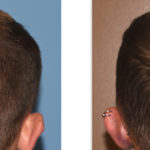
The correction of protruding ears, also known as otoplasty or ear pinning surgery, is a simple plastic surgery procedure that has a dramatic visual effect and an equally significant improvement in one’s self-image. By repositioning the cartilage of the ear with sutures through an incision on the back of the ear, the angle of the ear as it protrudes from the side of the head can be altered to a more favorable setback position. The effect is instantaneous, both on the operative table as well as when the ear dressings come off. Here are my after surgery instructions that I provide to my otoplasty patients.
1. A circumferential head dressing will be placed on at the end of the surgery
to protect the ears in their new position. In adults and teenagers, this dressing
can be removed the next day. In children, the head dressing will stay in place for 1 week.
(if they can stand it for that long!)
2. Dissolvable sutures are used behind the ears so suture removal is not necessary.
3. Once the head dressing is removed, the ears still need to be protected. In
children, a ’ski band’ or head band is to be worn as much as possible for
the next 2 weeks. In adults, this form of protection should be worn only at night
for several weeks after surgery. If one should accidentally twist an ear or roll over
on it during the night, it is possible to loosen or break the sutures with the ear
returning to its appearance prior to surgery.
4. Eyeglasses should not be worn for the first week after surgery so they do not
rub on the incisions behind the ears.
5. The ears will remain somewhat swollen for up to a month after surgery. Be patient
before judging the final result as it takes time for the ears to settle and be less
sensitive to the touch.
6. Swimming and other underwater activities should be avoided for two weeks after
the surgery.
7. Sports activities that pose a risk for direct ear trauma (e.g., basketball) should be
avoided for one month after surgery.
8. Make sure to take and complete your antibiotic prescription. While ear infections are
rare, should they occur around cartilage (known as chondritis), they can pose a
big problem. Cartilage infections are difficult to eliminate.
9. The need for pain medication is usually quite short-lived in otoplasty surgery. The ears
are sore but not acutely painful.
10. The sutures used to reshape the cartilage are permanent. It is uncommon, but possible,
for these sutures years later to extrude on the back of the ear. This usually appears
as a white knot which is easily removed in the office.
Dr. Barry Eppley
http://www.eppleyplasticsurgery.com/
http://www.ologyspa.com/
Clarian North Medical Center, Carmel, Indiana
Clarian West Medical Center, Avon, Indiana
Indianapolis
Resurfacing of damaged and wrinkled skin by the laser is a very effective procedure for creating smoother skin with a better texture. Because laser resurfacing is really a big burn and it is on your face, the after care is both significant and a little laborious. Not to mention somewhat psychologically disturbing as you see your face during the first week after treatment. The degree of care needed is dependent on the depth of the laser resurfacing. In general, if the procedure was done in the operating room under some form of anesthesia then it is likely is was DEEP laser resurfacing and the following list of instructions apply. In office-based laser resurfacing, this is either light or medium depth levels and the healing is much faster without the need for extensive after care.
1) Keep all treated areas covered with Aquaphor ointment constantly. Clean the
facial wounds gently with Cetaphil soap and cool water every 6 hours or so
the first two days and then twice a day thereafter.
2)Aquaphor ointment should be applied liberally to keep the treated areas moist.
T he formation of scabs is not desired. If they appear, it is because either not enough ointment is
being applied or it is not being applied frequently enough. If scabs do appear, do not scrub, pick,
or rub off any of them.
3) The more fluids you drink, the better your skin will heal. Try to drink 8 - 10
ounces of fluid every 2 to 3 hours during the first week after surgery.
4) You should continue oral antibiotics (e.g., Kelfex) for 7 days after surgery.
5) If the area around the mouth was treated, you should continue antiviral
medication (e.g., acyvlovir) for 5 days after surgery.
6) Take your pain pills (e.g., Vicodin) as prescribed.
7) You may experience mild itching 3 to 7 days after surgery. Ice packs gently
applied on top of the treated areas during the first day or two after surgery will
alleviate most itching. For more severe itching, you may try over-the-counter
Benadryl 30mg every 6 hours. (this will make you sleepy so no driving)
Once the skin is healed (7 - 8 days), apply your regular moisturizer to the
the treated areas liberally for the next few weeks to keep it from getting dry.
9) NO make-up until 7 - 10 days after surgery. A mineral-base foundation is
is recommened to both conceal the redness and sensitivity of the skin in the
first month.
10) Avoid direct sunlight during the first month after surgery. The skin is very
sensitive during this early healing phase. After the first week after surgery, wear
sunprotection (SPF 30 or higher) for the next 3 months when going to be exposed
to the sunlight.
Dr. Barry Eppley
http://www.eppleyplasticsurgery.com
http://www.ologyspa.com
Clarian North Medical Center, Carmel, Indiana
Clarian West Medical Center, Avon, Indiana
Indianapolis
Body lifts are almost exclusively done in the bariatric surgery patient who has undergone massive weight loss. (> 100 lbs) A body lift is a combined frontal tummy tuck and a posterior buttock lift with a resultant 360 degree (circumferential) scar. While good care after a body lift is not hard, the need for management of several drains can be challenging.
1. Body lifts usually have only a moderate amount of postoperative discomfort as
only skin and fat have been removed and no muscle work has been done. In addition
to taking your pain medication, keeping yourself in a partially flexed position (knees
slightly bent toward your chest) when resting in either a chair or bed is very helpful
during the first week after surgery.
2. You will have as many as four (4) drains coming out of the pubic and back area after
surgery. They will be removed when the drainage is sufficiently low. As most drains
don’t come out before 10 to 14 days after surgery, it is not important to start
recording their output until after the tenth (10th) postoperative day.
3. Get up and walk periodically even in the first few days after surgery. This will help
you breathe deeper and ultimately feel better. Judge your activity level on how you
are feeling. You will tire more easily than expected, even up to one month after
surgery.
4. You may shower on the 2ndd day after surgery. Do not submerge your incision in a bath
tub or hot tub/jacuzzi until 1 month after surgery. By this time, your drains will have
been removed and the incision healed adequately to prevent internal contamination.
5. Tapes are usually placed across the abdominal and back incisions. They should be
left in place and do not require any care. They will be removed within the
first two weeks after surgery.
6. You are to continue wearing your circumferential binder for 2 weeks or more after surgery.
As these binders have a tendency to ride up, it is important to keep them repositioned
low over the hips so some pressure can be maintained over the incision site.
7. Numbness of the abdominal and back skin is to be expected and complete return of
feeling may take up to 6 months after surgery. During this period, exposure to heat
(e.g., hot tubs, heating pads) should be done with this consideration in mind to avoid
potential burn injuries.
8. Avoid exercise and heavy lifting for 6 weeks after surgery. Abdominal stress and
abdominal specific exercises can be resumed 8 weeks after surgery.
9. You may drive when you feel comfortable and can react normally and are off pain
medication. Driving is all about whether you are safe to yourself and others on the road.
10. It is not rare to have some small openings along your extensive incision line which
develops several weeks after surgery. This is either sutures which are coming to the surface
or small areas that have slightly separated due to tension and movement on the wound.
Simply keep them covered with antibiotic ointment and a dressing and they will go on to
heal on their own. It is ok to get them wet in the shower.
Dr. Barry Eppley
http://www.eppleyplasticsurgery.com
http://www.ologyspa.com
Clarian North Medical Center, Carmel, Indiana
Clarian West Medical Center, Avon, Indiana
Indianapolis
The Top Ten Instructions After Your Blepharoplasty/Browlift Surgery
Author: barryeppleyEyelid (blepharoplasty) and browlift surgery can make a dramatic impact on how well rested you look since eye contact is a big part of every social conversation. It can also relieve the weight of excess upper eyelid skin and get rid of bags on the lower eyes. Any surgery around the eye will cause a fair amount of bruising and swelling after which, although it is fairly painless, certainly looks bad and is socially obvious for a awhile. Here is list of instructions that I provide to my patients after blepharoplasty and browlift plastic surgery.
1. Expect considerable swelling and bruising of the eyes, which usually is most severe by the second postoperative day. Most of the swelling and bruising will be gone by 2 weeks after surgery. Keeping your head elevated, on 2 to 3 pillows or sitting/ sleeping in a recliner, will help limit how much swelling will occur.
2. Keeping cold compresses on the eyes for the first 24 hours is also very helpful in in keeping down swelling. This can be done with ice cubes or frozen vegetables in a ziplock bag, changing them every 30 minutes or so as they become lukewarm. Continuing these cold compresses for 48 hours, if possible, is even better.
3. For eyelid suture lines, antibiotic ointment will be provided to you to apply twice a day. Apply enough to keep them lightly lubricated. The antibiotic ointment is an ophthalmic preparation, so it is safe if it gets in your eyes. (which it almost always does) Also, apply in eyes at bedtime for the first 2 to 3 days after surgery if they feel dry.
4. In browlifts, the incisions are in the scalp or at the hairline and there is no need to apply antibiotic ointment to them. This only makes the hair greasy and is difficult to get out.
5. In browlifts, there will be a circumferential head dressing to put pressure on the forehead. This may be removed the first morning after surgery.
6. Eyelid sutures will be removed 1 week after surgery. In browlifts, the scalp sutures will be removed 10 to 14 days after the procedure.
7. In eyelid surgery, you may resume the wearing of contacts 1 week after surgery.
8. In browlift surgery, one may wash their hair 48 hours after surgery.
9. The use of eye makeup (eyeliner, eyeshadow) should not be used for 2 weeks after surgery. Cover-up or concealer may be used on bruised areas after sutures are removed.
10. Exercise and strenuous physical activities should not be done for at least 3 weeks after surgery. Bending over (head below one’s waist) should be particularly avoided within the first week after surgery.
A tummy tuck (abdominoplasty) is a great operation to improve the middle of your body. It is so effective that I call it the facelift of the body. Here are ten instructions to know to help you recover after your tummy tuck surgery.
1. Abdominoplasties (tummy tucks) usually have a moderate amount of postoperative
discomfort due to the sewing of the abdominal muscles together. In addition to taking
your pain medication, keeping yourself in a partially flexed position (knees slightly
bent toward your chest) when resting in either a chair or bed is very helpful during the
first week after surgery.
2. You will have either one or two drains coming out of the pubic area after surgery.
They will be removed when the drainage is sufficiently low. As most drains don’t
come out before 10 to 14 days after surgery (in a full tummy tuck), it is not
important to start recording their output until after the first postoperative week.
3. Get up and walk periodically even in the first few days after surgery. This will help
you breathe deeper and ultimately feel better. Judge your activity level on how you
are feeling. You will tire more easily than expected, even up to one month after
surgery.
4. You may shower on the 3rd day after surgery. Do not submerge your incision in a bath
tub or hottub/jacuzzi until 1 month after surgery. By this time, your drains will have
been removed and the incision healed adequately to prevent internal contamination.
5. Tapes are usually placed across the abdominal incision. They should be left in place
and do not require any care. They will be removed within the first two
weeks after surgery.
6. You are to continue wearing your abdominal binder for 2 weeks after surgery. As
these binders have a tendency to ride up, it is important to keep them repositioned
low over the hips so some pressure can be maintained over the incision site.
7. Numbness of the abdominal skin is to be expected and complete return of feeling
may take up to 6 months after surgery. During this period, exposure to heat (e.g., hot
tubs, heating pads) should be done with this consideration in mind to avoid potential
burn injuries.
8. Avoid exercise and heavy lifting for 6 weeks after surgery. Abdominal stress and
abdominal specific exercises can be resumed 8 weeks after surgery.
9. You may drive when you feel comfortable and can react normally and are off pain
Medication.
10. If any redness, tenderness, or drainage develops after the first week of surgery, call
immediately and have your pharmacy number ready.
Dr. Barry Eppley
http://www.eppleyplasticsurgery.com
http://www.ologyspa.com
Clarian North Medical Center, Carmel, Indiana
Clarian West Medical Center, Avon, Indiana
Indianapolis
Rhinoplasty (nosejob) surgery can make a dramatic difference in the appearance of one’s face and an overall improvement in self-image. What to expect and how to take of your new nose right after surgery is an important part of the recovery process. Here are my top ten instructions that I provide to my rhinoplasty patients.
1. After the operation, you nose will be covered by tapes and a splint for both
protection and to keep down the amount of swelling.dressings. These will stay
in place for one week and be removed in the office. It is ok to get it wet in the
shower as it will not easily come off.
2. Nasal packing is rarely used and is not a routinue part of the nasal dressing.
A gauze pad (drip pad) will be secured on the upper lip to catch any oozing
from the nose. Change this as needed. It does not need to be used after the
first few days.
3. The use of an ice pack to your nose and eyes for the first 48 hours will help
limit the amount of swelling and bruising that may develop. (if your bones were
broken as part of the rhinoplasty operation) If not, then ice packs will not be
needed.
4. Keeping your head elevated for the first week after surgery is also helpful in
reducing swelling and making your breathing easier. This can be done by
sleeping in a recliner or on 2 to 3 pillows. Do not bend over as this may cause
bleeding.
5. Difficulty breathing through the nose can be expected immediately after
surgery due to swelling of the internal nasal linings. Saline (salt water) nasal
sprays may be started after the first postoperative week to moisturize the
lining and loosen any crusts. This is only important if you have had simultaneous
surgery on the inside of the nose to improve breathing.
6. In certain types of rhinoplasties (open), small skin sutures will be placed in
the columella. (skin between the nostrils)These are dissolvable and do not need to be
removed.
7. Avoiding blowing your nose for 3 weeks after surgery so as not to loosen any
clots and cause bleeding.
8. Eyeglasses may be worn across the bridge of the nose when it feels
comfortable.
9. Avoid strenuous exercise such as jogging and other sporting activities for
3 weeks after surgery so as not to disturb nasal healing.
10. Once the obvious swelling and bruising are gone within the first few weeks, the
nose will still continue to change shape over the next several months. Be
patient with the results until the final shape is obtained.
Dr. Barry Eppley
http://www.eppleyplasticsurgery.com
http://www.ologyspa.com
Clarian North Medical Center, Carmel, Indiana
Clarian West Medical Center, Avon, Indiana
Indianapolis
Liposuction surgery, to effectively reshape the contour of body areas, usually involves a significant surface area of treatment. This involves a fair amount of trauma to the underlying tissues and resultant swelling and bruising of the treated areas. Compression and shaping garments are an important part of the recovery process to maximize the contour and smoothness of the treated areas. Here is my top ten instructions that I provide to my body liposuction patients.
1. All areas treated by liposuction will be covered by a compression dressing
which consists of an outer binder and internal foam sponges. Some
drainage onto the outer garment is frequently seen during the first postoperative
night. Sleep on an old blanket to avoid ruining good sheets or your furniture. The
leaking of fluid will stop within 24 hours after surgery.
2. The compression dressing will be left in place for 2 days. It will then be removed
in the office with the placement of a new compression garment.
3. Showering may be done the day that the compression dressings are removed.
Bathing should not be done until 3 weeks after surgery.
4. Bruising and swelling are to be expected in the first few weeks after
surgery. Once this has resolved, intermittent swelling of the treated areas may
occur as one’s activity level increases over the next weeks to several months.
This is common and will eventually resolve. The lymphatic channels of the areas
that were suctioned are re-establishing themselves.
5. Sutures in the small incisions will be removed 7 to 10 days after surgery.
6. Do not simply lay around the first few days after surgery. Periodically getting
up and walking around is encouraged to improve circulation to your legs and
helping you breathe deeper.
7. If the legs, thighs, or knees have been treated, keep your legs elevated whenever
sitting during the first postoperative week will help to decrease foot and ankle
swelling.
8. Drive when you feel comfortable and are off pain medication. This is usually
within a week after surgery. Driving is about your personal safety, it does not
have any effect on the surgical outcome.
9. Light massaging of the treated areas beginning several weeks after surgery is
helpful in smoothing the skin and reducing soreness and swelling faster.
Lymphatic drainage massages can be very helpful over the treated areas.
10. You may return to normal physical activities and exercise within one month
after surgery. After exercise, the treated areas may temporarily swell until
the next day. This will eventually subside.
Dr. Barry Eppley
http://www.eppleyplasticsurgery.com
http://www.ologyspa.com
Clarian North Medical Center, Carmel, Indiana
Clarian West Medical Center, Avon, Indiana
Indianapolis
Her are the top ten instructions that I provide to my patients after their facelift surgery.
1. A bulky head and face dressing will be applied immediately after surgery.
This will stay in place until the next day when it will be removed in the
office. At the same time, your neck drains will be removed. Until then you do
not have to do anything with the dressing. With the dressing on, you may have
some trouble hearing.
2. It is important to sleep with your head up as much as possible. This will help
decrease the amount of face and eye swelling that will normally occur.
Sleeping in a recliner is most ideal for the first postoperative week.
3. Cold compresses to the eyes for the first 48 hours is very helpful to keep
swelling down and make them feel better. This can be done by chilled washrags,
gel eye masks, or frozen bags of vegetables. (my favorite!)
4. You may shower, bath, and wash your hair after the first 24 hours. Soap and water
along the incision lines pose no increased infection risk. Apply some antibiotic along
the ear incision just to keep them moist twice a day.
5. Your activity level should be what feels good. Do routinue activities as tolerated.
Avoid exercise, lifting, or straining to avoid increasing excessive blood flow to
your face during the first 3 weeks after surgery. It is particularly important to
avoid bending over until your face is well healed.
6. Your facial and neck skin will be numb for several months after surgery. As a
result, avoid exposing your face to extremes of temperature such as heating
pads or ice. You may easily create thermal burns to the skin.
7. Skin sutures and staples (in the hair) will be removed in 7 to 10 days in the
office.
8. It is extremely important to avoid any type of nicotine products for the first 4 to
to 6 weeks after surgery. Nicotine reduces the blood flow to the skin and may
impair or slow down healing. This includes cigarettes and cigars as well as
nicotine gum and patches.
9. You may begin driving after the first postoperative week provided you are off
pain medications and can see clearly. Driving is an issue of safety…are you safe
to others while you are driving?
10. Be patient. It takes nearly 3 full weeks to look fairly normal and not as someone
who had had surgery. After the first week, you can wear make-up or concealer
to mask signs of healing.
Dr Barry Eppley
http://www.eppleyplasticsurgery.com/
http://www.ologyspa.com/
Clarian North Medical Center, Carmel, Indiana
Clarian West Medical Center, Avon, Indiana
Indianapolis