Plastic surgery is one of the marvels of modern medicine, with a wide range of options for face and body improvements. And today’s media outlets make it easier than ever before to gather information on the latest plastic surgery procedures. But how does this information apply to you and your concerns?
Every person is unique and has his or her own desires. What procedure or combination of treatments is right for you? And what can you really expect? EXPLORE PLASTIC SURGERY with Dr. Barry Eppley, Indianapolis plastic surgeon, who can provide you with a wealth of practical and up-to-date insights into the world of plastic surgery through his regular blog posts. In his writings, Dr. Eppley covers diverse topics on facial and body contouring procedures. You will be sure to find useful information that will help broaden and enrich your plastic surgery education.
Archive for the 'rhinoplasty' Category
As we age our face undergoes many changes. Almost all of these age-related tissue changes are a downward drift due to gravity as tissues loosen and fall. The development of sagging eyebrows, malar bags, deepening nasolabial folds, jowls and neck wattles are the most recognizeable of these signs. But other facial features also age although they are less well described.
The nose, the central feature of everyone;s face, also has distinct aging characteristics. While traditionally thought as being a fixed structure of bone, cartilage and skin that undergoes little alteration throughout life, that is now known to be not true. With age the nasal tip loses support and drops downward. This not only decreases the nasolabial angle but also creates the appearance of a pseudohump. As the nose undergoes this counterrotation at he tip, it actually lengthens. This the old saying that our nose gets longer as we get older is anatomically true.
These age-related movements of the nose are exacerbated by changes in the underlying facial bones. Resorption of the pyriform aperture causes further recession of the support of the nasal soft tissues, worsening the decrease in the nasolabial angle.
The objective of rhinoplasty surgery is to transform the nose by changing its structure for improved nasal shape and putting it in better proportion to the rest of the face. The traditional maneuvers of hump reduction, creating a smooth dorsal line, tip rotation and narrowing all work together to create a shorter nose and more pleasing nasolabial angle. Such changes seem to be the antithesis of what happens in the aging nose, raising the question of whether rhinoplasty can also make one look younger as well.
In a paper published in the January/February 2012 issue of the Archives of Facial Plastic Surgery, the effect of rhinoplasty on aging appearance was studied. Before and after pictures of over fifty rhinoplasty patients were evaluated by fifty laypersons for their perception of patient ages. Measurements were also made for dorsal humps and nasolabial angles. The results showed that rhinoplasty made patient look younger after surgery by 1.3 years on average. Dorsal hump reduction was associated with 1.6 years younger look and opening the nasolabial angle reduced patient’s perceived ages by 1.3 to 2 years based on the degree of angular change. The greater the amount of hump reduction and tip rotation improved the rhinoplasty’s rejuvenative effect. Older patients also had a greater rejuvenative effect from their rhinoplasty surgery.
What this study demonstrates is that rhinoplasty can have both a transformative and rejuvenative effect on facial appearance. The greater the nasal change (hump reduction and tip rotation), the more evident is this effect. Although not specifically studied, I suspect that shortening the nose through tip rotation in older patients produces the most profound anti-aging effect.
Older patients (greater than age 50) make up the smallest subset of rhinoplasty patients by age. Conversely, they make up the largest number of patient seeking facial rejuvenation surgery. Tip rhinoplasty should be considered in these patients for its rejuvenative effect along with other more commonly performed skin excision/lifting procedures.
Dr. Barry Eppley
Indianapolis, Indiana
Background: A bump or hump on a nose is a common reason a patient will seek rhinoplasty surgery. A smooth or straight dorsal line is one of the more important aspects of a pleasing nasal appearance. While some small bump reductions can be achieved by a simple shaving of the bone edge, this is the exception and is not what will work for most hump reductions.What makes up most humps is a combination of bone and cartilage as the hump occurs where the bone of the nose stops and the cartilage of the nose begins. Successful and sustained nasal hump reduction is usually a combination of both bone and cartilage removal.
While many rhinoplasty patients have small humps, there are some that have really large and prominent humps. These are usually associated with many types of ethnic noses. These large humps create a hooked nose appearance. The dorsal line of the nose has a very convex or almost mountaneous peak appearance in profile. The size of the hump is a sign of septal overgrowth and the nasal tip may be pushed down due to the amount of septal push on the nasal tip cartilages.
While some small hump reductions can be done by shaving or rasping and do not require breaking the bones of the nose, most larger hump reductions do. Taking off the cartilage and bone of the hump will leave a flat open-roof deformity. To change that open roof back to an inverted-V shape of a pleasing nasal bridge appearance, the sides of the roof or bone must move inward. This is what breaking or cutting the nose bones does. It is also the rhinoplasty maneuver that causes bruising and black eyes afterward. The nasal bones are cut down low and then pushed in to close the open roof. This will also make the upper part of the nose more narrow and less thick after a significant hump reduction.
Case Study: This 35 year-old Hispanic man from Indianapolis Indiana wanted to get rid of his large nasal hump. He had a large and very prominent hump in an otherwise thin and narrow nose. His tip was a little wide but did not have much downward rotation. Computer imaging was done to see how much lowering of the dorsal line he desired. Two options were given as to the amount of lowering of the dorsal line, the more significant lowering involved burring down of the radix (upper nasal bone) as well.
Under general anesthesia, an open rhinoplasty approach was done exposing the entire osteocartilaginous structures. The upper part of the septum from the tip to the bone was removed with scissors after separating away the upper lateral cartilages. The exposed roof of the nasal bones was revealed and this was reduced with an osteotome creating an open roof. Medial and low lateral osteotomies were done with a small osteotome to close the open roof. Some rasping of the roof edges was also done. The upper lateral cartilages were rolled onto themselves and sewn down to the septum to create ‘auto spreader grafts’. The tip was then trimmed and narrowed by sutures.
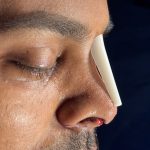
After one week, the nasal splint and tapes were removed. Some swelling of the nose was present as expected but a big change could already be seen. By six weeks after surgery most of the significant swelling was gone and most of the overall new shape of the nose was appreciated.
Large nasal humps are part of many ethnic rhinoplasties and require significant cartilage and bone removal. Osteotomies are almost always needed due to the created open roof. Attention needs to be paid to potential narrowing of the middle vault when such large humps are reduced. Rather than discarding the upper edges of the upper lateral cartilages with the septal reduction, they can be preserved and used to keep width to the middle vault to keep/preserve straight dorsal lines from the frontal view.
Case Highlights:
1) Large nasal humps require bone and cartilage reduction/reshaping through an open rhinoplasty approach.
2) The amount of nasal hump reduction that a patient wants should be determined prior to surgery with computer imaging.
3) Dorsal hump reduction in men should achieve a straight line between the radix and the tip. In women more reduction may be desired in the upper third of the nose to create a more feminine appearance.
Dr. Barry Eppley
http://www.eppleyplasticsurgery.com
Indianapolis, Indiana
Rhinoplasty is one of the top five cosmetic procedures of the face in the United States. It is a challenging operation to perform and it is complicated by being intimately involved with the nasal airway. Some nose operations do not involve efforts to improve the airway and are known simply as a rhinoplasty. Other operations of the nose are done to either improve breathing alone or are combined with changing the nose shape and are known as a septorhinoplasty.
In either type of rhinoplasty procedure, the most dreaded fear of many patients is that their nose will be packed at the end of the operation. As an historic standard of postoperative nasal surgery care, packing today is variably used by the differing backgrounds of surgeons who perform nasal procedures. I routinuely get asked by my rhinoplasty patients about whether their nose will be packed after surgery. The fact that I almost never do nasal packing seems to be of great relief. But I know that my hesitancy to use nasal packing is not universally shared.
In the March 2011 issue of the Aesthetic Surgery Journal, a study was reported on the occurrence of nasal packing after rhinoplasty surgery. In an online survey of members of the Aesthetic Plastic Surgery Society, questions were posed on the type of postoperative nasal care and their most frequent rhinoplasty complications. Of the 126 respondents (8% response rate out of 1500 surveys sent), about 33% regularly used packing after rhinoplasty. But this percentage decreased amongst surgeons who performed a higher volume of rhinoplasties. The most commonly reported complication were nasal tip deformities.
The purpose of nasal packing is that it is purported to decrease postoperative complications such as bleeding, septal hematomas and adhesion formation. It achieves bleeding control if needed by pushing up against the location of the bleeding vessel and tamponading it. Septal hematoma prevention is the result of the packing pushing the raised septal mucosa back down onto the cartilage. Adhesion prophylaxis is due to the interposition of the packing between the septal and lateral nasal and turbinate mucosa. While the benefits of packing seem theoretically sound, some have suggested that it is not as effective as thought and may actually cause these problems.
What we do known about nasal packing with certainty is that it is associated with discomfort as long as it is in and it is painful to remove. Patients uniformly do not like and some fear it greatly. This fear may lead to some delaying rhinoplasty or not having it at all.
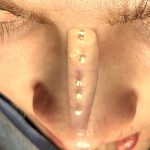
Much of the purported benefits of packing can be replaced with the use of nasal quilting sutures. With a little more intraoperative time, the septal mucosa can be sewn back by passing back and forth resorbable sutures between the two sides of the mucosal lining. Septal mucosa can also be readapted using plastic splints, which while requiring removal later, is not nearly as obstructive as any form of packing. The use of these two methods completely replaces the need for packing in my rhinoplasty practice with the exception of difficult bleeding either before or after surgery.
Dr. Barry Eppley
Indianapolis, Indiana
Rhinoplasty can make significant changes to the appearance of the nose whether it is the removal of a bump from the bridge or a narrowing and lifting of the tip. No matter what structural reshaping of the nose has been done, its aesthetic improvements can only be perceived by how the skin overlies it. Often overlooked, the skin should not be ignored as an important contributor to the final effects of a rhinoplasty procedure.
Regardless of how the bone and cartilage of the nose has been reshaped, these changes require the overlying skin to shrink and adapt down to the newly altered framework. In essence the effects of a rhinoplasty is highly influenced by the size and thickness of the enveloping skin. It is well known that thinner skinned patients gets less nasal swelling after rhinoplasty, show the results sooner and is more likely to show any irregularities or asymmetry caused by the surgery. Thin-skinned patients show more refined rhinoplasty results. Conversely, thick-skinned patients get a lot of nasal swelling, takes a long time for it to settle down and masks framework imperfections better.
Compared to the bone and cartilages that make up the sides of the nose, the overlying skin actually occupies a larger surface area. It can not be manipulated or removed so it is not a variable that can be changed by surgery. It is really a fixed variable in rhinoplasty even though it is usually perceived as a variable one. While widely believed that skin has a great ability to shrink, it really has a limited ability to do so. The perception of skin shrinking after rhinoplasty is probably more that of the swelling going away rather than less skin resulting afterward.
It is important to realize that whatever shrinkage or adaptation that the skin of the nose does is also influenced by where on the nose it is located. The skin across the bridge can more easily adapt as it is essentially a simple saddle shape. The skin on the tip of the nose, however, has a more complex shape. Like wrapping a piece of paper around one side of a sphere, its shrinkage can create more of a bobbed-nose appearance.
The skin of the nose must be respected in a rhinoplasty. Large thick-skinned noses must not have too much structural support removed underneath it, particularly in the tip area. Otherwise a contracted unshapely tip appearance may result that can be uncorrectable later. Rhinoplasty should be done with an appreciation for the volume of the overlying skin and where it is least likely to adapt well.
The size and thickness of the skin of the nose should also temper a patient’s expectations. Too much can be expected in thick-skinned rhinoplasty patients when more subtle changes are realistic.
Dr. Barry Eppley
Indianapolis, Indiana
Background: Rhinoplasty is known to reshape a wide variety of nose appearances. While everyone’s nose is truly different, there are some classic nasal shapes that many people of vastly different ethnicities share. The appearance of such nose shapes can cast certain impressions about the owner that varies amongst different cultures. One of the most common and recognizeable nose ‘deformities’ is that of the hook or bent nose.
Certain noses have a hooked shape that resembles the beak of a parrot. This gives a very recognizeable shape in profile, that when cartooned to excess, is used in characters such as that of a witch with a long and downturned nose. Ideally, the angle between the upper lip and the nose (the nasolabial angle) should be between 90-105 degrees in women and between 90-95 degrees in men. When this angle is smaller than 90 degrees, it gives the appearance that the tip of the nose is drooping and it can also make the individual seem older than their age.
The hooked or beaked nose is also known as the Aquiline or Roman nose. This is a commonly perceived to be a nose that has a prominent bridge giving it the appearance of being curved or slightly bent. The word aquiline is of Latin origin deriving from the word aquilinus (‘eagle-like’) with an obvious reference to the curved beak of an eagle.
Case Study: This 38 year-old female had wanted since she was a teenager to change the shape of her nose. She had a large hump, a tip that was bent downward, a nasolabial angle that was less than 90 degrees and large nostrils. Her nose was deviated to the right and the nasal tip was wide and slightly bulbous. She also could not breathe well through the left side of her nose at all with some airflow through the right side.
Through an open approach, a complete septorhinoplasty was performed. The septal height was taken down along the dorsum with a 7mm reduction of the bony hump. Low nasal osteotomies were down to narrow the nasal base and close the open roof from the hump reduction The septum was straightened and used as a donor site for middle vault spreader grafts. The caudal end of the septum was reduced by a large wedge cartilage resection and the septal angle trimmed. The dome was narrowed by sutures and supported by a columellar strut graft. Alar rim grafts were placed to lower the outer edge of the nostrils. Lastly, the inferior turbinates were reduced by outfracture and electrocautery. The procedure was completed under general anesthesia as an outpatient.
At one week after surgery, the external splint and tapes were removed along with the internal septal splints. Much of the swelling had gone done by 6 weeks after the procedure but continued nasal refinement was still evident at 3 months. Her breathing was improved from that prior to surgery.
Correction of the hooked nose by rhinoplasty requires multiple maneuvers to make a smooth nasal dorsum and a dorso-columellar and nasolabial angles that are closer to 90 degrees. Much of the surgical manipulations come from reducing and reshaping the large overgrown nasal septum. The nasal bones and the tip cartilages are then reshaping and attached to it. Opening of the airway by septal straightening, open of the internal nasal valve and reducing the size of the turbinates are important steps to improve almost always compromised nasal breathing.
Case Highlights:
1) The hooked or aquiline nose can be dramatically improved through rhinoplasty. It can be one of the most dramatic ‘nose makeovers’.
2) The hooked nose is treated by an open rhinoplasty based on reducing the height of the bridge and shortening and lifting the tip of the nose.
3) The hooked nose deformity often has associated breathing problems that can be treated at the same time as the external changes.
Dr. Barry Eppley
http://www.eppleyplasticsurgery.com
Indianapolis, Indiana
Almost anyone in the world is aware of the recent tragedy in Norway with the mass killings of an incomprehensible number of Norwegian teens and young adults. The murderer Anders Breivik appears to have acted alone, driven by his white supremacist and anti-Muslin views. What has caught my attention as a plastic surgeon, however, is comments that have been written about his facial appearance.
According to the head of Norway’s intelligence agency, it is believed that he had undergone plastic surgery in the past to look more “Aryan.” The agency’s head has stated that “You do not have that Aryan look naturally in Norway”…”Hitler would have had him on posters. He has the perfect, classic Aryan face. He must have had a facelift.”
While I am not an expert on Norwegian facial structure, I do know that he would not have had a facelift to change his facial appearance. That is not what a facelift does. A facelift is what I call ‘anti-aging facial surgery’, where one is trying to return to one’s prior appearance. This does not change your face but rather makes it look rejuvenated and less tired like it did 10 or 15 years ago. But you still look like you, just a better you.
Rather he would have undergone ‘structural facial surgery’, where the foundational components of the face are altered. That can and often does change one’s appearance. Foundational facial procedures are done at the bone or cartilage level, not just the skin and soft tissues. This includes plastic surgery procedures such as rhinoplasty and facial bone augmentations. (forehead, brow, cheek, chins and jaw angles) According to reports, he supposedly underwent nose and chin surgery at age 21. This would make more sense as these can change the structure of the face and definitely can make one more Aryan in facial appearance, particularly if certain elements of the face are already there.
This raises the question of what is an Aryan facial appearance and why does it look so? The word Aryan, at least as it was perceived and used in Nazi Germany, specifically refers to being white, blond-haired and blue-eyed. But there is not necessarily a specific set or arrangement of facial features that are ascribed to an Aryan face. People talk about it and one would know if they saw it but may not be able to describe the details of it. But what it undoubtably refers to is a strong and well-chiseled face. For a male this would be highlighted by well-defined facial bony prominences of the brows, cheeks, chin and jaw angles. The nose would have a strong and high dorsal line with a balanced ratio between the three nasal thirds.
The concept of an Aryan face continues to exist today but it is better known as the ‘Male Model Face’. Most young male models in any advertisement today almost all have this type of facial appearance. Whether they have it by genetics, plastic surgery or the use of good lighting and/or Photoshop, the strong and desireable male face has these consistent features.
Plastic surgery techniques today can help many men undergo these type of structural facial changes. Rhinoplasty, anatomical cheek implants, square chin implants, vertical lengthening jaw angle implants and occasionally select fat removal below the cheeks and in the neck can create a face that has more well-defined angles and is more masculine in appearance. For some men, this ‘Male Model Surgery’ can be very effective provided they don’t have a lot of facial fat and not an overly round face.
Dr. Barry Eppley
http://www.eppleyplasticsurgery.com
Indianapolis, Indiana
Rhinoplasty is a unique plastic surgery, not in how it changes the shape of the nose, but on its potential impact on a patient’s psyche. Rhinoplasty has long been associated with patients who obsess over apparently very small nose issues and frequently request and pursue multiple revisional surgeries from different plastic surgeons. While changes in one’s face or body can evoke a variety of patient reactions, rhinoplasty disproportionately causes a greater amount of obsessive or perfectionist reactions.
Known as body dysmorphic disorder (BDD), this is a condition in which one has an unnatural and often unreasonable preoccupation with defects in appearance. Most of the time these defects are slight to even imaginary. Some patients with the disorder complain about body parts that most people would consider to be normal. Given that the outcome of a rhinoplasty involves a lot of different and interrelated parts to create the overall look, it is no surprise that BDD occurs most commonly with this plastic surgery operation.
In the August issue of Plastic and Reconstructive Surgery, a study out of Belgium reports that a significant number of people who complain about the size or shape of their noses show signs of this mental condition. This study was based on more than 200 patients who were evaluated for rhinoplasty over a nearly 1 ½ year period. During the initial consultation, the patients were given a psychological questionnaire to assess their potential symptoms of body dysmorphic disorder. They found that over 40% of patients had symptoms of BDD that were seeking to have cosmetic changes in their nose. Conversely, only a handful (2%) of patients seeking correction of a breathing problem exhibited symptoms of the disorder. Collectively, one-third of the studied rhinoplasty patients had signs of BDD.
This study shows a surprisingly higher number of BDD symptoms in rhinoplasty patients than previously thought. Previous studies have shown that about 10 percent of patients seeking plastic surgery suffer from the condition. But there is the influence of the makeup of the questionnaire and the study and culture of the patient population being evaluated. It is also relevant that these were primary rhinoplasty patients. Patients seeking revisional rhinoplasty may or may not have a higher incidence of BDD.
When evaluating a patient for rhinoplasty, it is important to remember that they are there because they are dissatisfied with the appearance of their nose. This does not automatically make them abnormal or have BDD. I would say that the vast majority of rhinoplasty patients I see have very visible and understandable reasons for why they don’t like the shape of their nose. What can not be known in most consultations is how much the appearance of their nose disrupts the rest of their lives. Even a big deformity of the nose if it disrupts the major functions of their life is not a healthy psychological sign.
But it is very hard to pick up BDD symptoms in a primary rhinoplasty consultation. That discovery all too often is not made until afterwards. But despite this study’s findings, my own practice experiences do not show the potential numbers of rhinoplasty patients with BDD that are remotely that high. While I have never done a consultation questionnaire, the percent of rhinoplasty patients unhappy with their results is a ‘hard’ test after the fact…and a hard one to miss.
The risk of rhinoplasty and subsequent unhappiness in a patient with BDD escalates considerably in revisional surgery, particularly when you did not do the primary surgery. A knowingly unhappy patient upfront has a very diminished ability to be happy afterward. Fortunately, these patients are easier to pick up than primary rhinoplasty patients with BDD. They describe in great detail the anguish of their prior surgerie(s), how it has disturbed their everyday life, and have pictures or drawings as to what is wrong or what needs to be done. They spend a great deal of time with a mirror in their hand pointing out the flaws of the prior surgery during the consultation. This does not mean that a good surgical outcome can not be obtained, but the percentage of doing so drops precipitously.
Dr. Barry Eppley
Indianapolis, Indiana
One of the very common reasons that a patient wants to change their nose is for the reduction of hump or bump. Known as dorsal reduction, it is one of the most common maneuvers in all of rhinoplasty. Contrary to the perception of many patients, a hump reduction is not just about taking down and smoothing bone. Rather a hump, even the smallest one, is a combination of bone and cartilage. That is because the hump area is really where the cartilage of the middle third of the nose (middle vault) meets the bone of the upper third of the nose. (nasal bones)
While a hump reduction seems like it would be a simple rhinoplasty maneuver, it is not. The skin is very thin over this area (the thinnest on the nose) and it is not uncommon to have unhappy patients who can feel and even see irregularities and unevenness after surgery across this area. Worse complications can also occur including collapse or separation of the cranial end of the upper lateral cartilages resulting in middle vault collapse (evidenced by a pinched appearance of the middle third of the nose) with internal nasal valve obstruction and breathing difficulties.
Maintaining straight and symmetric dorsal lines as well as good internal airway function is as important as the amount of nasal hump reduction in rhinoplasty. Many techniques have been described as to how to take down a nasal hump but the one I have found most successful is the component dorsal hump reduction technique. It is a series of five graduated steps including initial separation of the upper lateral cartilages from the septum, dorsal septal reduction, dorsal bony reduction with a rasp, external skin palpation and finally osteotomies or spreader grafts if needed. Why this approach works well is that the bone and cartilages of the hump are treated separately and sequentially, unlike the radical hump reductions of the past.
The determination of the success of any hump reduction technique in rhinoplasty is the preservation or restoration of the dorsal aesthetic lines. In the July issue of Plastic and Reconstructive Surgery, a study was reported that looked at this aspect of rhinoplasty. One hundred primary rhinoplasty patients from a single plastic surgeon was assessed by digital image analysis one year after their surgery. Dorsal line symmetry and nose width were assessed and compared before and after surgery. The study showed significant improvements in both dorsal line symmetry and nasal width lines. Almost all of the patients had harmonious dorsal lines after surgery.
Dorsal reduction using the components technique demonstrates a very reliable method for preserving or obtaining the aesthetic dorsal lines and significantly reducing the risk of middle vault collapse. This has proven to me to be the safest hump reduction method in rhinoplasty with fewer postoperative problems such as dorsal irregularities. Rasping of the nasal bones is a slower method of bony hump reduction than an osteotome in surgery but allows for a smoother result in my hands. This excellent study proves it with a careful digital computer analysis.
Dr. Barry Eppley
http://www.eppleyplasticsurgery.com
Indianapolis, Indiana
Background: Rhinoplasty is a structure-changing operation that draws considerable attention to the patient’s midface. Most rhinoplasties today are done through an open approach which requires a small horizontal incision in the middle of the columella. This scar heals very well due to the superb blood supply surrounding the columella with inflow from the septal mucosa and the skin at the base of the nose and upper lip.
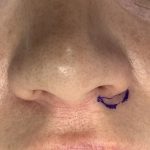
A subnasal lip lift is a skin-reducing procedure that shortens the upper lip and creates more of a central lip pout. This is done by removing skin in an irregular wavy pattern under the nose so that the final scar is at the groove of the union of the base of the nose and the upper lip. The incision runs from one side of the nostril, across the base of the columella, to the side of the opposite nostril. When well placed and executed, this scar also heals well and inconspicuously.
When doing a rhinoplasty, patients will often focus on other potential facial changes as well. This is the result of surgical opportunity and convenience. It is not infrequent that lip augmentation is one of those combined procedures. Adding volume to the upper lip or even doing a lip (vermilion) advancement can easily and safely be done at the time of a rhinoplasty. Considering a subnasal lip lift with a rhinoplasty, however, places two incisions very close to each other and the blood supply to the skin between the two incisions must be considered.
Case Study: A 26 year-old female wanted reshaping done to her nose as well as a lip enhancement procedure. She was bothered by her thin upper lip. She had previously had injectable fillers but was unhappy with the lip look that it created. She wanted the lip lift by shortening the upper lip skin. She did not want, however, a scar along the skin and vermilion junction (vermilion advancement) and felt a lip lift (bullhorn lip lift) was a better procedure.
While she ideally and understandably wanted a rhinoplasty and subnasal lip lift done together, the risks of skin necrosis between the two incisions was not worth the risk in my opinion. Her open rhinoplasty was then done alone with an uncomplicated and successful outcome.

Four months later, a subnasal lip lift was performed in the office under local anesthesia. At its central portion, 6mms of vertical skin length was removed from the base of the nose and the central lip lifted. After three months, the scar was virtually undetectable and there was minimal relapse of any of the central lip pout.
While a rhinoplasty and subnasal lip lift can be performed at the same time…doesn’t mean it should. I suspect that the skin between the two incisions would not be affected in most patients. However should there be a skin necrosis problem, it is a difficult area to reconstruct well. Given that it is a procedure that can be performed in the office, a delay between the two procedures is the safest approach.
Case Highlights:
1) Rhinoplasty and lip lifts are midfacial procedures that are close in proximity and have incisions that are separated only by millimeters.
2) Because of the surgical opportunity provided by a rhinoplasty, it is very tempting and desired by the patient to perform both during the same procedure. The risk of skin necrosis between the two incisions should make one very cautious to do so.
3) To prevent any incision healing problems, an open rhinoplasty should be performed first. This can then be followed by a subnasal lip lift three or six months later.
Dr. Barry Eppley
http://www.eppleyplasticsurgery.com
Indianapolis, Indiana
Changing the appearance and improving the function of the nose through rhinoplasty surgery is sought by many patients. Having the opportunity to get rid of that hump, narrow and lift the tip, straighten the nose and overall make the nose more proportionate can improve the look of one’s entire face. Coupled with improving the breathing through one’s nose, should that also be a problem, provides a functional benefit as well.
While the outcome of a rhinoplasty can be very exciting, it is surgery and with that comes a recovery period. While often stated as being two or three weeks for a rhinoplasty recovery period, what happens in an actual patient is quite different than what is written in a brochure or on a website. Because it is a surgery that affects the most prominent part of one’s face, the recovery period after nasal surgery will always be much longer than most patients anticipate. Recovery from rhinoplasty must be thought of as having both a cosmetic and functional component that occurs in four stages.
The first stage of rhinoplasty recovery is up to a week after surgery and is largely a functionally restrictive period. It is during this period that splints and tapes will be on the nose and it is obvious one has had surgery. This is the ‘social reclusion’ stage for most patients. Few patients want to go in public or go to work with this external marker present. Whatever pain one will have is during this phase although rhinoplasty is not commonly very painful. It is uncomfortable with the splint in place for sure and, when combined with congestion and nasal stuffiness (if septal and turbinate work has been done), is a week one wants to get over quickly. If nasal osteotomies (breaking the bones) are done, bruising may appear under the eyes but often will not appear for several days. The nose does not get swollen (because of the splint) but the surrounding face might in the cheeks and down to the jowls.
The second stage of rhinoplasty recovery is between one and three weeks after surgery. After one week, the nasal splint and tapes are removed as well as any internal splints. The nose is also cleaned of any clots if possible. That is a breath of fresh air for every patient, no pun intended. If bruising has occurred it will still be present and will take up to the end of stage two to go away completely for most patients. This is not the end of the functional recovery as further improvements in breathing will occur but it is the beginning of the cosmetic recovery. Removing the splint is not a ‘TV moment’, meaning the final result is not going to appear. The nose will be swollen and distorted and often will look worse than before surgery. This is normal. The thicker one’s skin is and the more work that has been done leads to a lot of swelling. This swelling will not go away in the next two weeks. It will improve but even at three weeks after surgery less than 50% of the swelling will be gone. Most patients understand this but it is still hard when it is one’s own nose.
The third stage of rhinoplasty recovery is between three weeks and three months. It is a completely cosmetic recovery at this point as the swelling gradually goes down. While many patients want to look critically and note many ‘flaws’ in the result, what is seen now is still not the final result. While the biggest parts of swelling have subsided in the first couple months after surgery, many finer nasal issues such as the size of the tip or shape of the nostrils still needs more time. But during this phase the general change in nose shape should be apparent even if it needs more time for further refinement. This is the hardest phase as one’s patience is growing thin but just remember how far you have come sicne stage two. But no matter how it looks, even if it is not what one anticipated, the thought of revisional rhinoplasty will never be entertained at this time. All plastic surgeons will advise patience.
The fourth and final stage of rhinoplasty recovery is between three months and one year after surgery. Subtle changes continue to take place. Something that looked not quite at three months may have completely gone away by six or nine months after the surgery. Conversely, an asymmetry or bump may appear at six months after surgery that was not apparent at three or four months after surgery. Revisional surgery, if needed, may be entertained at the end of this stage.
In conclusion, recovery from rhinoplasty surgery is a long process and the final result may take up to a year to fully appreciate.
Dr. Barry Eppley
Indianapolis, Indiana