
For testicle implant replacements urologists consistently use saline testicular implants. These are not most patient’s preference by how they feel.Urologists don’t prefer hard saline testicular implants because patients love them—they use them largely because of a mix of regulatory approval and lack of knowledge of other alternatives, not because they’re ideal.
Here’s the real breakdown:
1. FDA approval & availability (biggest factor)
- In the U.S., the most commonly available implant (like the Coloplast Torosa) is saline-filled with a silicone shell.
- Softer, gel-like implants exist in other countries, but they are not FDA-approved in the US, which limits what urologists can offer.
- Since most urologists are placing testicle implants in a hospital or surgery center through insurance as a reconstruction procedure they generally stick to well known approved devices whose cost insurance will cover.
2. Surgical predictability
- These implants are:
- Easy to place
- Consistent in shape/size
- Lower complication rates overall
- That matters a lot in reconstructive or cancer-related cases where reliability is more important than feel.
3. Infection & complication considerations
- Testicular implants already have a small but real infection risk
- Urologists tend to favor devices that are the most well known to them and what they have always used (comfort and consistency)
4. Patient feedback vs. system inertia
- Many patients do say they feel:
- Too firm
- Less natural than expected
- But change is slow because:
- Limited competing products
- Regulatory barriers
- Lack of large-scale comparative data
Are there better options?
- Softer silicone gel implants (more natural feel) are used in some countries.
- Some surgeons will discuss custom or off-label options, which can be very effective but less well known and not usually covered by insurance.
Bottom line
It’s not that urologists ignore patient preference—it’s that they’re working within a system where the most accessible, approved option prioritizes familiarity over realism.
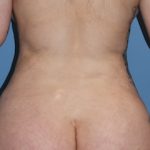
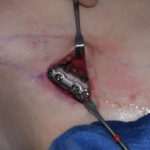
Case Example
Discussion
Patients who’ve actually switched from saline to silicone (solid or gel) tend to describe the change in very consistent, almost predictable ways. Here’s what comes up over and over in real-world feedback:
? The biggest shift: “awareness” ? “forgetting it’s there”
Before (saline)
- “I’m always aware of it”
- “Feels like something added, not part of me”
- “Kind of like a small object sitting there”
After (silicone)
- “I stop thinking about it”
- “Feels like it belongs”
- “Blends in with the other side”
? This reduction in constant awareness is usually the #1 benefit.
? Feel: from “tense” ? “compliant”
Saline descriptions
- “Tight”
- “Too round and firm”
- “Doesn’t give when you touch it”
Silicone (especially gel)
- “Has some give”
- “Feels more like tissue than an object”
- “Less ‘ball-like’”
? Patients often say the saline implant feels pressurized, while silicone feels relaxed.
? Weight difference (surprisingly important)
Saline
- “Too light”
- “Doesn’t match the other side”
Silicone
- “Finally has weight”
- “Hangs more naturally”
? This affects not just feel—but how it sits in the scrotum all day.
? Movement & position
Saline
- “Rides high”
- “Doesn’t swing naturally”
- “Feels like it floats or sits separately”
Silicone
- “Hangs lower”
- “Moves with me instead of against me”
- “More natural in underwear and when walking”
? Many revision patients say this is almost as important as softness.
? Psychological impact
This is where the difference can be bigger than expected:
After switching
- “Less self-conscious”
- “More symmetrical mentally, not just physically”
- “Feels normal in intimate situations”
Some even say:
- “I didn’t realize how much it bothered me until it didn’t”
? Downsides patients mention after switching
It’s not universally perfect—there are trade-offs:
1. Not quite soft enough (occasionally)
- A minority feel silicone implants are:
- “Softer but not quite like the opposite natural testicle”
- Not perfectly like the natural side
2. Position still matters
- If the pocket wasn’t corrected during revision:
- You can still get high-riding or unnatural positioning
3. Surgical recovery (revision)
- Second surgery = more scar tissue considerations
- Slightly higher complexity than first-time placement
? Solid silicone vs saline (from revision patients)
- Solid silicone (elastomer):
- “Big improvement over saline”
- Much less firm and acceptable
- Most patients who go silicone don’t want to go back
? One brutally honest summary (from patient sentiment)
- Saline: “It doesn’t look or feel right.”
- Silicone: “Now it both looks and feels right.”
? Important reality check
Not everyone with a saline implant is unhappy:
- Some patients:
- Get used to it
- Prioritize safety/availability
- Don’t want another surgery
But among those who choose revision, satisfaction rates after switching to silicone are generally much higher.
Dr. Barry Eppley
Plastic Surgeon