
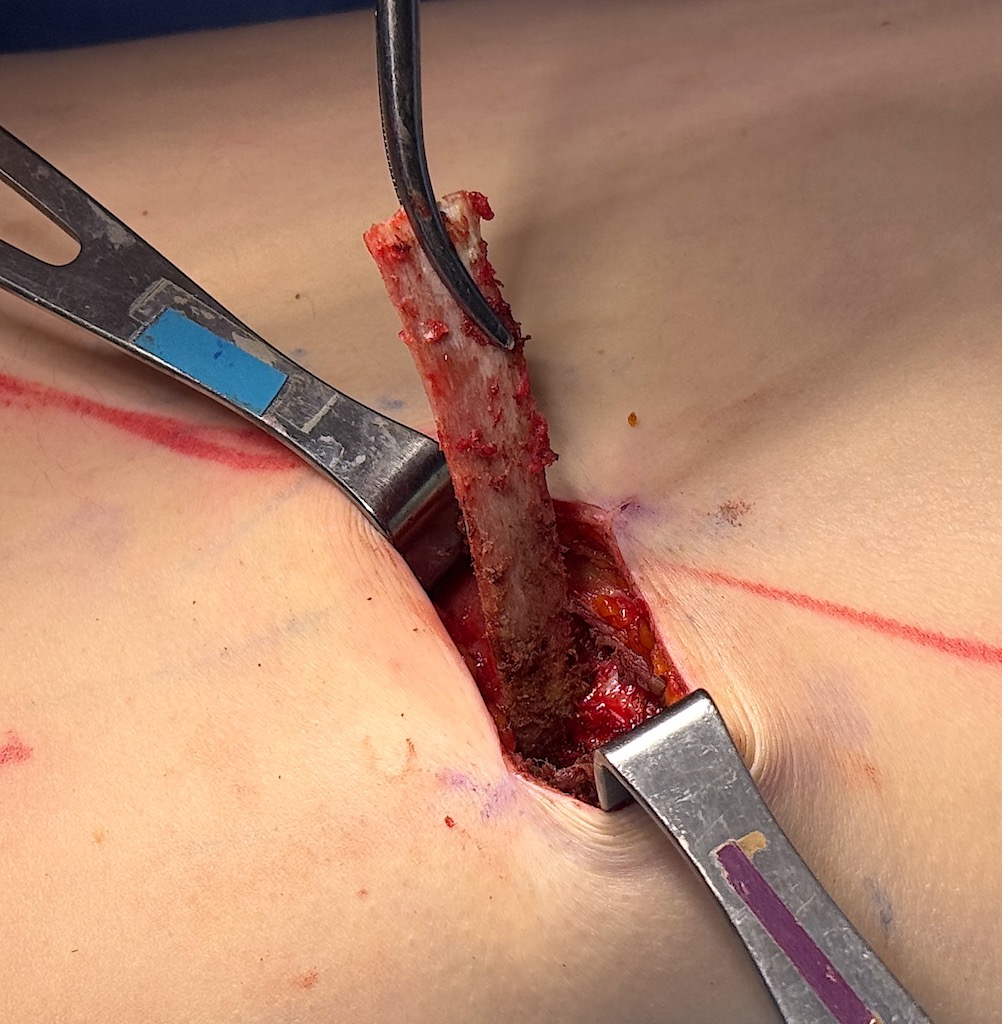
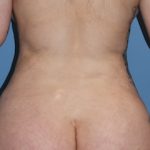
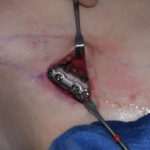
The “tunnel technique” in rib removal for aesthetic waist narrowing refers to a minimally invasive surgical approach where portions of the lower ribs (typically 10–12, sometimes 9–12) are removed through small, strategically placed incisions, creating a subcutaneous “tunnel” to access the ribs rather than using a wide ??? (open) exposure.
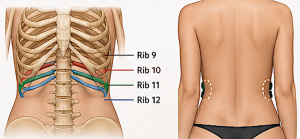
Core Concept
Instead of fully exposing the rib cage, the surgeon:
- Makes a small incision (often posterior or lateral, hidden along natural creases)
- Develops a soft-tissue tunnel down to the rib surface
- Uses specialized instruments to dissect and remove segments of the floating ribs (10,11,12)
- Preserves surrounding musculature and neurovascular structures as much as possible
Key Features of the Tunnel Technique
1. Limited Incision / Hidden Scars
- Incisions are usually 3–5 cm
- Often placed:
- Along the posterior flank in an oblique orientation
- Or more lateral in a vertical orientation
- Results in less visible scarring
2. Subperiosteal Rib Removal
- The rib is approached under the periosteum
- Segmental removal while:
- Protecting the pleura
- Avoiding injury to intercostal nerves/vessels
3. Circumferential Visual Rib Dissection
- Work is done through a narrow tunnel with:
- instruments
- Limited direct visualization
- Requires high anatomical precision and experience
4. Reduced Soft Tissue Disruption
- Muscles are split or tunneled through, not widely detached
- Leads to:
- Less postoperative pain (relative)
- Faster recovery (in experienced hands
5. Rib Delivery
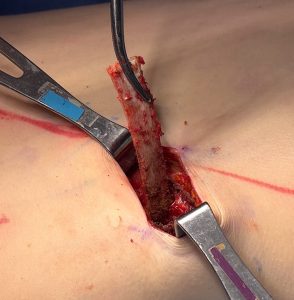
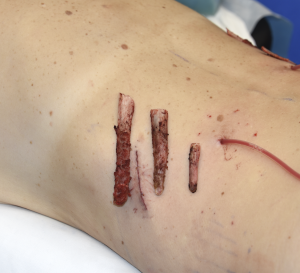
- Rib is delivered in a longitudinal fashion through the incision at 90 degrees from its orientation along the rib cage
- The delivery technique keeps the incision small
Advantages
- Smaller scars (aesthetic benefit)
- Less tissue trauma vs. open approach
- Potentially shorter recovery time
- Lower risk of contour irregularities from large dissections
Limitations / Risks
This is where reality matters—this is still a major structural surgery:
- Pneumothorax risk (pleural violation)
- Injury to:
- Intercostal nerves ? chronic pain or numbness
- Vessels ? bleeding
- Asymmetry if resection is uneven
- Over-resection ? unnatural contour or instability
- Limited visualization ? technically demanding
- Irreversibility of rib removal
Aesthetic Goal
By removing the lower floating ribs:
- The waist indentation increases
- The torso appears:
- Narrower
- More hourglass-shaped (especially in combination with liposuction or other body contouring surgeries)
Tunnel Technique vs Open Rib Removal
|
Feature |
Tunnel Technique |
Open Technique |
|
Incision size |
Small |
Larger |
|
Visualization |
Limited |
Direct |
|
Tissue disruption |
Less |
More |
|
Precision |
Surgeon-dependent |
More controlled |
|
Scar visibility |
Minimal |
More visible |
|
Risk profile |
Technically sensitive |
More predictable exposure |
Who Typically Uses It
- Surgeons specializing in:
- High-end body contouring
- Waist narrowing procedures
- Often combined with:
- Liposuction (360 lipo)
- Breast implants
- Backlifts
- Shoulder narrowing
- Pelvic Plasty
 Corset wear post-op
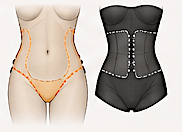 Corset wear post-op
 Bottom Line
The tunnel technique is essentially a limited incision, cosmetically optimized method for rib removal that prioritizes small scars and reduced dissection—but it trades that for higher technical difficulty and reliance on surgical expertise.
Dr. Barry Eppley
Plastic Surgeon