
Does adding an implant (standard or cusom) actually improve the aesthetic outcome over just a facelift alone?”
Short answer: sometimes yes—but only when there’s a structural deficiency to fix. Otherwise, it can add complexity without meaningful benefit.
Here’s the practical way to think about it:
When an implant does improve the facelift result
A facelift repositions soft tissue. If the underlying “scaffold” is weak, tightening alone can only go so far.
You’ll see a clear improvement with an implant when there is:
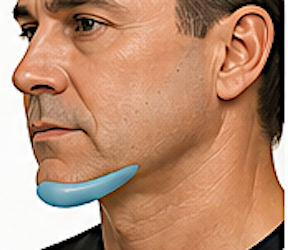
1. Weak chin (microgenia)
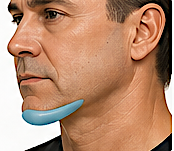
- Facelift alone – tighter neck, but still a blunted cervicomental angle
- Facelift + chin implant -sharper neck angle, better profile balance
2. Underdeveloped jawline
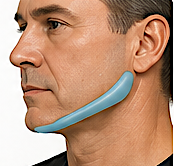
- Facelift alone – reduces jowls but doesn’t create a strong mandibular line
- Add a custom jawline implant – transforms a rounded/lax jaw into a defined, angular one
3. Skeletal volume loss with aging
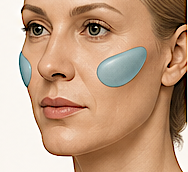
- Not just sagging, but actual loss of projection/support
- Implants restore that foundation so the facelift “drapes” better
? In these cases, the implant doesn’t just add volume—it amplifies the facelift result.
When it does NOT meaningfully improve things
1. Good bone structure, just soft tissue descent
- Strong chin/jaw already present
- Main issue = jowling, neck laxity
? Facelift alone usually gives an excellent result
2. Desire for subtle, natural change
- Implants inherently change shape, not just tighten
- Can overshoot if the goal is simply “refreshed”
3. Volume loss that’s better treated with fat
- Midface aging often responds better to fat grafting than implants…if one’s face is not too thin.
The key concept: “tightening vs. building”
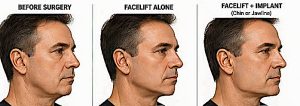
- Facelift = tightening and repositioning
- Implant = building and reshaping
If the problem is:
- Loose skin – facelift
- Small/weak chin/jaw – implant
- Both – combination
The biggest mistake to avoid
Expecting a facelift to compensate for weak structure.
That’s when you get:
- Persistent lack of jawline definition
- A neck that’s improved but not sharp
- A result that looks “tight” but not sculpted
Ths greatest deep plane facelift in the world will not create a more defined facial structure…unless it existed beforehand and is merely camoflaged by soft tissue descent.
The flip side (important reality check)
Adding an implant when it’s not needed can:
- Make the face look overbuilt or artificial
- Increase risk (infection, swelling, longer recovery)
- Distract from an otherwise clean facelift result
Bottom line
An implant improves a facelift only when it solves a structural problem the facelift cannot fix.
If the foundation is lacking, it’s a big upgrade.
If the foundation is already good, it’s often unnecessary—or even counterproductive.
Dr. Barry Eppley
Plastic Surgeon