
Introduction
Adult Metopic Ridge Reduction refers to surgical contouring of a persistent midline forehead ridge caused by partial or complete fusion of the metopic suture. In adults, this is a cosmetic forehead contouring procedure and is not a craniosynostosis operation.
What a Metopic Ridge Is (in Adults)
A metopic ridge in adults is characterized by:
-
A palpable and/or visible midline ridge extending from the hairline toward the glabella
-
Physiologic fusion of the metopic suture, which normally occurs in infancy
-
No functional or neurologic significance, as the adult skull is fully developed
Accordingly, treatment is performed only for aesthetic reasons.
Indications for Reduction
Common indications include:
-
A visible ridge under normal or oblique lighting
-
Forehead asymmetry or a sharp midline contour
-
Patient dissatisfaction with overall forehead shape
-
Increased visibility in patients with thin soft-tissue coverage or shaved/receding hairlines
Case Study
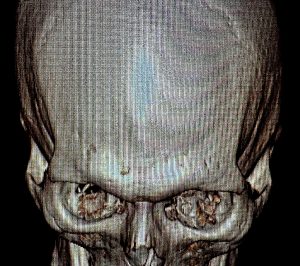
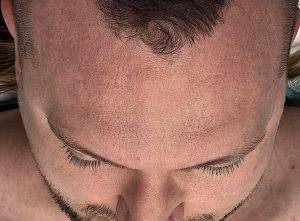 This male patient has a well-defined metopic ridge that became more apparent in adulthood as his frontal hairline receded. The ridge created a prominent midline bump along the upper half of his forehead and was particularly noticeable when light reflected off the forehead surface. A 3D CT scan showed the small ridge.
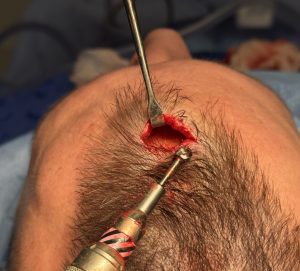
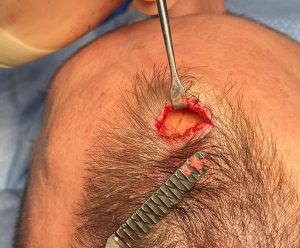
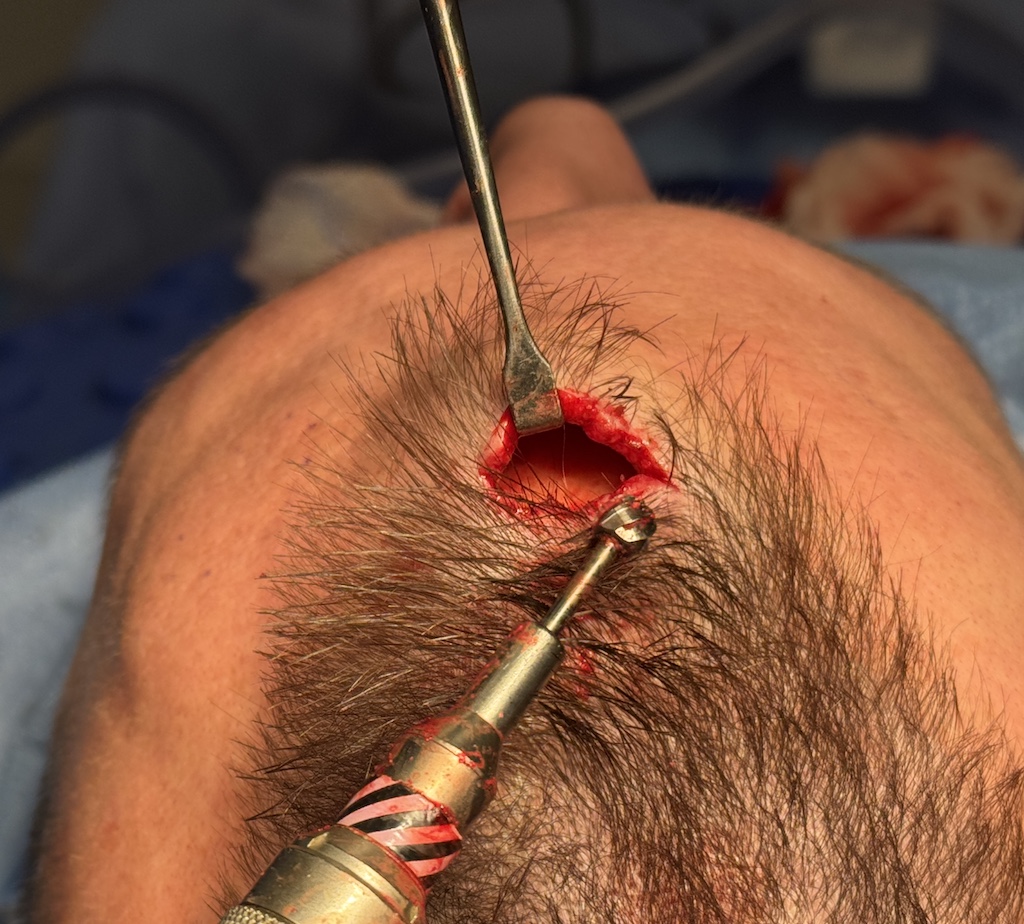
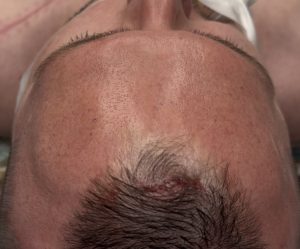 Through a limited scalp incision just behind the frontal hairline, the metopic ridge was accessed. Reduction was performed using a combination of high-speed drill burring followed by final smoothing with large skull rasps. Endoscopic assistance is not helpful for this technique, as precise reduction requires direct visualization combined with tactile palpation.
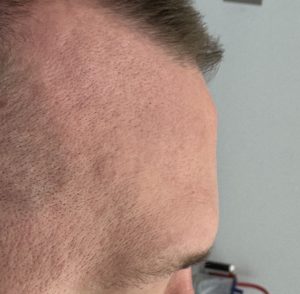
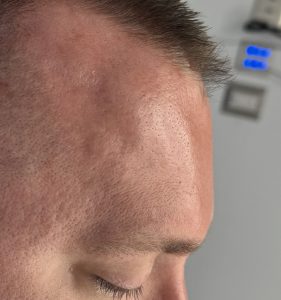 A successful and smooth contour reduction was achieved.
Discussion
The metopic ridge is an uncommon adult forehead prominence with the classic presentation of a vertical midline ridge. Because of its suture-based origin and its relationship to a minor form of metopic craniosynostosis, it is often associated with a relatively narrow forehead shape.
This anatomy raises the theoretical option of camouflage augmentation using bone cements rather than direct ridge reduction. However, this approach should be reserved for cases in which the ridge is too thin to safely reduce, which is rare.
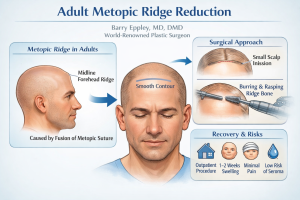 With adequate bone thickness, the ridge can be safely reduced with limited risks, including:
-
Over-reduction resulting in a contour depression
-
Excessive bone thinning (rare when a conservative technique is used)
-
Temporary scalp numbness
-
Hematoma or seroma (low risk)
-
Asymmetry if contour blending is inadequate
Recovery
Recovery from metopic ridge reduction is generally straightforward:
-
Outpatient procedure
-
Mild swelling for 1–2 weeks
-
Minimal postoperative pain
-
Return to normal activities in approximately 7–10 days
-
Final contour visible once swelling resolves, typically within 4–6 weeks
Key Points
-
Metopic ridge reduction in adults is a cosmetic forehead contouring procedure performed solely for aesthetic purposes.
-
Treatment is performed through a limited incision using high-speed burring and manual rasping to achieve permanent bone reduction.
-
Because the ridge represents a thickening of the bone along the suture line, adequate and safe reduction can usually be achieved.
Barry Eppley, MD, DMD
World-Renowned Plastic Surgeon