
Top Articles

The 3D Architecture of the Human Skull Explained

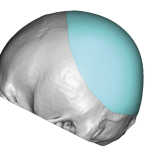
The human skull is not just a collection of bones—it is a highly engineered three-dimensional biological structure designed to achieve four major goals simultaneously: Protect the brain Support the face Enable sensory function Provide lightweight structural strength Its architecture resembles principles seen in: domes, trusses, shell structures, and composite materials used in engineering. 1. The Read More…

Occipital Skull Reduction – Anatomy and Technique

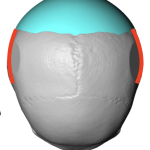
Occipital skull reduction is a cosmetic cranial contouring procedure that reduces the prominence or projection of the back of the skull (the occipital bone). It is typically done for patients who feel the back of their head is overly protrusive, asymmetrical, or disproportionate in profile. Common Reasons for the Procedure Prominent occipital “bump” or bulge Read More…

Custom Facial Implants – Techniques in Intraoperative Placement

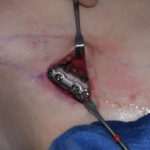
Some surgeons falsely allege and some patients erroneously assume that a custom facial implant just snaps into place because of its design with an underlying shape that mimics the surface anatomy of the bone on which is placed.  There is also the mistaken belief that certain implant materials (aka PEEK) are better because of this Read More…

What is Aesthetic Skull Reshaping Surgery

  Every day I get inquiries from patients requesting ‘skull reshaping surgery’ without any further specifications or details of their head shape concerns, not recognizing the scope of the general term. A detailed description of what encompasses skull reshaping surgery is described. What is Aesthetic Skull Reshaping Surgery Aesthetic skull reshaping surgery—often called cranial contouring Read More…

Secondary Custom Skull Implant Overlays and Extensions
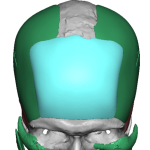
Custom designed implants for aesthetic skull augmentation and contouring is a very effective method that has replaced the limitations of traditional cranioplasty bone cements. But like any aesthetic implant patients may determine secondarily that they desire an enhanced augmentation effect. This could mean more projection than the current implant, increased surface area of augmentation coverage Read More…
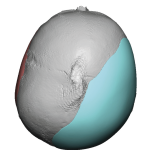
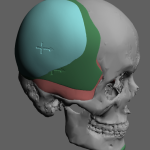
Adult Plagiocephaly Skull Asymmetry Correction Case Example

Custom skull implants are one of the main surgical options used to improve cranial asymmetry in adult plagiocephaly when the skull bones can no longer be reshaped. In adults, the cranial sutures are fused, so correction is typically done by augmenting the skull contour rather than moving bones. Below is a structured overview of how Read More…

Custom Occipital-Parietal Temporal Skull Implant Overlay Case Example

A custom skull implant overlay (sometimes called a “topper implant” or stacked skull implant) is a secondary implant designed to sit on top of an existing skull implant to increase projection or refine contour without replacing the original implant.  Concept The original implant acts as the base implant that establishes the footprint on the skull. A secondary overlay implant is designed to fit precisely over that base implant within the Read More…

Tertiary Custom Skull Implant Overlay Case Example

Placing a custom skull implant overlay on top of an existing skull implant is possible — but it requires careful analysis and is not a routine situation. The approach depends heavily on what the first implant is, how it was placed, and why additional augmentation is needed. Here is a structured breakdown: 1. When Would Read More…

Custom Skull Implant Augmentation and Scalp Stretch

How much skull augmentation is realistically possible depends on the thickness of  the scalp and the size of the implant. A major consideration in the custom skull implant design is an estimate of what the scalp can accommodate., The Main Limiting Factor: The Scalp The skull bone itself is not the limitation in augmentation. The Read More…

Female Custom Fronto-Temporal Head Widening Implants Case Example

Custom Fronto-Temporal Implants are patient-specific cranial implants designed to widen the upper temporal region and the lateral forehead in one continuous contour. They address the transition zone between the forehead and the side of the head — an area that strongly influences facial width and upper facial balance. What Area They Augment Fronto-temporal implants cover: Read More…

Top Articles