Top Articles

Blog

Female Chin Reduction with Facelift

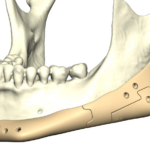
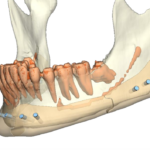
A female chin reduction combined with a facelift can be an effective facial balancing procedure when an overly prominent chin contributes to a masculine lower face or detracts from a youthful neck and jawline. The key is to reduce the chin in a way that preserves feminine proportions while allowing the facelift to enhance soft Read More…

The Safe Amount of Clavicle Bone Removal in Shoulder Narrowing Surgery

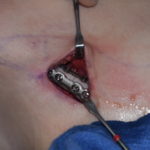
How much can the clavicle be shortened before it affects arm range of motion? This is one of the key unanswered questions in cosmetic clavicle shortening surgery because there are no published biomechanical or clinical studies that define a precise threshold. Most of what we know comes from studies of malunited clavicle fractures, clavicle resections, Read More…

The Biomechanical Implications on Recovery From Shoulder Narrowing Surgery

  From the standpoint of clavicle shortening osteotomy for shoulder narrowing, the postoperative recovery is driven much more by muscle and shoulder girdle adaptation than by changes in the strength of the clavicle itself. The bone is actually mechanically favorable after shortening, but the shoulder has to learn to function with a new geometry. Early Read More…

The Effects of Shoulder Narrowing on Biomechanical Loading of the Clavicles

Clavicle shortening fundamentally changes the way forces are transmitted across the shoulder girdle. The clavicle is not simply a strut connecting the arm to the trunk—it is a compression and bending beam that maintains the lateral position of the scapula while transferring loads from the upper extremity to the axial skeleton. When the clavicle is Read More…

Differing Clavicle Bone Shapes Amongst Shoulder Narrowing Patients

One of the more interesting observations in clavicle reduction osteotomy surgery is that no two clavicles are exactly alike. The clavicle is arguably the most variable long bone in the human skeleton in terms of its shape, curvature, cross-sectional dimensions, and even bone quality. This variability has important implications for shoulder narrowing surgery because it Read More…

Custom Infraorbital-Malar Implants vs. Fat Grafting for Undereye Hollowing

Custom infraorbital-malar implants and fat grafting are fundamentally different treatments because they address different anatomical causes of undereye hollowing. Fat grafting restores soft tissue volume, whereas custom implants restore deficient skeletal support. Choosing between them depends less on patient preference and more on identifying whether the primary problem lies in the bone, the soft tissues, Read More…

Custom Infraorbital-Malar Implants for Undereye Hollowing Case Example

Custom infraorbital-malar implants are designed to permanently correct bone-based undereye hollowing by rebuilding the deficient skeletal support beneath the lower eyelid and extending onto the upper cheek when necessary. Unlike fillers or fat grafting, which add soft-tissue volume, these implants restore the underlying facial framework. This approach is particularly effective in patients whose hollow appearance Read More…

Augmentation of the Upper Face – Part 9. The Future of Forehead Reshaping Surgery

Forehead reshaping has undergone a remarkable transformation over the past three decades. What began as a procedure based largely on intraoperative sculpting of bone cements has evolved into a digitally planned, patient-specific discipline in which implant geometry, skeletal anatomy, and aesthetic analysis are integrated before the patient ever enters the operating room. As imaging technology, Read More…

Augmentation of the Upper Face – Part 8. Complications, Revision Surgery, and Prevention Strategies

Although custom forehead augmentation has become a highly predictable procedure, successful outcomes depend upon thoughtful patient selection, meticulous implant design, precise surgical execution, and realistic patient expectations. Fortunately, true medical complications are uncommon. The majority of revision procedures performed after forehead augmentation are not undertaken because of infection or implant failure, but because of aesthetic Read More…

Top Articles