Top Articles

Blog

Design Principles for Custom Male Brow Bone Implants

Designing a custom brow bone implant from a CT scan is a very deliberate process—it’s not just “adding projection,” but engineering a smooth, stable transition across the forehead and brow while respecting the sinus underneath. 1. Overall Design Concept on CT The implant is created as a 3D overlay on your existing bone: Implant Footprint Read More…

Brow Bone Reduction Reversal with a Custom Brow Boen Implant Case Example

A brow bone reduction can be reversed with a custom brow bone implant in selected patients. The usual concept is to use a patient-specific implant designed from a current 3D CT scan to rebuild projection of the supraorbital ridge/brow area. That is a recognized approach in facial masculinization, where forehead/brow augmentation may be done with Read More…

Custom Male Forehead-Brow Bone Implant Case Study

A custom male forehead–brow bone implant is a facial implant designed to enhance the supraorbital ridge (brow ridge) and forehead contour—typically to create a stronger, more masculine appearance. Here’s a clear breakdown of what that involves: What It Is A patient-specific implant (usually made from solid silicone or PEEK) Designed from a CT scan of Read More…

Male Brow Bone Reduction Case Example

Male brow bone reduction is a cosmetic bone-contouring procedure used to soften a prominent supraorbital ridge while still keeping a masculine look if that is the goal. In practice, the amount of reduction depends far more on your frontal sinus anatomy than on sex; men with strong brow bossing often want a less aggressive contour Read More…

The 3 Common Patterns of Male Brow Bossing

While brow bone reduction surgery today is most commonly associated with forehead feminixation it also has a prior history in men as well. For the male with overly prominent brow bones suirgical reduction can reduce the hypermasculine or Neanderthal appearance. But not all male brow bone prominences are the same and matching the correct reduction Read More…

Golden Ratio Guidelines for Jawline Implant Design

The Golden Ratio has been applied to facial aesthetics for a long time for both facial analysis as well as surgical treatment planning. While it is not a mathematical formula  to be universally applied for every surgical procedure it does have some use in facial and skull implant planning as well. Let’s dive in and Read More…

The 5 Aesthetic Vectors of the Male Jawline Implant Design

In advanced CAD planning for total jawline implants, I analyze the lower face using five aesthetic vectors.These vectors describe the direction and magnitude of skeletal augmentation needed to produce a strong, natural male jawline. Instead of thinking in millimeters alone, it is also useful to think in directional growth patterns. Below are the five vectors Read More…

Eppley-Style Jaw Augmentation Algorithm

    The Eppley-style jaw augmentation algorithm is more granular than typical cosmetic algorithms because it evaluates the mandible as three independent aesthetic units: Chin (central projection) Mandibular body (jawline length/straightness) Jaw angle (width and posterior definition) Treatment is then selected depending on which unit is deficient and whether the deficiency is projection, width, or Read More…

Aesthetic Total Custom Jawline implant Design Principles

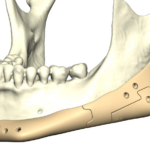
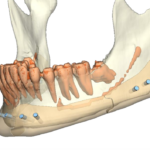
Designing an aesthetic total custom jawline implant (angle ? body ? prejowl/chin transition) is fundamentally about creating a continuous mandibular border with controlled width, projection, and symmetry while respecting soft-tissue behavior and anatomy. The best results come from designing the implant as a global lower-face framework, not isolated angle or chin augmentation. Below are the core aesthetic design principles  I Read More…

Aesthetic Jawline Implant Selection Algorithm

Evaluation of lower third of the face deficiencies and the appropriate treatment for them can be assessed both from an anatomic unit and dimensional standpoint. The evaluation process begins at the chin and works its way back to the jaw angles. Step 1 — Evaluate Chin Projection Assess the pogonion position relative to ideal profile Read More…

Top Articles