Top Articles

Blog

Soft Tissue Jaw Angle Implants For Camoflage of Masseteric Muscle Dehiscence

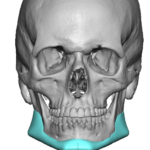
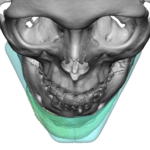
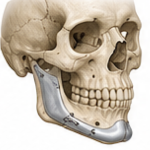
Soft-tissue jaw angle implants can be a very useful solution for masseteric muscle dehiscence, but only in select scenarios and with the right implant design and surgical strategy. The Problem: Masseteric Muscle Dehiscence Masseter muscle dehiscence typically presents as: Soft tissue oosteroinferior hollowing at the mandibular angle Can make the bony or implanted jaw angle Read More…

Iliac Crest Augmentation With Soft-Tissue Extended Flange Hip Implants (Aesthetic Pelvic Plasty)

Aesthetic pelvic framework contouring is achieved through subperiosteal augmentation of the lateral iliac crest using titanium implants, with optional adjunctive soft-tissue hip augmentation (autologous fat grafting or silicone implants). This combined approach enhances lateral hip width while smoothing contour transitions. Components 1. Iliac Crest Augmentation (Primary Procedure) Subperiosteal placement of titanium bone-widening implants Augmentation of Read More…

Labiomental Fold Reduction by Dermal-Fat Grafting

Labiomental fold reduction by fat grafting is an effective way to soften the deep crease between the lower lip and chin while preserving a natural look. What the labiomental fold is The labiomental fold (mental crease) separates the lower lip from the chin pad It deepens with: Strong mentalis muscle activity Chin retrusion or vertical Read More…

Male Soft Tissue Cheek Reductions Case Study

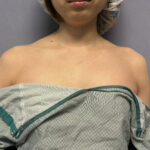
Soft tissue cheek reduction refers to procedures that slim the soft-tissue volume of the cheeks (not the cheekbone itself) to create a leaner, more contoured facial appearance—often aiming to reduce “chubby,” “full,” or “puffy” cheeks. What tissue is being reduced? Primarily fat and soft tissue, not bone. The main targets are: Buccal fat pad (deep fat in the lower cheek) Read More…

The Aesthetics of Occipital Augmentation – Profile Curve Shape

This is where skull augmentation stops being about adding volume and becomes about sculpting geometry. An ideal occiput isn’t “round everywhere” — it has a very specific curve architecture. The ideal occipital curvature (in profile) Think of the back of the head as a long, continuous S-curve, not a single arc. 1. Upper occiput: gentle Read More…

The Aesthetics of Occipital Augmentation – How Much Projection IS Enough

Occipital skull augmentation increases the projection of the flat back of the head. But how does projection translates visually in profile? This is the key concept most people don’t get until they see simulations…the eye reads curves, not millimeters. Let’s break down how occipital projection actually shows up in profile. The Profile Reference Line In Read More…

Custom Back of The Head Skull Implant for Adult Male Brachycephaly

A complete flat back of the head (often called occipital flatness or brachycephaly) can be augmented surgically if someone wants a more rounded, balanced skull shape. This is a real and fairly specialized area of craniofacial / aesthetic skull surgery. What is skull (occipital) augmentation? It’s a cosmetic procedure that adds projection and roundness to Read More…

Custom Midface Mask Implant Replacements for Standard Cheek Implants Case Study

Why replace standard cheek implants with a custom midface implant? Standard cheek implants (malar, submalar, or combined) are one-size designs. They work fine for isolated cheek augmentation, but they often fall short when: There is midface deficiency (infraorbital rim, paranasal, maxillary support) The implant looks “stuck on” rather than skeletal There’s aging-related midface collapse The Read More…

The Postauricular Incision in Aesthetic Temporal Reduction Surgery

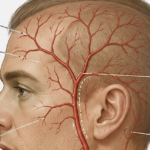
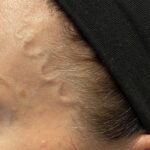
The temporal reduction surgical technique (often called temporal narrowing or temporal contour reduction) is a skull contouring procedure aimed at reducing excess width or fullness in the temporal region (the sides of the head above the ear). It is most done in males who want a more vertically shaped side of the head  and may Read More…

Top Articles