Top Articles

Blog

Comparing Silicone vs PEEK Custom Jawline Implants – Surgeon’s Perspective

As a surgeon I have to think a variety of technical issues when comparing materials for custom jawline implants. These include incision strategy, screw fixation, mental nerve considerations, implant thickness, long-term bone changes, revision/explant technique, and how I would counsel a cosmetic patient choosing an implant material.. For a custom wraparound jawline implant—chin + mandibular Read More…

Comparing Silicone vs PEEK Custom Jawline Implant – Patient’s Perspective

For a custom jawline implant, both solid silicone and PEEK can work well, but they behave quite differently surgically and biologically. There is not strong head-to-head evidence showing that one is universally superior; much of the published custom-implant literature is observational and PEEK-specific rather than direct PEEK-versus-silicone comparison. Feature Custom silicone Custom PEEK Consistency Flexible Read More…

The Six-Piece Custom PEEK Jawline Implant

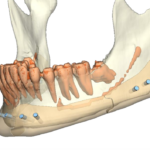
Why do custom PEEK jawline implants with larger jaw angle segments have the jaw angle segment split into two pieces changing a four piece to a six piece implant design? With PEEK, the reason can be even more restrictive than with a large silicone jawline implant: the problem is not simply the total number of Read More…

PEEK Custom Jawline Implant Placement Challenges Case Example

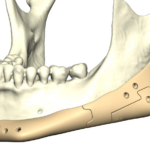
A PEEK wraparound jawline implant usually needs to be made in multiple pieces because PEEK is very rigid. A full jawline implant can extend from one mandibular angle, across the chin, to the opposite angle. Unlike silicone, PEEK cannot flex enough to pass that entire shape through the relatively small incisions used for placement. Dividing Read More…

Custom Facial Implant Materials and Infection Risk – Part 2 Surface Energies

One material  property i occasionally hear about implants and infection risk is surface energy. This is usually mentioned in regard to silicone materials and their low sueface energy which may help them be more infection resistant. Not necessarily. Silicone’s low surface energy does not make ordinary medical-grade silicone inherently infection resistant. In many biologic environments, Read More…

Laryngeal Fracture Plate Removal

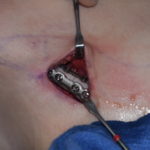
Titanium miniplates used to stabilize thyroid-cartilage fractures are generally left in place when they are asymptomatic. The published laryngeal-fracture literature does not establish routine removal at 6–12 months; reports describe retained plates with good airway, swallowing, and voice outcomes at follow-up extending from several months to two years. Evidence specifically addressing elective plate removal from Read More…

Top Articles