Top Articles

Blog

Long Term Considerations in Female Shoulder Narrowing Surgery

For female shoulder-narrowing surgery using bilateral clavicle-shortening osteotomies, I would frame the important long-term considerations in five buckets. The biggest caveat is that cosmetic shoulder narrowing is relatively new, so there is not yet robust 10–20 year peer-reviewed outcome data. Much of the reassurance about long-term results comes from clavicle-fracture literature plus relatively limited cosmetic Read More…

Custom Infraorbital-Malar Implants for Aesthetic Augmentation – Silicone vs PEEK

For custom infraorbital–malar augmentation, I’d generally favor PEEK when the goal is true skeletal reconstruction with exact CT-based contour, and silicone when the goal is primarily aesthetic augmentation and you value intraoperative adjustability/reversibility/optimal implant design. There is no literature specifically comparing custom PEEK with custom silicone in this exact anatomic zone so much of the decision Read More…

The Male High Cheekbone Look Implant Design

For a male “high cheekbone” look, I would design the implant quite differently from one intended to create generalized midface fullness or any other standard cheek implant. The key is a high, lateral, relatively angular zygomatic augmentation, not simply a bigger or more highly positioned malar implant. The implant’s maximum projection should sit high on Read More…

Finite-Element Modeling in Custom Facial Implants

Finite-element modeling—usually called finite-element analysis, or FEA—is a virtual mechanical test of the patient-specific implant–fixation–bone–soft-tissue system. It can be used before manufacturing to compare implant thickness, material, footprint, screw positions, edge geometry, porosity, lattice structure and fixation stiffness. Patient-specific maxillofacial workflows increasingly combine CT-derived anatomy, CAD design and procedure-specific FEA to identify regions of excessive Read More…

The Modern Midface Augmentation Patient – Skeletal and Soft Tissue Considerations

Today’s midface augmentation patient is less often asking simply for “bigger cheeks.” More commonly, they are seeking better facial structure, balance, and restoration of youthful contour without looking filled or operated on. There are several common patient profiles:   The younger structural patient, often in their 20s–40s, has congenitally flat or underprojected malar bones, a Read More…

Comparing Silicone vs PEEK Custom Jawline Implants – Surgeon’s Perspective

As a surgeon I have to think a variety of technical issues when comparing materials for custom jawline implants. These include incision strategy, screw fixation, mental nerve considerations, implant thickness, long-term bone changes, revision/explant technique, and how I would counsel a cosmetic patient choosing an implant material.. For a custom wraparound jawline implant—chin + mandibular Read More…

Comparing Silicone vs PEEK Custom Jawline Implant – Patient’s Perspective

For a custom jawline implant, both solid silicone and PEEK can work well, but they behave quite differently surgically and biologically. There is not strong head-to-head evidence showing that one is universally superior; much of the published custom-implant literature is observational and PEEK-specific rather than direct PEEK-versus-silicone comparison. Feature Custom silicone Custom PEEK Consistency Flexible Read More…

The Six-Piece Custom PEEK Jawline Implant

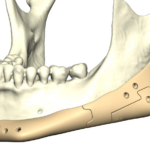
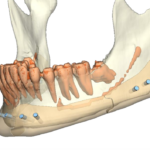
Why do custom PEEK jawline implants with larger jaw angle segments have the jaw angle segment split into two pieces changing a four piece to a six piece implant design? With PEEK, the reason can be even more restrictive than with a large silicone jawline implant: the problem is not simply the total number of Read More…

PEEK Custom Jawline Implant Placement Challenges Case Example

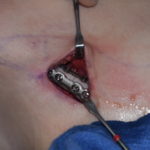
A PEEK wraparound jawline implant usually needs to be made in multiple pieces because PEEK is very rigid. A full jawline implant can extend from one mandibular angle, across the chin, to the opposite angle. Unlike silicone, PEEK cannot flex enough to pass that entire shape through the relatively small incisions used for placement. Dividing Read More…

Top Articles