Top Articles

Combining Deep Plane Facelifts with Custom Cheek Implants

One of the primary benefits of a deep place facelift is ts effects on the cheeks to correct sagging or tissue descent. But some patients have naturally flkatter cheeks that hav always lack projection…which is a major reason why some patients develop more cheek soft tissuer sagging than others. Overview Custom cheek implants and a Read More…

Combining Custom Facial Implants with a Deep Plane Facelift

Facial implants have a long history of being done in conjunction with facelift surgery. This almost always has been with the use of standard chin and cheek implants to help build out a flat or recessed cheek and chin bone structure which both aids the aesthetic result and provides some support to the lifted soft Read More…

Custom Jawline Implant Design Concepts for Facial Masculinization

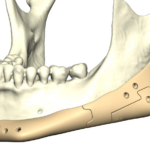
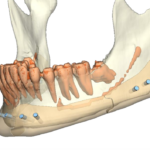
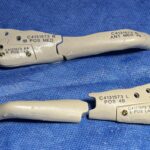
For facial masculinization, a custom jawline implant designed in the “Eppley style” typically focuses on creating a stronger, wider, and more angular lower face while maintaining proportional harmony with the chin and cheekbones. Key design principles include: 1. Wraparound Jawline Design Rather than separate angle implants and a chin implant, the design is usually a Read More…

The Biology of Bony Overgrowths Around Facial Implants

Bony overgrowths occur around facial implants, particularly chin and jaw angle implants, is commonly observed on 3D CT scans and during implant replacement surgery. It is less discussed than bone imprinting changes underneath the implant even though it is part of the overall bone remodeling process that occurs  as an adaotive response to implant placement. Read More…

The Biology of Bone Remodeling Around Facial Implants

There is an established association of bone changes with facial implants but it is poorly understand despite that the biology of bone remodeling in response to mechanical stress is well known. Facial implants can cause underlying bone resorption (bone remodeling/imprinting), although the degree varies considerably by implant type, location, design, fixation method, and duration of Read More…

Custom Zygomatic Arch Implant Designs

When designing a custom zygomatic arch implant, the primary goal is usually not projection but controlled lateralization of the arch to create the desired increase in upper facial width while maintaining a natural skeletal contour. Key Design Parameters 1. Amount of Width Increase This is the most important variable. Typical augmentation: 3–5 mm per side: Read More…

Zygomatic Arch Implants – A Unique Facial Augmentation Concept

A zygomatic arch implant is a facial skeletal implant designed to increase the projection and width of the zygomatic arch, which is the bony arch that extends backward from the cheekbone toward the ear. It is a cheek implant but not creating a traditional form of cheek augmentation. Anatomy The cheekbone region consists of: Malar Read More…

Can AI-Generated Face Images Be Recreated with Custom Facial Implants?

Ai Facial Imaging Replication – Understanding What Is Possible Artificial intelligence (AI) can now create highly realistic images of faces. Some people use these images to visualize facial features they would like to have, such as a stronger jawline, more prominent cheekbones, a more projected chin, or better facial balance. A common question is: “Can Read More…

Facelift – Before, During or After Custom Jawline Implants

While jaw implant augmentation can be done at any age if a structural deficiency exists management of loose or sagging overlying soft tissues is usually more age dependent. But in contemporary facial surgery we are seeing much younger patients seeking face/necklift surgery. Weight loss, early onset aging in structurally weaker faces and the desire for Read More…

Deciding Between A Custom Infraorbital or Infraorbital-Malar Implant Design

One of the more contemporary and increasingly popular facial reshaping changes that has grown in demand due to custom implant designs is that of the periorbital region, specifically the upper midface along the infraorbital rims and cheekbones. Structural deficiencies in this area even in young people cause undesired effects of undereye hollowing and weak cheekbones. Read More…

Top Articles