
Top Articles

Subcostal Subtotal Rib Prominence Reductions in a Male Case Example

Prominent lower ribs that project outward beneath the breast crease or upper abdominal area, can be treated by rib shaving (rib contouring) to reduce their flared appearance. When rib shaving may help Rib contouring is most effective when: The lower costal margin (typically ribs 8–10) is excessively prominent. The flare is due to actual rib Read More…

Custom Secondary Occipital Skull Extension Implant Case Example

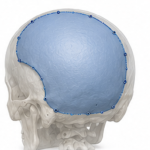
A custom back-of-the-head skull implant (occipital skull implant) is a patient-specific implant designed to increase the projection, width, or symmetry of the posterior skull. It is commonly used for: Flat back of the head (occipital flattening) Congenital skull shape deficiencies Asymmetric occipital skull contours Secondary correction after previous cranioplasty procedures Design Process Obtain a high-resolution Read More…

Female Large Two Stage Skull Augmentation Concept

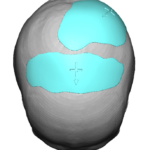
A large two-stage skull augmentation is used when the desired increase in skull size or contour exceeds what the scalp can safely accommodate in a single operation. The goal is to create enough scalp tissue first, then place a much larger custom implant in a second surgery. Stage 1: Scalp Expansion A scalp tissue expander Read More…

Skull Shape Guidelines for Aesthetic Augmentation Implant Designs

For overall cranial augmentation performed purely for aesthetic enhancement, there is surprisingly little scientific literature defining an “ideal” skull shape compared to the extensive literature on facial aesthetics. Most implant design is therefore based on artistic contouring principles combined with anthropometric measurements rather than any single formula such as the Golden Ratio. What Makes a Read More…

Does the Golden Ratio Apply fo Custom Skull Implants

The Golden Ratio (approximately 1.618:1) has some relevance to the design of custom skull implants but it is not rigidly applied.  It is helpful in understanding good skull shape proportions For aesthetic facial procedures, surgeons sometimes reference proportions related to the Golden Ratio when evaluating facial balance, forehead width, facial thirds, or overall craniofacial harmony. However, Read More…

Sagittal Ridge Skull Reduction – Basic Concepts and Surgical Technique

A sagittal ridge skull reduction refers to contouring down a prominent midline ridge on the top of the skull that follows the sagittal suture. It is usually done for cosmetic reasons when the ridge creates a peaked, narrow, or “keel-shaped” head appearance. What causes a sagittal ridge? Common causes include: Normal anatomical variation — thickened Read More…

Male Custom Back of Head Skull Implant Case Example

In adults, a flat back of the head is usually due to one of these situations:            Natural skull shape (flat occiput) Very common and often genetic/ethnic/anatomical. Usually harmless. Some people notice it more with short haircuts or certain head angles. Residual positional plagiocephaly/brachycephaly from infancy Flattening that developed as a Read More…

Role of Perfusion Holes in Custom Aesthetic Skull Implants

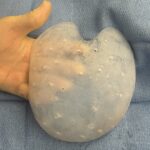
Perfusion holes in aesthetic skull implants serve several important biologic and mechanical purposes. Since onlay skull implants for aesthetic augmentation are made of solid silicone these holes are intentionally made intraoperatively for multiple purposes. Some of these effects are for intraoperative use while others have postoperative benefits. In either case they have the biologic effects Read More…

The Geometry of Aesthetic Custom Skull Implants

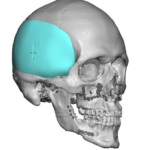
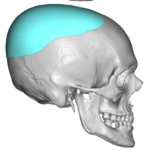
One of the most successfuk forms of aesthetic skull surgery is augmentation using a custom designed skull implant. Enlargement or augmenattion of any or all of the five surfaces of the skull can be done (forehead, top of head, back of head, sides of the head) with designs only limited by the  ability of the Read More…

Top Articles