Top Articles

The Aesthetics of Occipital Augmentation – Profile Curve Shape

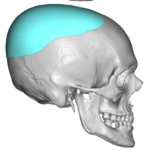
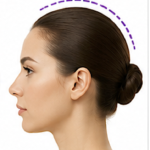
This is where skull augmentation stops being about adding volume and becomes about sculpting geometry. An ideal occiput isn’t “round everywhere” — it has a very specific curve architecture. The ideal occipital curvature (in profile) Think of the back of the head as a long, continuous S-curve, not a single arc. 1. Upper occiput: gentle Read More…

The Aesthetics of Occipital Augmentation – How Much Projection IS Enough

Occipital skull augmentation increases the projection of the flat back of the head. But how does projection translates visually in profile? This is the key concept most people don’t get until they see simulations…the eye reads curves, not millimeters. Let’s break down how occipital projection actually shows up in profile. The Profile Reference Line In Read More…

Custom Back of The Head Skull Implant for Adult Male Brachycephaly

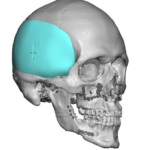
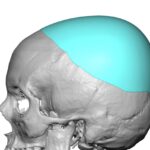
A complete flat back of the head (often called occipital flatness or brachycephaly) can be augmented surgically if someone wants a more rounded, balanced skull shape. This is a real and fairly specialized area of craniofacial / aesthetic skull surgery. What is skull (occipital) augmentation? It’s a cosmetic procedure that adds projection and roundness to Read More…

Adult Brachycephaly Skull Reshaping Case Study

Adult brachycephaly refers to a persistently short, wide head shape (increased cranial width relative to length) that began in infancy and remained into adulthood. What it is Definition: Brachycephaly = reduced front-to-back skull length with increased width Cephalic index: Typically > 80–85 In adults, the skull bones are fused, so the shape is stable and non-progressive The most common cause is positional Read More…

Aesthetic Skull Augmentation – Custom Implant vs Bone Cements

Aesthetic skull augmentation focuses on cosmetic contouring rather than reconstruction.  That is a very important distinction as aesthetic augmentation requires material onlay on top of existing bone while reconstruction requires inlay material placement for bony skull defects. Such onlay augmentations can be done using a custom implant vs. bone cement (PMMA/HA).  While they represent two Read More…

Adult Male Metopic Ridge Reduction – Case Study

Introduction Adult Metopic Ridge Reduction refers to surgical contouring of a persistent midline forehead ridge caused by partial or complete fusion of the metopic suture. In adults, this is a cosmetic forehead contouring procedure and is not a craniosynostosis operation. What a Metopic Ridge Is (in Adults) A metopic ridge in adults is characterized by: Read More…

Skull Reduction Bone Thickness Color Mapping

Calculating bone thickness in skull reduction (cranial contouring) surgery is a critical step for safety and predictable aesthetic outcomes. Below is a practical, surgeon-focused explanation of how this is done in modern practice. Primary Assessment Tool: 3D CT Skull Scan A 3D skull CT scan  allows direct measurement of the three layers of the skull, Read More…

Occipital Bun Reduction with Scalp Roll Excision Case Study

Introduction An occipital bun is a rounded overgrowth of the occipital bone at the back of the skull. This produces an exaggerated posterior curvature that disrupts the normal, smooth convex contour of the back of the head when viewed in profile. It represents a normal anatomic variant of skull development rather than a true bony Read More…

Custom Back of the Head Skull Implants (Occipital Implants) – Case Study

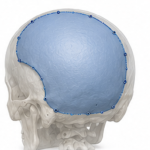
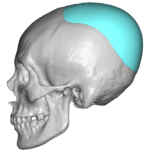
Introduction A back-of-the-head skull implant, also known as an occipital implant, is a cosmetic or reconstructive procedure designed to improve posterior skull projection, roundness, and symmetry. Common indications include: A flat or under-projected occiput (most often congenital) Imbalance in head shape where the front or sides are well developed but the back appears flat Asymmetry Read More…

Custom Head Widening Implants Case Study

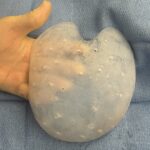
Introduction Custom head-widening implants are a highly specialized procedure performed by only a few surgeons worldwide. These implants are 3D-designed, medical-grade solid silicone devices placed along the sides of the skull—specifically over the temporal muscle region—to increase the absolute width of the head. Designed from a patient’s 3D CT scan, they typically provide 0.5–1.0 cm Read More…

Top Articles