

Introduction
Reversal of a feminized chin is one of the more predictable and achievable components of facial feminization reversal surgery.
What Feminizing Chin Surgery Typically Does
Feminizing chin surgery commonly involves one or more of the following changes:
- Narrowing of chin width
- Reduction of chin height or forward projection
- Rounding or tapering of the chin point into a V-shape
- Shortening of vertical chin height
These changes are most often achieved through:
- Sliding genioplasty
- Burring or shaving of the mandibular symphysis
- Combination techniques
Chin Feminization Reversal Options
(Listed from most to least effective)
1. Custom Chin Implant (Most Reliable Option)
Best suited for: Significant narrowing, loss of projection, or vertical height deficiency
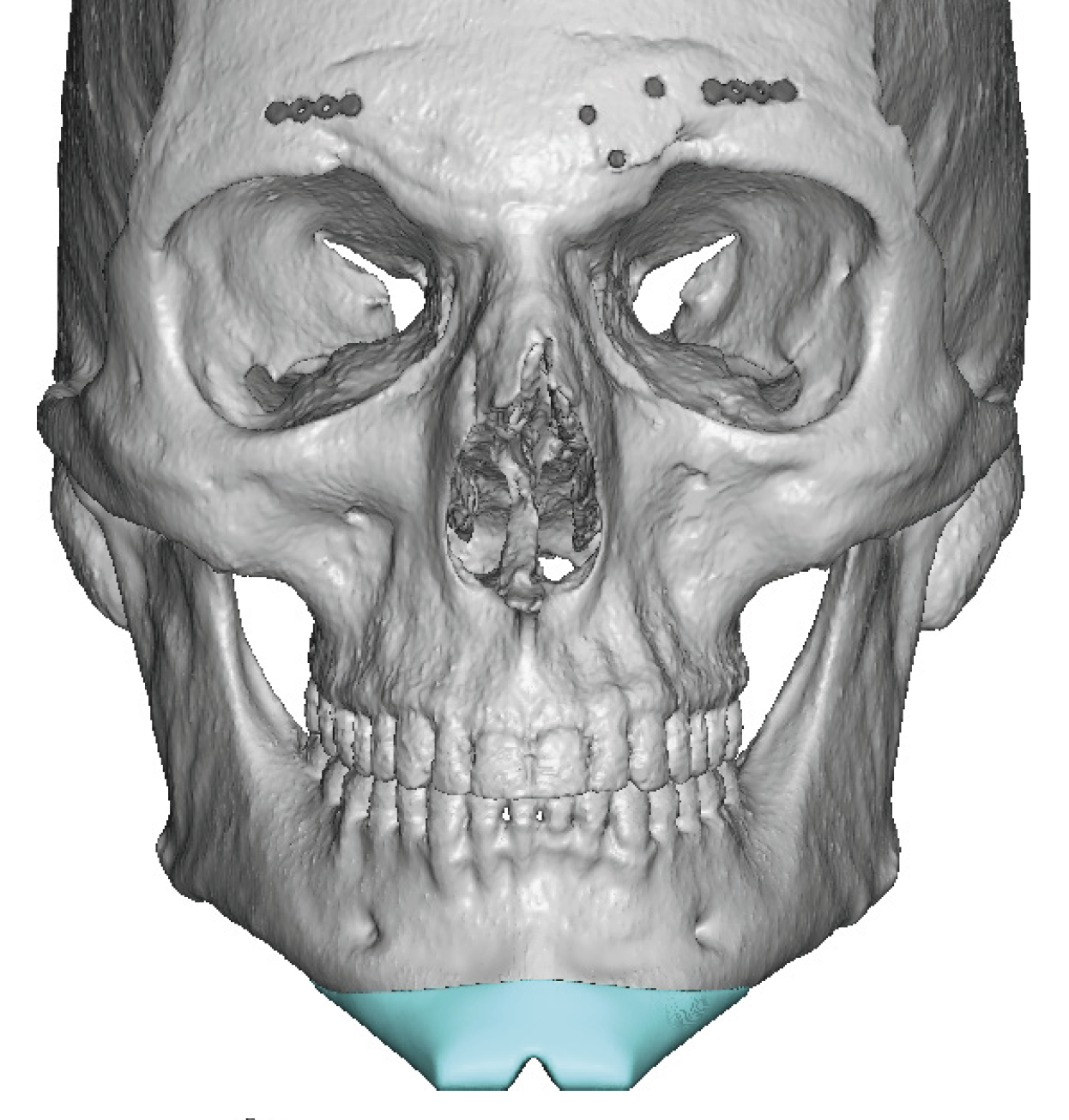
A custom-designed chin implant allows restoration of width, projection, and contour using CT-based 3D planning. It can recreate a square or broader chin and compensate for lost vertical height and projection.
Advantages
- Precise control over shape and dimensions
- Stable, long-term results
- Avoids re-cutting or re-sliding bone
Disadvantages
- Implant-related risks (infection, malposition)
This is the gold standard for most chin feminization reversals.
2. Off-the-Shelf Chin Implant
Best suited for: Mild feminization changes
- Adds width and projection
- Less precise than a custom implant
- Cannot restore lost vertical height
- Provides only partial structural reversal and is effective in select cases
3. Bone Grafting or Re-sliding Genioplasty
- Rarely performed due to complexity
- Requires autologous bone grafting because of missing bone
- Technically demanding with less predictable outcomes due to scar tissue
- Generally avoided unless implants are contraindicated
4. Fat Grafting or Injectable Fillers
- Adds soft-tissue fullness and width
- Does not restore structural or skeletal masculinity
- Best suited for temporary or adjunctive improvement
Key Surgical Considerations
- Mental nerve position is often lower than normal
- Scar tissue increases technical complexity
- Symmetry correction is frequently required
- Improvement should be achieved without overcorrection
Expected Outcomes
- Restoration of a broader, stronger, more square chin
- Masculine or neutral contour is achievable
- Exact replication of pre-FFS anatomy is unlikely, but results are often dramatic
Bottom Line
? Chin feminization reversal is very achievable
? Custom chin implants are usually the optimal solution
Case Study
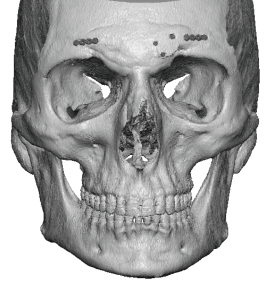
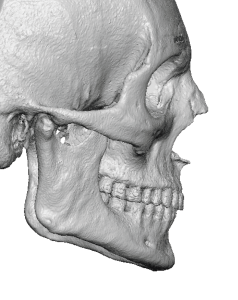 A male patient previously underwent facial feminization surgery in which the chin was reduced, while the remainder of the jawline was left untreated. The exact dimensions of the bone reduction were unknown, but significant vertical height loss was evident.
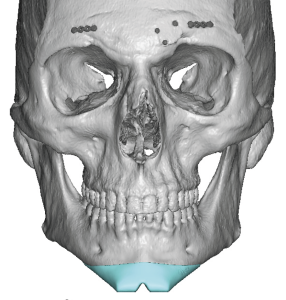
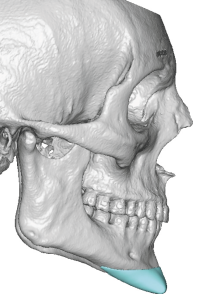 A custom chin implant was designed to provide 4 mm of horizontal projection and 7 mm of vertical elongation. The implant was shaped to produce a square chin, and an initial request was made for a vertical cleft.
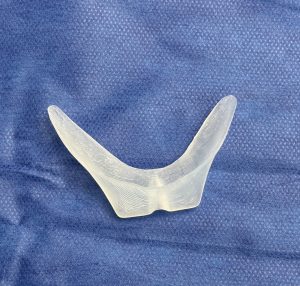
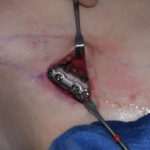
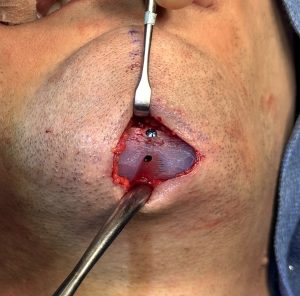 Through a submental incision, the entire chin bone was exposed. The implant was placed and secured with screw fixation. Prior to surgery, the patient elected to eliminate the cleft; the pre-designed cleft and V-shape were therefore filled with non-resorbable bone wax.
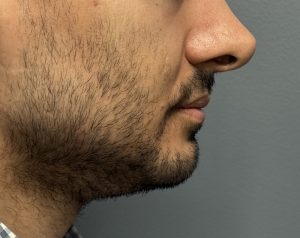
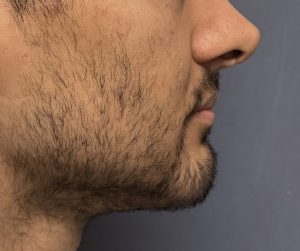
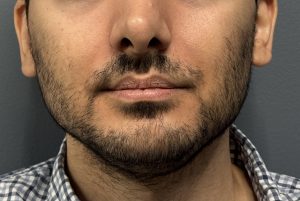
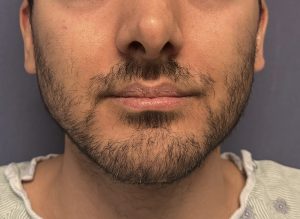 At six-month follow-up, a profound masculinization of the chin contour was clearly evident.
Discussion
Facial feminization is fundamentally reductive, whereas facial masculinization is augmentative. As a result, reversal of feminization procedures frequently requires restoration of lost bony volume and projection. Implants provide the most reliable and predictable means of achieving this goal.
Ideally, pre- and postoperative 3D CT scans would be available to quantify the exact extent of bony reduction. This information would allow for precise implant design without estimation. However, such data are rarely available. Consequently, implant design must be based on reconstructive judgment and aesthetic goals to approximate full restoration of chin form.
Key Points
- A custom chin implant provides the most complete, multidimensional reversal of chin feminization.
- The submental approach allows the most accurate implant placement.
- Screw fixation is essential due to reduced residual bone surface area.
Barry Eppley, MD, DMD
World-Renowned Plastic Surgeon