
Introduction
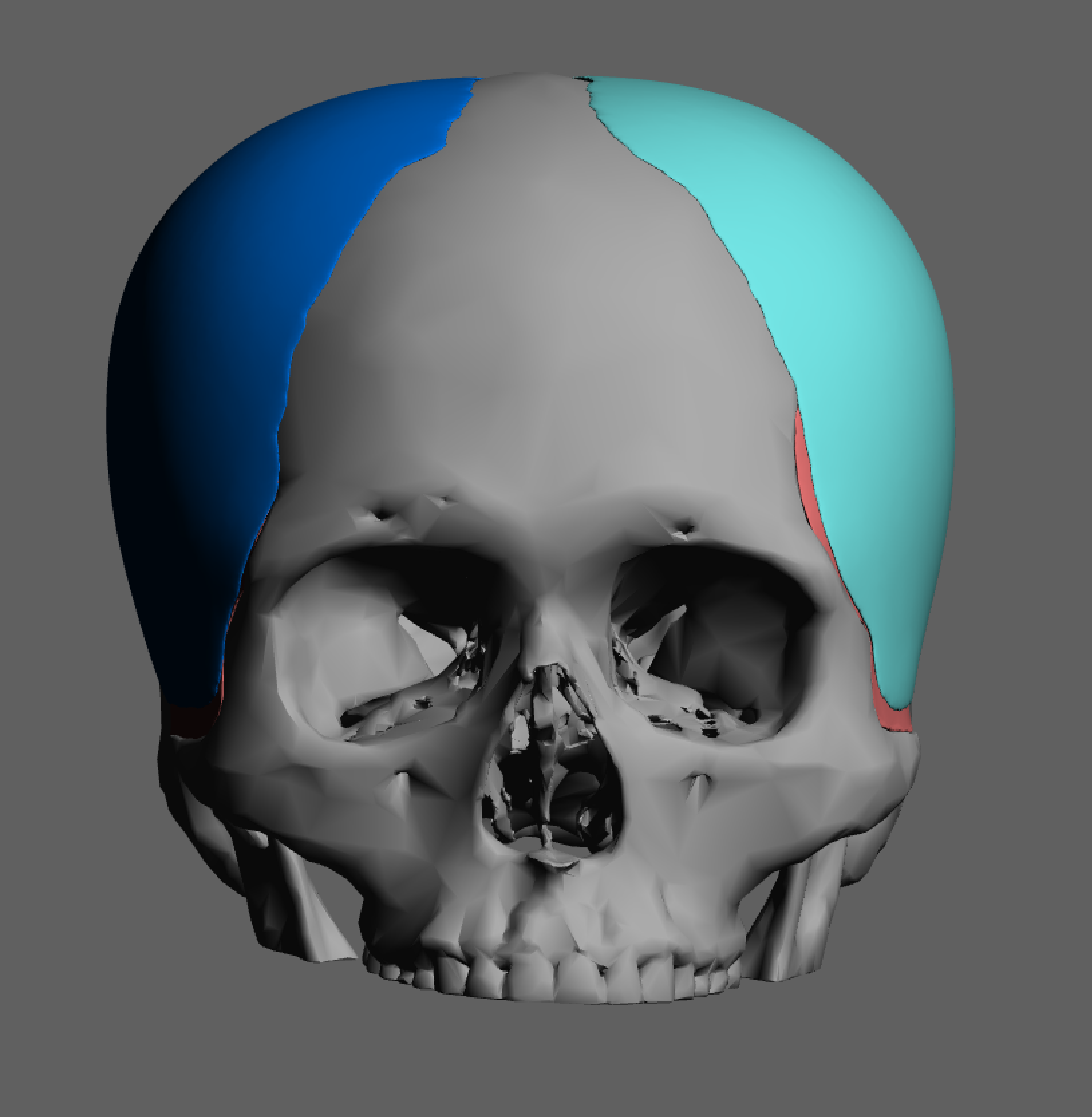
Custom head-widening implants are a highly specialized procedure performed by only a few surgeons worldwide. These implants are 3D-designed, medical-grade solid silicone devices placed along the sides of the skull—specifically over the temporal muscle region—to increase the absolute width of the head. Designed from a patient’s 3D CT scan, they typically provide 0.5–1.0 cm of width per side, though increases of 15–20 mm total may be possible depending on the patient’s anatomy and scalp elasticity.
This procedure is performed for:
-
Aesthetic desire for a broader, more proportionate head shape
-
Increasing bitemporal width (within the bony temporal line of the skull)
When greater width is desired, the augmentation may need to extend beyond the bony temporal line and blend into the forehead or back of the head.
Although often associated with traditional temporal augmentation, head-widening implants are fundamentally different in size, purpose, and the effects they create.
Head Widening vs. Temporal Augmentation
Head Widening Implants
-
Create a visibly broader head shape through major skull contour augmentation
-
Change head width from both the front and back views
-
Produce a stronger, wider, or more symmetrical cranial shape
-
Require custom 3D-designed implants placed on top of the deep temporal fascia, particularly when the implant wraps around the side of the head
Temporal Augmentation Implants
-
Add soft-tissue fullness to correct temple hollowing
-
Improve contour between the forehead and cheek without increasing true head width
-
Create a softer, natural filling effect
-
Use standard implant shapes placed beneath the fascia but above the muscle
Which Procedure Is Right for You?
?? Choose Head Widening if:
-
Your head looks narrow from the front or top
-
You want a broader, more masculine or stronger cranial width
-
You desire a true skeletal contour change
?? Choose Temporal Augmentation if:
-
Your temples appear hollow
-
You want added fullness rather than width
-
You prefer a softer, more subtle enhancement
Case Study
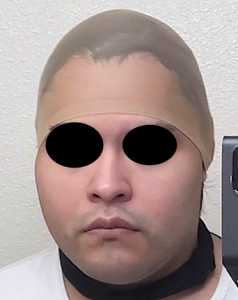 A young male patient sought a significant temporal augmentation to substantially widen the sides of his head. He habitually styled his hair to make his head appear wider and demonstrated his natural head narrowness by flattening his hair under a stocking cap.
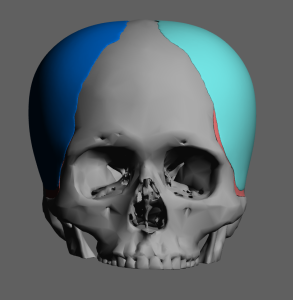
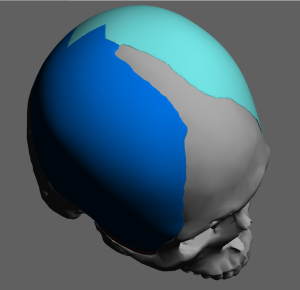
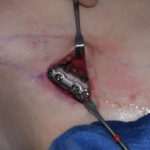
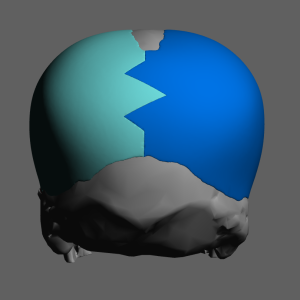 Using his own modified images to illustrate his desired change, a custom skull implant was designed. Due to its large surface coverage and volume, a two-piece head-widening implant was created.
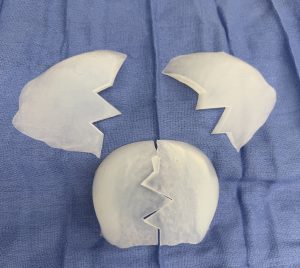 Because of the implant’s considerable volume (300 cc), a first-stage scalp expansion was required over four months to generate adequate scalp stretch. A second-stage surgery was then performed to place the implant.
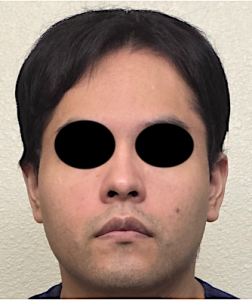 His long-term results showed a significantly improved head-width proportion, much closer to his ideal.
Discussion
Implants placed on the side of the head—beyond small temporal hollowing corrections—are largely unfamiliar procedures. Many surgeons assume such augmentation is impossible, but this misconception stems from unfamiliarity rather than true limitations.
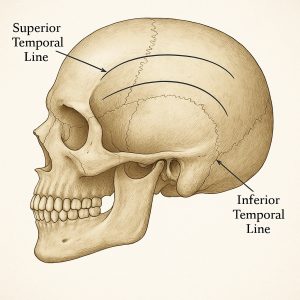 What makes this region unique is the presence of thick, variable temporal muscle overlying complex bony contours. The anterior forehead-temple junction has a concave bony shape, whereas the bone near the ear is convex. These anatomic factors divide temporal augmentation into:
-
Procedures within the bony temporal line, and
-
Procedures requiring augmentation beyond this boundary
For head-widening implants, the 3D design must extend across the entire bony temporal region from front to back. To achieve smooth transitions with the surrounding skull, the implant must be positioned above the muscle fascia, allowing uniform blending with the forehead, crown, and occipital regions.
Key Points
-
Head-widening implants are custom-designed from a patient’s 3D CT scan.
-
Large-scale widening may require multi-piece implant designs that are assembled inside the surgical pocket.
-
Significant widening with high-volume implants often requires first-stage scalp expansion to ensure safe and effective placement.
Barry Eppley, MD, DMD
World-Renowned Plastic Surgeon